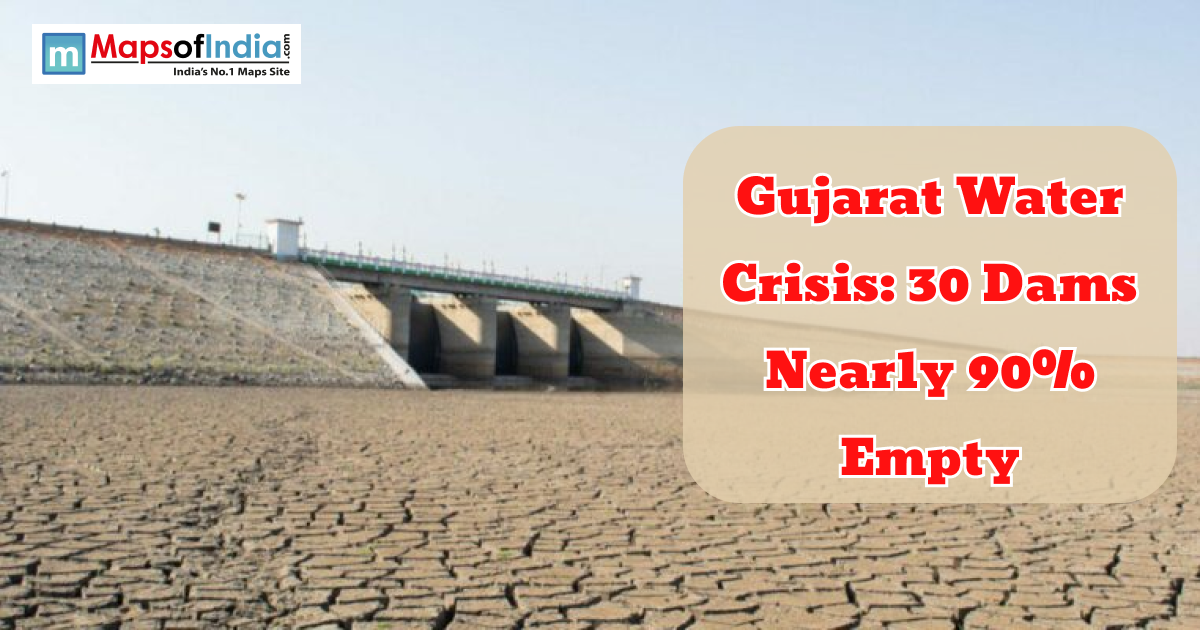
The water crisis is intensifying in Gujarat with a number of dams in the state, especially in Saurashtra, filling up to alarmingly low levels. In the recent reports, no less than nine dams in Saurashtra have been completely dried up, and their beds are now like barren fields. Also, almost 30 of the dams in the state are said to be approximately 90 per cent full, and this is a serious concern as to whether there will be water in the next few weeks.
This drastic decline in water levels has been blamed on a multiplicity of causes, among them being the low level of rainfall in the last monsoon season, rising temperatures in summers and growing water demands. Saurashtra, which has already been facing water shortage, seems to be one of the most affected areas this year.
As summer approaches, the situation is likely to get even worse. Reservation loss can be a serious threat to drinking water and even agriculture. The region’s farmers will face extreme challenges in irrigating their crops, and this may result in low yields and losses. Rural inhabitants in the country may have to resort to using water tankers as the existing water resources are becoming scarce.
Cities are not spared either, with governments grappling to find a solution with scarce water supplies. Authorities are said to be keeping a close eye on the level of reservoirs and making contingency plans to make sure that there are minimal disruptions to the necessary water supply. Water rationing and controlled distribution are some of the measures that can be taken in case the situation continues to degrade.
The long-term water management in the state has also raised concerns due to the crisis. Scientists highlight that the conservation practices should be more effective, water use should become more efficient, and the infrastructure should be upgraded to be more effective in storing water and distributing it. As much as diversion projects that have been used before to drain the main rivers have relieved the situation to some extent, the current situation brings out the increasing disparity between the demand and supply of water.
Environmentalists caution that such frequent crises are signs of larger climate problems, such as unpredictable rainfall and extended heatwaves. They emphasize the need to have sustainable solutions to the causes of water scarcity.
With Gujarat preparing to face a challenging summer, it is a matter of dealing with the crisis in the short term and long-term resilience. People are still being advised by governments to be conscious about their water use and to help in conservation to mitigate the impacts of the existing shortage.