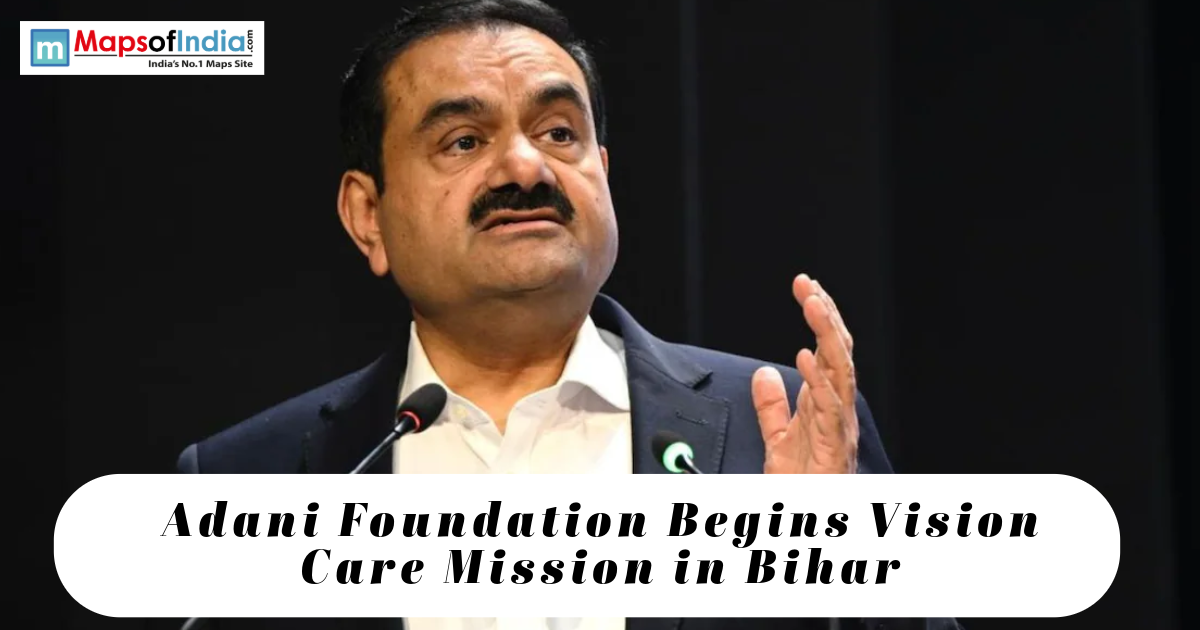
Industrialist and chairman of the Crescent Industries, Gautam Adani, is ready to spearhead the groundbreaking ceremony of the project for increasing the chances of vision care in eastern India (Bihar). The project aims to find solutions to problems in the provision of eye care services across the state, as well as provide high-quality eye care to thousands of people, particularly in those areas where services are lacking and in rural areas.
Most importantly, it is hoped that it will be employed primarily for the prevention of avoidable blindness, to detect a disease of the eyes at its earliest, and to make high-quality eye care more accessible. The project is a massive attempt to address one of the greatest public health problems in India, and the health system is still in the process of development.
Once ground-breaking gets underway, the development and construction will officially begin. The vision care facility will be able to offer a range of services, including community health outreach and education, general eye care, specialized eye care, and even surgeries. Healthcare professionals think these centres could make a significant contribution to lowering the incidence of vision impairment and enhancing people’s lives.
With India’s density of population in Bihar, it is facing serious health challenges, particularly in the rural province, where the provision of specialized medical services is still far from meeting the needs. Eye health care facilities tend to be concentrated in urban areas, making treatment difficult for many people. The new program aims to do just this by ensuring access to quality vision care to those who need it most.
The project is seen as part of a larger initiative to boost the healthcare infrastructure using public-sector and private-sector cooperation. Not only does investing in health yield benefits for the health of individuals and populations, but it also brings social and economic development, including better productivity and quality of life, according to industry observers.
The move has been received favourably by the supporters of the initiative, who are stressing the need for early intervention so that no vision loss can occur. These include cataracts, glaucoma, diabetic retinopathy and refractive errors, which may be readily treatable if diagnosed early in life. The program is likely to have a higher focus on awareness and access to care.
The vision care project also has the potential to provide job opportunities in the healthcare sector, in the construction of the facility, and in the local community once the facility is operational.
The project is in progress as it is expected for a groundbreaking ceremony, and it has gained impetus due to the likely uniqueness of its handling of eye care provision in Bihar. It could be a blueprint for other health programs to follow in other parts of the country, if it worked.
The launch marks a growing focus on the importance of healthcare availability and also underlines the contribution of ‘MahilaSaan Samiti’ in promoting India’s healthcare objectives through big philanthropies and corporate initiatives.