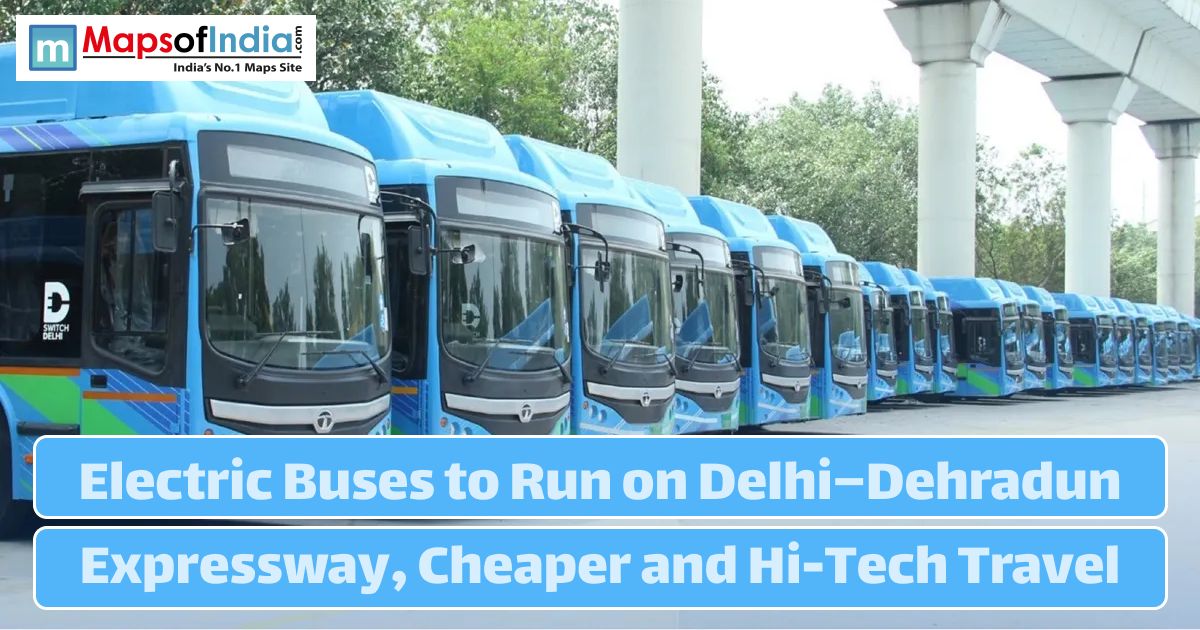
The government is also intending to introduce electric buses in a major step towards modern, green transport on the Delhi-Dehradun Expressway that will ensure the intercity transport is cheaper, faster and environmentally friendly. The project is in line with the overall effort of India to achieve clean mobility and smart infrastructure.
The Delhi-Dehradun Expressway is one of the most significant highway projects in the nation that has been scheduled to assist a lot in reducing the amount of time spent on travelling between the national capital and Dehradun. In the usual circumstances, the five-to-six-hour travel can be cut down to only two-and-a-half hours when the travelling is fully operational. This route will also become more efficient and more appealing with the help of electric buses.
Electric buses, also known as e-buses, run on a battery and not the regular fossil fuels such as diesel and petrol. This renders them a cleaner choice with zero tailpipe emissions, and it helps to improve air quality, which is a significant factor, particularly in areas such as Delhi that have a high pollution rate. Besides environmental advantages, e-buses produce less noise, and their ride is smoother, making the ride experience more comfortable for the passengers.
The intended service will also reduce the cost of travelling. E-buses have lower operational costs because electricity is cheaper than conventional fuels, and the maintenance needs are also lower. Such savings would be converted into lower ticket costs to the passengers, and the service would be available to a broader segment of the population.
In addition to cost and sustainability, a hi-tech travel experience is a key focus of the project. It is also probable that the buses will have some modern comforts like GPS tracking, electronic ticketing systems, surveillance by CCTV cameras and air-conditioned buses. The route is also likely to have charging infrastructure and smart bus terminals to facilitate smooth operations.
The project is an indication of the increasing attention of transport authorities, such as the Delhi Transport Corporation, towards the expansion of electric mobility solutions. The government expects to make a next-generation public transport corridor by combining e-buses with a high-speed expressway that would make people start to replace their personal cars.
In general, the implementation of electric buses on the Delhi-Dehradun route will transform intercity transportation. Blending speed, affordability, technology and sustainability, the project has the potential to be a benchmark of similar projects throughout India and establish a cleaner, more efficient transportation network.