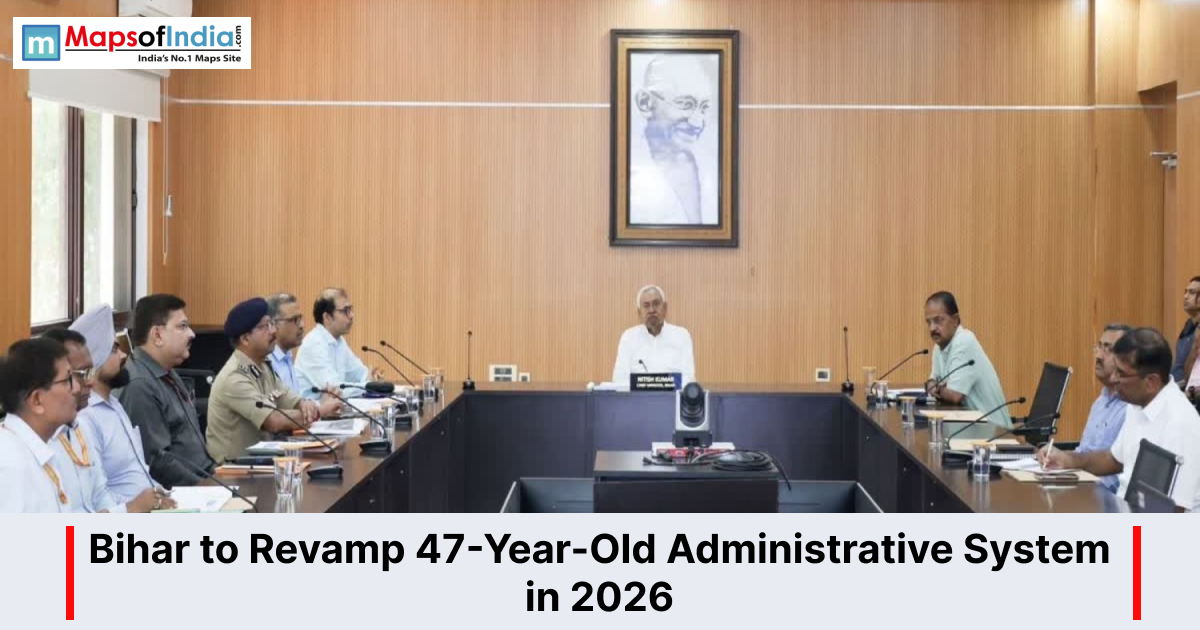
In a major step towards overhauling governance, the Government of Bihar is planning to revamp its decades-old administrative structure by enacting new executive rules in 2026. The reform aims to bring an end to a system that has existed for almost 47 years, one of the most radical bureaucratic reforms in the recent history of the state.
The current administrative regulations, which were developed in the late 1970s, have long regulated the operations of government departments and have defined the process of making decisions, the behaviour of officials, and the coordination of the department. Nevertheless, due to the fast development of technologies and the changing requirements of governance, authorities think that these regulations are obsolete and cannot be used to solve the current problems.
According to sources in the administration, the proposed Executive Rules 2026 will aim at promoting efficiency, transparency, and accountability at all governance levels. Among the most important ones is the facilitation of decision-making, the minimization of bureaucratic delays and the definition of roles and responsibilities of government officials. The new framework will also include provisions that resonate with the practice of digital governance, which is an indication of the rising usage of technology in running administrations.
The fact that the reform focuses on the control of the behaviour of government employees in the digital environment deserves to be mentioned. Recently, the state has already unveiled tougher measures regarding the use of social media by authorities, who are not allowed to publicly communicate their views on government policies or post confidential information on the Internet without permission. These provisions will be enhanced further under the new regulations.
According to the officials, the reform is not just a procedural one, but it is focused on a cultural change in the bureaucracy. This is through a revision of the administrative rulebook, where the government aims to promote more discipline, accountability and responsiveness among the workforce. These changes will also enhance the coordination between the departments, which will result in better implementation of policies and programs to benefit the public.
Development of the new executive rules is in progress, and the suggestions of different departments and administrative specialists are also taken into consideration. The rules will be enacted throughout the state once they are finalized and will completely replace the current system.
Analysts perceive this initiative as a step in the right direction, of streamlining the administrative set-up of Bihar in line with modern governance principles. When done well, the reform may help the state a lot in providing its services in an efficient and responsive manner to the needs of its citizens in a fast-changing environment.