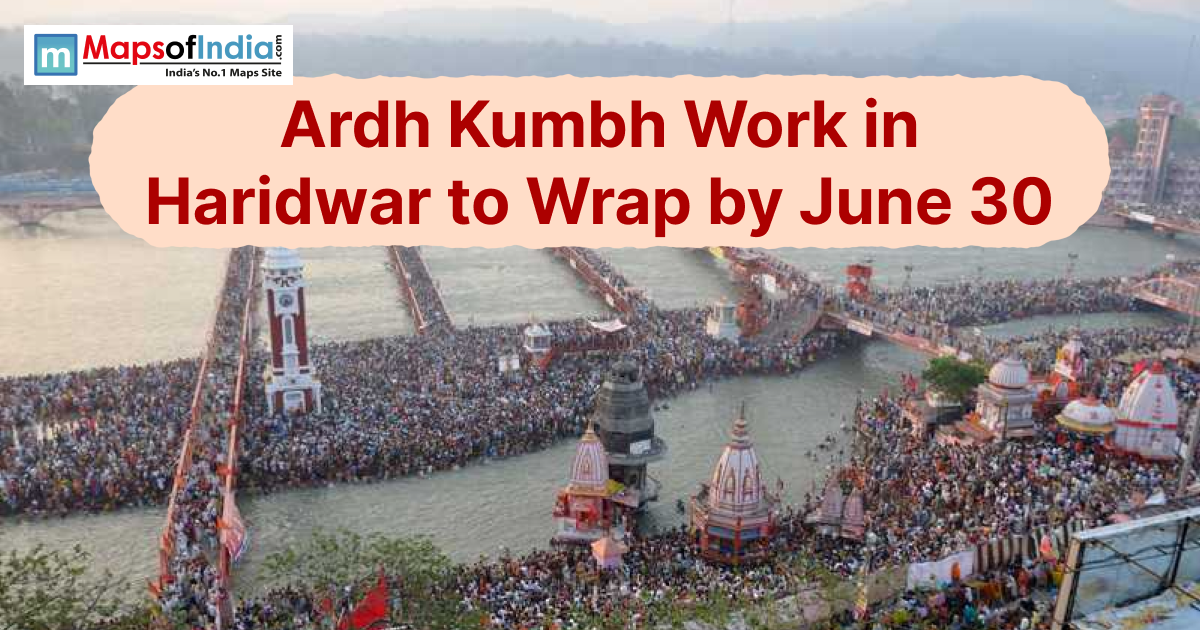
The preparations for the coming Kanwar Yatra are underway in full blast in Haridwar, and the authorities have fixed a strict deadline by June 30 to get all the major construction and infrastructure work done. The grand-scale activities are geared towards the facilitation of harmonious preparations of the millions of worshipers who are likely to attend the yearly pilgrimage, as well as preparing in advance for the next Ardh Kumbh.
The district administration and various government departments are operating at a faster rate to renew roads, ghats and public facilities along major Kanwar routes. The authorities have noted that all the necessary projects should be in place by the close of June to prevent last-minute inconveniences. It is very important in terms of timing because a Kanwar Yatra usually starts in July and is attended by an enormous number of pilgrims, who come to visit it throughout the northern part of India.
Kanwar Yatra is a festival celebrated by devotees, or Kanwariyas, who come to collect Ganges River water and take it back to their hometowns, where they offer it in Shiva temples. The magnitudes of the yatra demand a lot of planning, such as traffic control, crowd control, sanitation and safety provisions. Over the last several years, the number of participants has increased considerably, which has even strained the local infrastructure.
The government has said that the construction activities involve widening and repairing roads, making bridges stronger, installing drainage systems, and building ghats to serve large populations. The installation of street lights, drinking water, temporary shelters, and medical aid centres along the pilgrimage routes is also receiving special attention.
Along with the Kanwar Yatra, these plans are a part of the larger plans of the Ardh Kumbh, which is likely to bring an even greater number of pilgrims in the not-so-distant future. Through the alignment of the two projects, the administration will have developed the long-term infrastructure that will be able to support the recurring religious events in the city.
Top management is carrying out frequent inspections to check on the development of ongoing projects. Contractors have been instructed to ensure quality is maintained, but at all times to meet deadlines. Pilgrims might be inconvenienced by any delays or incomplete work, and safety might be questioned.
Even security measures are being tightened, and more police force, surveillance systems, and emergency response teams are planned during the yatra period.
In general, the rush to finish the construction process before June 30 indicates the zeal of the administration to provide a safe, orderly, and comfortable experience to the devotees. As Haridwar is about to host millions, it is now about the timely execution and proper management of one of the largest religious gatherings in India.