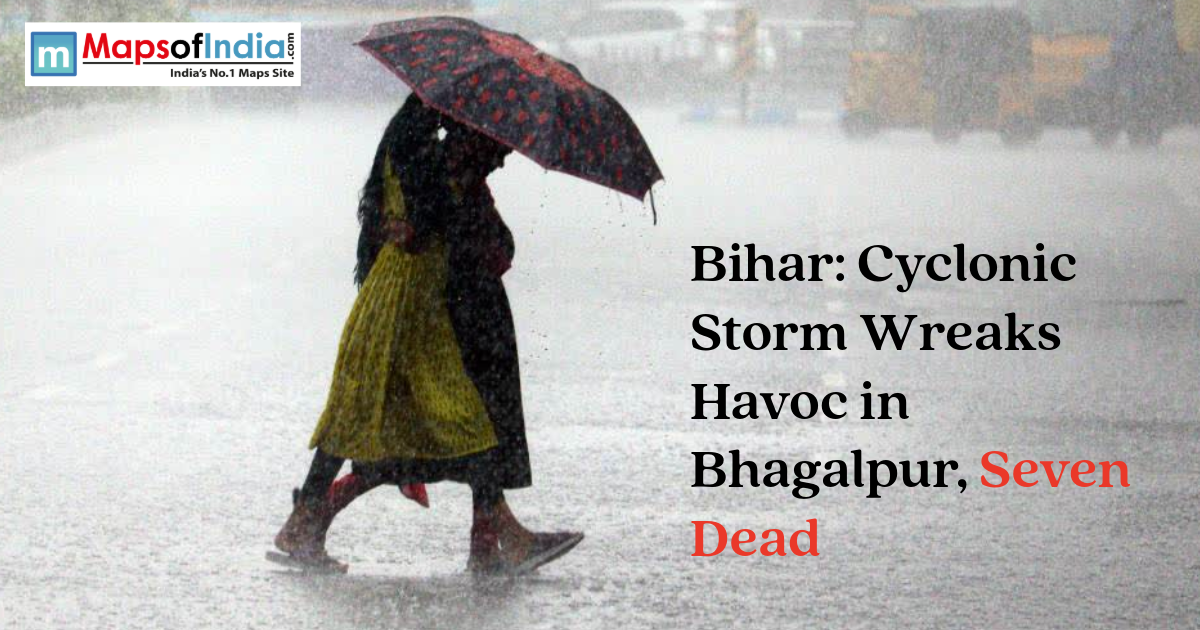
A severe cyclonic storm with heavy rainfall and high-speed winds ravaged the district of Bhagalpur in Bihar, where at least seven people lost their lives, and normal life in the city was affected. During the storm, winds reached almost 140 kmph, causing damage to houses, uprooting trees and seriously impacting the electricity infrastructure, officials said.
This storm came upon them at a time they were not expecting and caused some residents to flee to their homes for shelter. There has been widespread damage in several areas of Bhagalpur where trees were blown over, electric poles were snapped, and roofs and tents of temporary structures were damaged by the high winds. The roads were clogged with trees and debris, making them difficult for traffic to navigate and hard for emergency personnel to access.
Preliminary reports indicate seven people died in separate incidents related to the storms. There are reports of some deaths being attributed to the trees falling on them or parts of the building collapsing, with others being injured by the weather. Rescue and relief operations have been started, and the damage is still being assessed.
The biggest effect of the storm was the huge disruption of the electricity supply. The strong winds damaged power lines and transformers, cutting off electricity to large areas of Bhagalpur. Restoration efforts started right away, but could take time depending on the damage done to the electrical infrastructure, officials at the electricity department said.
The extreme weather conditions also had a negative impact on the lives of the people of the district. Markets were partially closed, transportation services were impacted, and communication systems were impacted and temporarily disrupted in places. During the evening hours, residents started reporting fear and chaos as the storm grew stronger.
The teams for disaster management, police and local administration officials were deployed nationwide to clear roads, restore normal services, and assist the injured in affected areas. Police also urged people to stay indoors in bad weather and to not touch broken electrical wires or unsafe buildings.
The experts in the field think that this storm was related to strong pre-monsoon atmospheric activity over eastern India. Thunderstorms and cyclonic wind systems have also been in the region of Bihar, often in this period, but this was an unusually strong storm, officials said.
The incident is yet another reminder of the growing risks of extreme weather in various regions of the country. Climate change could lead to increased storms, precipitation, and unexpected changes in weather in the near future, experts say.