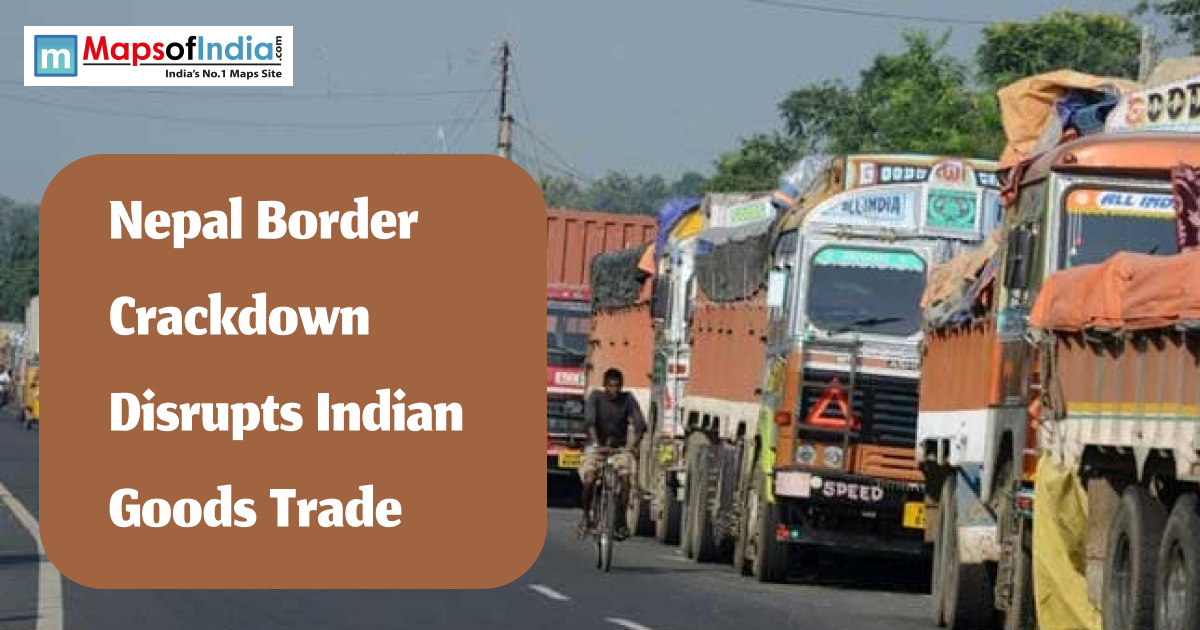
There have been reported impacts of trade activity across the India-Nepal border due to increased security and increased enforcement by authorities on the Nepal side. According to traders and local sources, there are more inspections and closer attention to cross-border traffic, which have resulted in delays in the transportation of Indian products, and have also resulted in uninformed accusations of an unorthodox system of informal fees at some of the checkpoints.
Traders dealing in the border areas like Uttar Pradesh and Bihar claim that the new change in enforcement practices has decreased the normal flow of trade. Nepal has been extremely reliant on Indian imports of basic commodities, such as food products, construction materials, and consumer goods. Any interruption in border logistics, even on a temporary basis, is likely to cause instant effect on the supply chains in the two nations.
According to reports by the trading fraternity, even though the aforementioned intention of the tightening of checks is to reduce smuggling and illegal cross-border operations, the operation has resulted in longer queues of transport vehicles and more compliance measures. In others, traders have complained of goods being detained to be verified, which has caused delays in the delivery schedules and increased transportation costs.
There are also reports going around traders about extortion-like activities in some of the border points. These claims indicate that unofficial payments are being taken to get goods cleared more quickly. Nevertheless, these assertions are hard to ascertain on their own, and there has not been an official statement by the authorities in both India and Nepal on systemic malpractice.
The governments of both countries have long stressed collaboration in ensuring safe and controlled trade corridors. Bilateral agreements have opened the India-Nepal border to free movement of goods and people, making it a more or less porous border. Nevertheless, the openness also exposes the region to problems like smuggling, illegal trade and inconsistencies with enforcement.
Analysts supplement that sometimes, border restrictions can be enforced temporarily by a change in political leadership or administrative priorities in Nepal. They are typically aimed at improving adherence to customs and revenue collection, but can lead to temporary inconveniences for reputable traders.
Despite the existing problems, the trade between India and Nepal is strong and highly significant to both economies. The largest trading partner of Nepal is India, and the cross-border trade plays a crucial role in supporting lives in the border states.
Things are changing, and the traders are insisting on more guidelines, faster clearance systems and openness at the border checkpoints to ensure that lawful trade is not adversely affected whilst retaining necessary security checks.