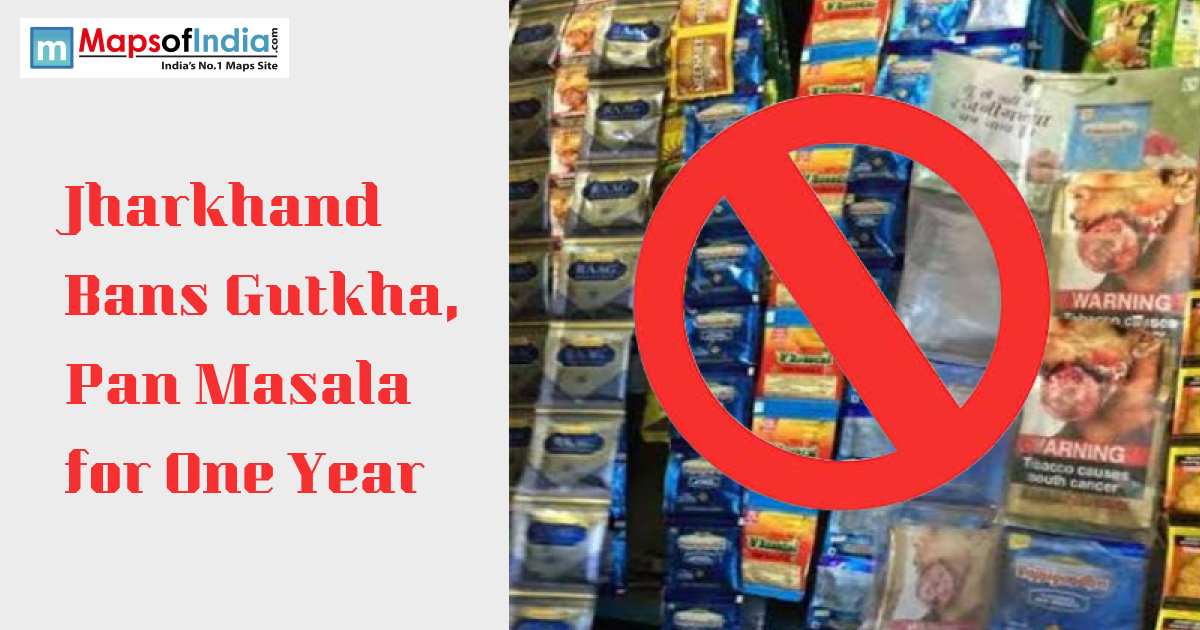
Jharkhand has banned the manufacturing, storage, sale and distribution of gutkha and pan masala, which contain tobacco in the entire state for a period of one year. The order was issued by the state Health Department in an effort to curb rising cases of oral cancer and other tobacco-related diseases.
The ban is for all tobacco or nicotine-containing products, including brand names, officials said. This was decided under the provisions of the Food Safety and Standards Act, 2006 and its regulations for the protection of public health.
The Additional Chief Secretary and Food Safety Commissioner, Ajay Kumar Singh, issued the notification. The authorities said the exercise will help in curbing addiction to tobacco, particularly among the youth, and raise awareness about the ill effects of gutkha use.
The health authorities of Jharkhand have been worried about the growing incidence of oral cancer cases associated with chewing tobacco products. Doctors have issued repeated warnings of the dangerous ingredients in gutkha and flavoured pan masala products and their ability to cause serious health issues such as cancer of the mouth, throat and digestive tract.
The new order has called for a no-holds-barred approach to anyone found to be breaking the ban. The district administrations and food safety officers are directed by the state government to inspect and raid for compliance. Offers made by shops and distributors who are caught by law enforcement to sell banned products can result in legal action, goods being seized and licenses being revoked.
The government will also be promoting awareness within schools, colleges and public areas with regard to the health hazards of tobacco use. Officials feel there is a need to better enforce and involve the public to ensure the ban is effective.
It is not the first time that Jharkhand has taken action in regard to tobacco products. Restriction measures were also in place in previous years, but most of them were short-term or were only applied to specific areas. The new order is being considered a more thorough statewide effort to address the problem.
The change has been welcomed by public health activists and doctors who believe it may help to curb addiction and help people enjoy better long-term health outcomes. But, there have been some traders and small shop owners who have complained about financial losses that they are facing because of the ban.
The ban will remain in effect for one year from the time of notification and then will be reviewed by the government and extended or lifted as necessary.