Gujarat’s ambitious Kalpsar Project has been given a new lease of life after Prime Minister Narendra Modi gave it a fresh impetus by inking a historic partnership agreement with the Netherlands. The agreement is based on the themes water management, coastal engineering and dam technology – fields where the Netherlands is believed to be a world leader.
Gulf of Khambhat Development Project, popularly known as Kalpsar, is one of the biggest infrastructure and water conservation development projects in Gujarat. The project will involve the construction of a huge dam that will be built across the Gulf of Khambhat to trap the freshwater flowing into the Arabian Sea from the rivers. The drinking water stored is used for irrigating, drinking and industry in various drought-prone areas of Gujarat.
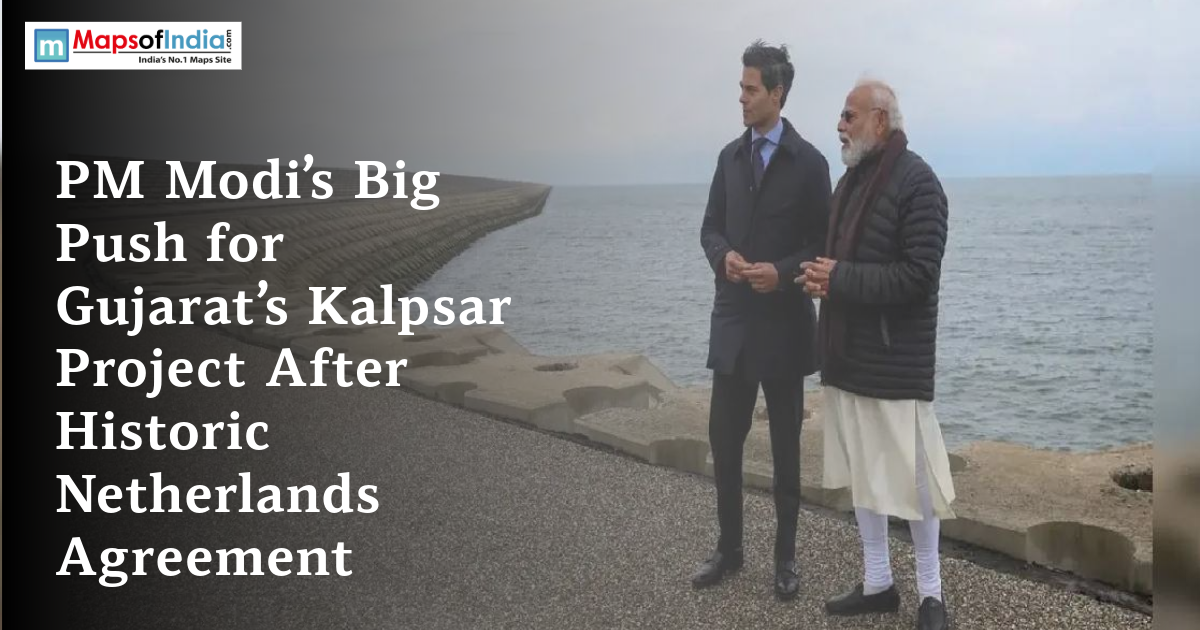
PM Modi, during his recent visit to the Netherlands, visited the High-Tech Water Management Systems of the Netherlands and the famous Afsluitdijk Dam, which protects the country from floods and, at the same time, saves water. After talks between the two countries, India and the Netherlands inked a Letter of Intent to work together on technical expertise for the Kalpsar Project.
The cooperation with the Dutch experts may help India address technical and environmental issues faced in the mega project, the government officials believe. The Netherlands is well known in the world for its experiences with flood control, land reclamation and the construction of large dams and is therefore an important partner in the project.
Once completed, the Kalpsar Project is likely to have a significant impact on the state of Gujarat. It is estimated that it will be able to supply irrigation water for almost 10 lakh hectares of land and access to potable water in several districts. The project could also reduce the travel time between South Gujarat and Saurashtra via a proposed transport route crossing the dam.
The project will also help promote the use of renewable energy sources such as wind and solar power, in addition to water conservation. It could offer new opportunities in the areas of fisheries, tourism, transportation and economic development in the region.
Although the project has been talked about for many years, it was delayed because of the environmental considerations, technical difficulties, and need for large amounts of investment. With the recent deal with the Netherlands, however, the longstanding project has rekindled hope that it might finally become a reality.
If the Kalpsar Project is implemented successfully, it will prove to be one of the most important water infrastructure projects in India, according to experts. It is a big step towards long-term water security, climate resilience and sustainable development in Gujarat for the Modi government.