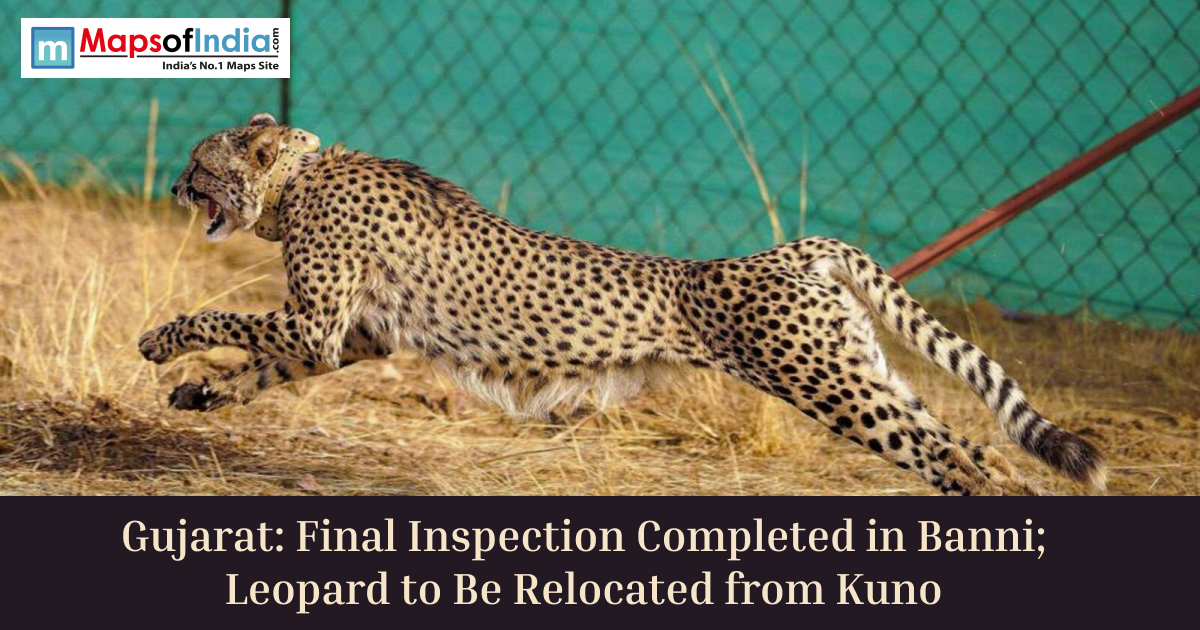
The plan to relocate a leopard to the Banni grasslands of Gujarat has taken a step forward, with the National Tiger Conservation Authority (NTCA) making its final visit to the area. The relocation is a part of a larger campaign to enhance the ecological balance of the Banni region, a special grassland habitat of the Kutch district.
A group of scientists of the NTCA recently made an on-ground survey of the Banni region to determine its capability to accommodate such a high predator as the leopard. The monitoring was based on the main parameters of the availability of prey, the quality of the habitat, the water resources, as well as the possible threats of human-wildlife conflict. According to the officials, the results were mostly good, and the next step of the translocation process was on its way.
The leopard will be relocated to Kuno National Park in the state of Madhya Pradesh, which is a reserve with a rich biodiversity and a successful program of saving the wildlife. The government feels that the transfer of a leopard out of Kuno, where there is a stable population of big cats, will not have a negative impact on the ecosystem in Kuno but will help the Banni landscape.
According to wildlife experts, Banni has no dominant predator at the moment; hence, this has caused an imbalance in the ecosystem. It is believed that the introduction of a leopard will aid in controlling the number of herbivores and enhance biodiversity. This type of translocation is becoming particularly popular in India as a scientific effort to conserve and restore habitats.
Nevertheless, officials are conscious of the issues at hand. Safety of local communities is a priority. Taking steps like monitoring the animal through GPS collars, adding forest patrols, and carrying out awareness programs for the residents is likely to be adopted alongside the relocation.
The final inspection is an important milestone as it means that the project is about to be executed. Upon receiving all the administrative clearances, the leopard will be captured in a controlled environment, transported to Gujarat and released into its new environment in a controlled environment under close supervision.
This move indicates that India is still on the way to innovative conservation programs, taking into account the experience of the previous relocation of wildlife. A successful Banni leopard project would be used as a model in other ecosystems in the country, and the essence of having a healthy and balanced natural environment should be upheld.