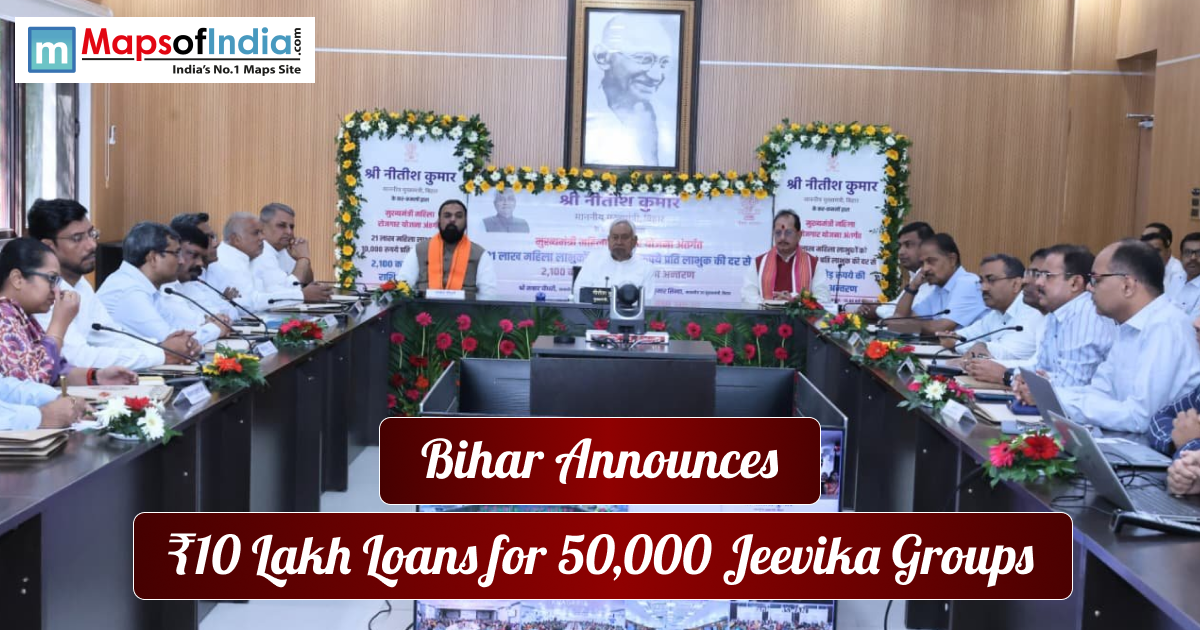
In a major step towards economic empowerment of women, the government of Bihar has declared a big financial project that will help in funding rural self-help groups, a program called Jeevika. After the preceding moves by Nitish Kumar, the Deputy Chief Minister Samrat Chaudhary, has presented a fresh strategy of offering massive financial support to women-led organizations in the whole state.
This program will provide loans of up to ₹10 lakh to approximately 50,000 self-help groups or Jeevika Didis, as they are commonly referred to. The scheme will be implemented in the current financial year and is designed to enhance the financial strength of these groups so that they can increase their livelihood activities.
One of the most famous programs in rural development in Bihar is Jeevika, which is aimed at empowering women by means of financial inclusion and community-oriented programs. A self-help group is usually comprised of 10 to 12 women who share resources, regularly save and access credit together. Members with the higher loan limit will now have the opportunity to invest in income-generating ventures like agriculture, dairy farming, small-scale retail business and other micro-enterprises.
The authorities pointed out that the repayment history of such groups has been extremely high, and this has seen banks issue higher credit limits. The relocation can also be seen as a larger initiative of the state government to issue thousands of crores of loans to self-help groups in the year, which will further enhance financial accessibility in rural locations.
The announcement is likely to have a widespread effect on the rural economy of Bihar. The scheme will decrease reliance on informal lenders by providing more access to formal credit and facilitating sustainable income generation. It also complements the vision of the government to increase the involvement of women in economic activities and decision-making at the grassroots level.
Along with its economic consequences, the initiative has social connotations as well. When women are empowered financially, the household welfare is usually enhanced, children get a better education, and the community development results are enhanced.
With the scheme being implemented, authorities have been optimistic that the scheme will not only enhance small-scale entrepreneurship but will also lead to the success of the Jeevika model in transforming rural livelihoods.