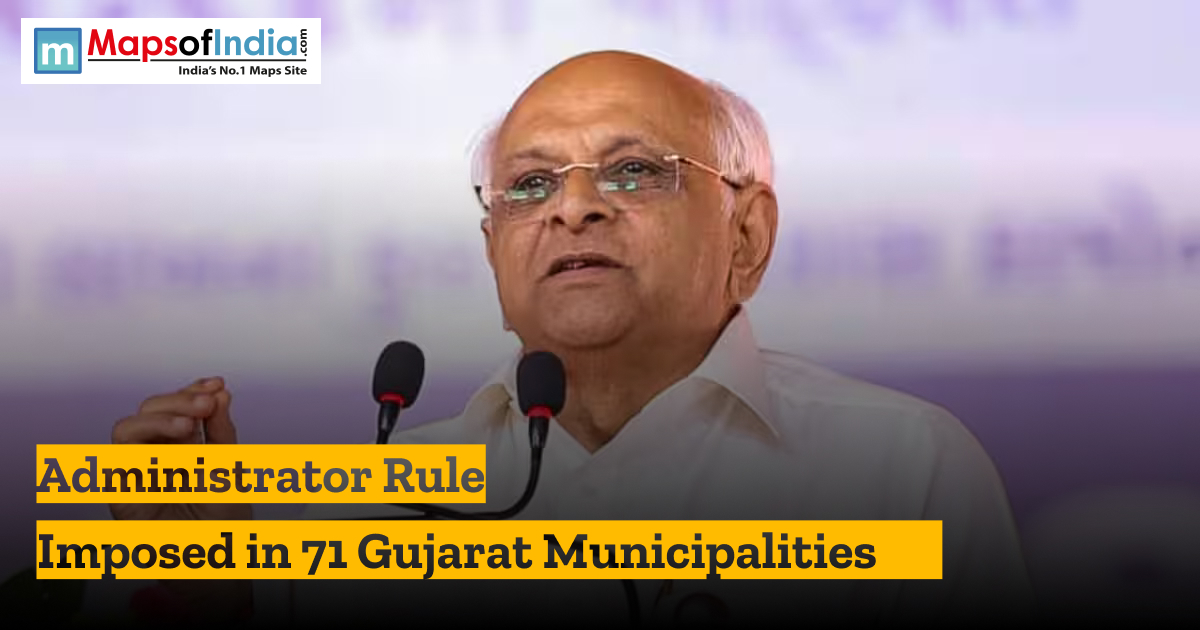
In an important administrative step, the government of Gujarat has put 71 municipalities in the state under the administrator rule as the period of their elected bodies expired. The ruling maintains a smooth sailing of civic administration until fresh municipal elections and election of new representatives take place.
The Urban Development and Urban Housing Department in the state issued the order. The officials claim that the five-year term of the elected municipal councils in such cities is over, thus leaving the civic bodies with no elected governing body. The government has chosen to have people in charge of the municipalities so that the operations of the local government are not disrupted.
In this design, the government officials who are senior, like Mamlatdars, Prant officials and other administrative officials, have been given the mandate of running the municipal affairs. These police officers will serve as interim leaders of the civic organizations and will be in charge of day-to-day activities until new councils are established by election.
The administration will be tasked with upholding the critical services in the municipality like water, sanitation, waste disposal, road repairs and lighting. They will also oversee municipal personnel, budgets, and make sure that development activities that are going on are not halted. According to the statements of the officials, they are mainly in an administrative position and should not make significant long-term policy decisions that would have ordinarily had to be approved by the elected officials.
The relocation is viewed as a quotidian administrative measure, which frequently occurs when the term of a municipal agency comes to an end prior to the possibility of holding elections. The State Election Commission normally fixes the municipal elections and also prepares the electoral rolls, announces the date of the elections and is also in charge of organizing the voting process.
According to political observers, having the administrators in place makes governance continuous but also makes elections in the local bodies timely. The municipal councils are the most important in the governance of the towns in that they are able to represent the interests of the people and make decisions regarding the infrastructure, growth, and services provided to the people.
In the affected municipalities, their residents should continue receiving the services necessary because the administrative machinery will be present. The government has been guaranteeing that the arrangement is a temporary one and will only prevail until the election process is soon over.
The State Election Commission will release the date of local elections at the earliest time. When elections are conducted and new elected councillors are elected, the administrative control will be handed over to the newly formed municipal councils.
Generally, the ruling will serve to uphold continuous civic rule in the 71 municipalities as the state awaits the upcoming local body elections.