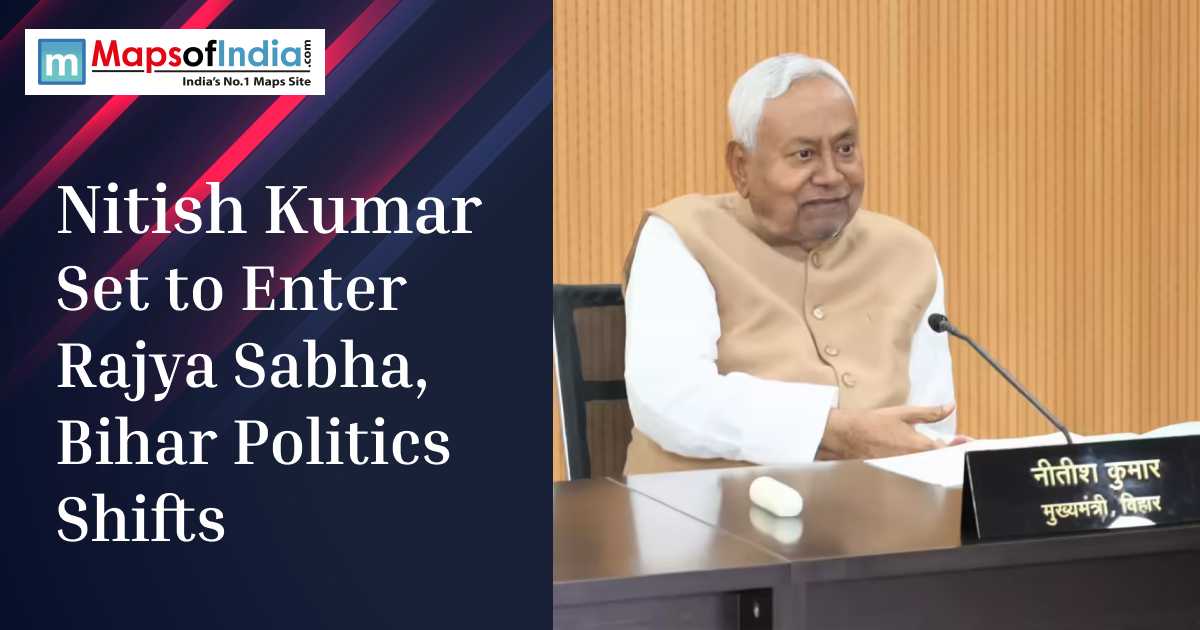
A historical event is about to happen in the political front of Bihar as the Chief Minister Nitish Kumar will be filing his nomination to the Rajya Sabha. The move has created a great deal of talk in political circles, with most observers arguing that this might be the beginning of the potential termination of his almost 20-year-long reign in the politics of Bihar.
Since he was first elected as Chief Minister way back in 2005, Nitish Kumar has been one of the most influential political figures in the state. He has headed several coalition governments over the years and has been at the centre of the political and administrative relations of Bihar. His reign has been largely linked with infrastructure development, reforms in governance, as well as social welfare and development initiatives.
His decision to nominate the Rajya Sabha, the upper house in the Indian Parliament, has generated some speculation that he may be aiming to change his political position. The senior political leaders usually join the Rajya Sabha at a time when they are likely to have a bigger role in national politics or when there is a change of leadership at the state level. However, as much as a filing of nomination does not necessarily imply that he will resign as Chief Minister in the foreseeable future, the future leadership of the state of Bihar has been questioned.
Should Nitish Kumar one day move to the Rajya Sabha and leave behind his Chief Ministership, it will end the so-called Nitish Kumar era in Bihar politics. His leadership has characterized the state politics, alliance and governing tactics of the state over almost two decades. One of the main characteristics of his career is that he has been able to negotiate his way through coalition politics without losing his political relevance in the various alliances he has served.
Any change in his position will open the door to new leaders in his party and partnering alliances, according to political analysts. This would probably affect the political balance in the state in the run-up to further elections. The development is being closely monitored by parties in the political spectrum because such development may affect the balance of power in the state.
Simultaneously, the proponents of Nitish Kumar believe that the transfer to the Rajya Sabha may enable him to participate in the national policymaking process and still be able to impact the political course in Bihar. This move is yet to be determined as to whether this is a total change in his political career or just a tactic.
With the nomination process underway, the interest will continue to be centred on the political events in Bihar and what the upcoming chapter would entail, both in the life of Nitish Kumar and the state in general.