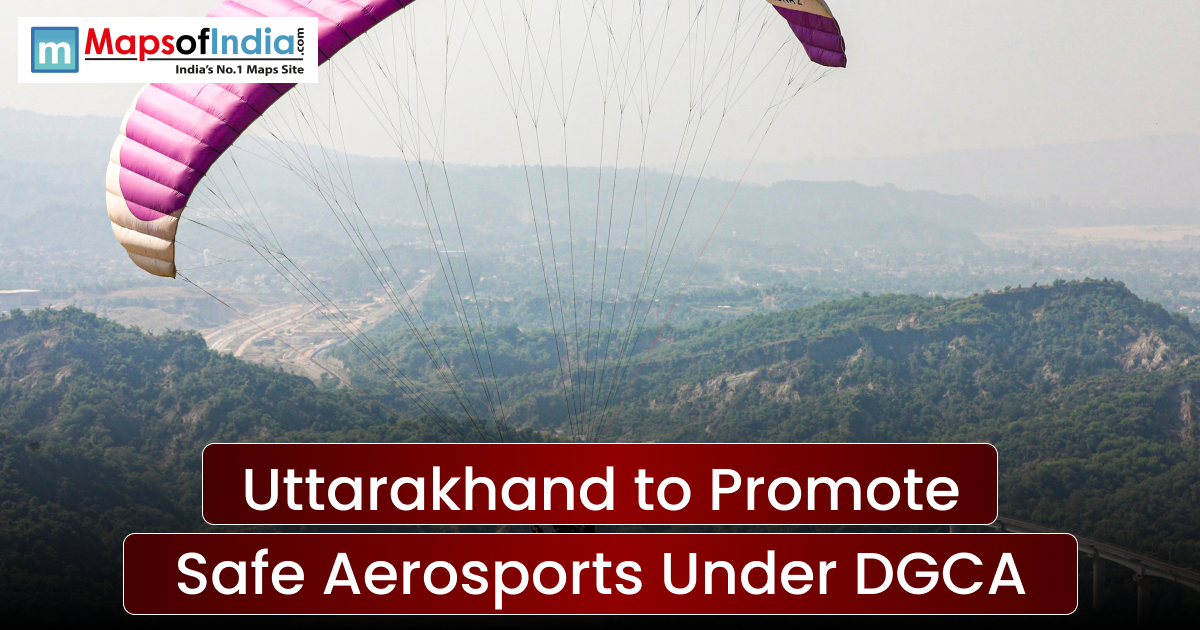
The government of Uttarakhand has declared that it is planning to promote safe and regulated aerosports in the state, based on the guidance that has been developed by the Directorate General of Civil Aviation (DGCA). It is a huge boost to adventure tourism in the state. This relocation will enhance safety levels and increase the prospects of the adventure tourism industry that is presently experiencing rapid expansion.
Some of the aerosports include paragliding, paramotoring, skydiving and hot air ballooning. Uttarakhand, with its picturesque landscapes in the Himalayas, deep valleys, and unhindered skies, has always been a favourite destination among thrill-seekers. Nevertheless, governments have realized that the tightening of control is crucial to the safety of tourists and the prevention of accidents.
The new plan will see the aerosport operators within the state adhere to the standards of operations as approved by DGCA. This encompasses the compulsory licensing of pilots and instructors, equipment certification, frequent inspections and compliance with weather and airspace laws. This is because only licensed and proficient operators will be permitted to carry out commercial aerosports activities, as officials put it.
The state authorities stressed that the project is not only about the promotion of tourism but also the responsible and sustainable development. Important aspects of the framework will include safety audits, adventure sport agency registration, and setting up emergency response procedures. Another motive that is being pursued by the government is the establishment of special aerosports zones to facilitate actions and prevent unregulated activity.
It is hoped that the new rules will have an impact on popular tourism spots like Rishikesh, Nainital and Auli. By complying with the DGCA standards, the state will improve the confidence of visitors and win more local and foreign adventure lovers.
Tourism administrators observed that adventure sports can create great job opportunities for young people in the area in the form of trained pilots, trainers, support crew and even safety coordinators. The introduction of structured training programmes can also be made to create capacity locally in accordance with the national aviation standards.
This initiative will be timely as adventure tourism in India has been experiencing consistent growth. The priority in Uttarakhand is to position itself as a key player in the safe aerosports destination within the region by putting safety and compliance with regulations at the top.
The government believes that the implementation of the DGCA-backed norms could not only reduce the risks but also enhance the image of the state as an environmentally safe adventure tourism destination. The use of the framework will begin in the near future, and the directions of particular operations will be discussed.