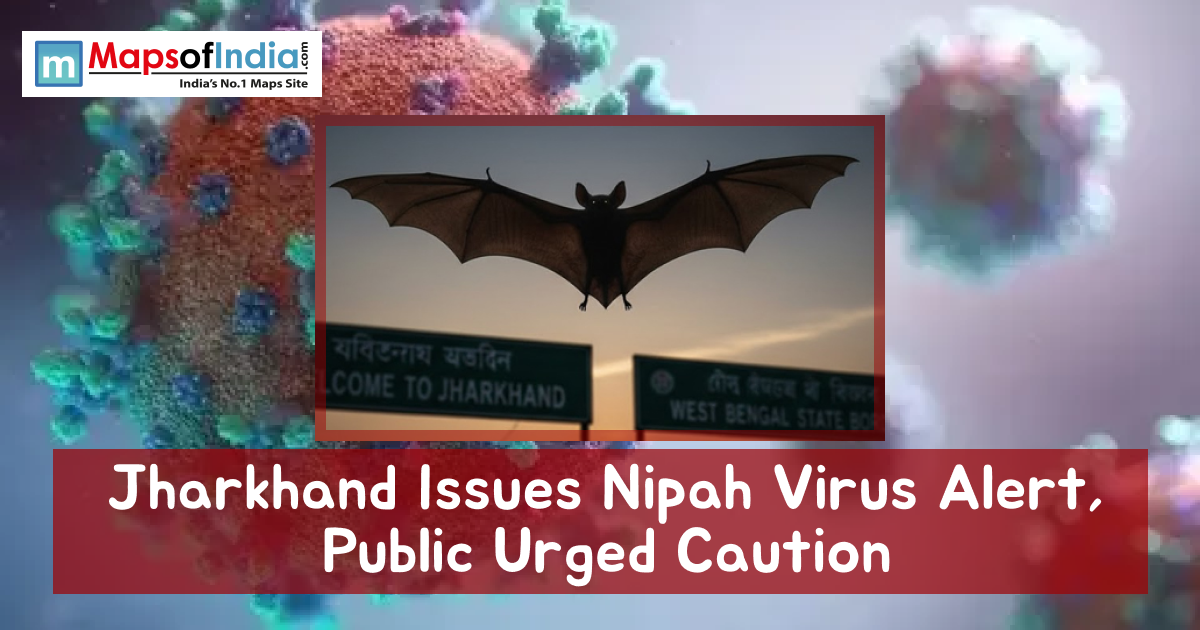
Jharkhand has gone on a high alert after suspected cases of the Nipah virus in its neighbouring state, West Bengal, which made its state health department step up screening and preparedness efforts. Even though Jharkhand had not yet identified any confirmed case of an outbreak, measures were being taken in this regard to prevent any potential outbreak of the lethal virus.
Health officials reported that this alert was given because some districts of Jharkhand share borders, and they often move to West Bengal. Due to the high contagiousness of the Nipah virus and its previous outbreak in India, the state government has requested all the district governments and hospitals to be on their guard.
The health department has instructed the civil surgeons and medical officers to be keen on following up the patients who exhibited high fever, headache, vomiting, difficulty in breathing or even the neurological symptoms like confusion and drowsiness. Hospitals have been encouraged to make sure that they have isolation facilities to contain any outbreak, emergency medicines, and report any suspected case to the higher authorities.
There are also special Rapid Response teams that are put on standby to implement contact tracing and containment in case of need. The authorities have emphasized the importance of early diagnosis and quarantine in stopping an outbreak.
Two important pieces of advice to the citizens have been offered by doctors to mitigate the chances of being infected. To start with, individuals have been advised not to eat partially eaten, fallen, or damaged fruits since fruit bats, which are the natural vectors of the Nipah virus, usually defile these fruits. Second, the citizens are also advised to avoid drinking uncooked fruit juices, such as date palm sap or toddy, which may also be bat-infested.
The Nipah virus is an animal-to-human infection that is spread by animals as well as persons who are in close contact with an infected person. According to medical professionals, the virus is very fatal, and it has no cure; hence, prevention and awareness have become the best protective measures.
The health department has also encouraged the citizens not to panic but to be cautious and observe simple hygiene practices. The citizens have been encouraged to take immediate medical care in case of flu-like symptoms once they have been exposed to the possible risk.
Authorities restated that Jharkhand is now secure, yet active efforts are underway to make sure that the state is ready. The public awareness campaign is likely to be boosted within the next few days to inform people on the symptoms, preventive measures and the need to report early enough.
The health department has ensured it closely monitors the situation and that whenever a new development arises, it will be communicated to the population in good time.