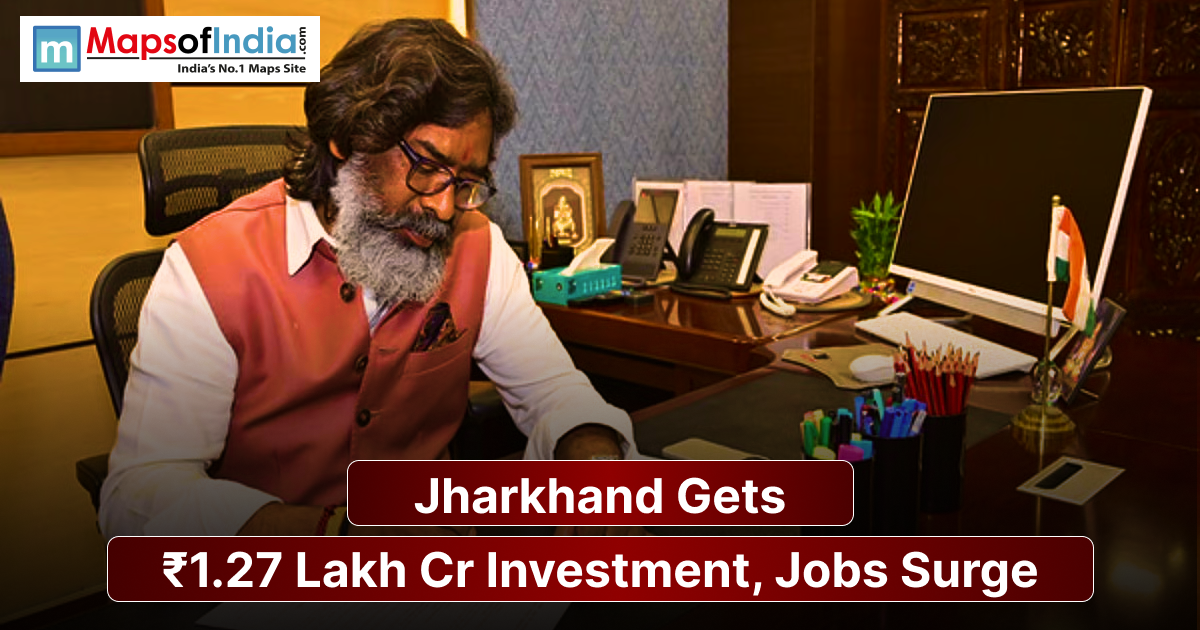
The Jharkhand government has been getting investments of about 1.27 lakh crore, and it is one of the highest levels of industrial interest in the state in recent times. This is being regarded as a significant move in the process of converting Jharkhand into a modern manufacturing and green industry hub, and thousands of jobs will come after the projects enter the implementation phase.
Leading industrial groups and companies in the steel production sector, power generation, cement manufacturing, automobile parts, advanced materials and data centres made the proposals according to the officials. The Naveen Jindal Group is a major investor and has reportedly offered a large share of the overall investment, as well as Tata Steel and various other medium-sized manufacturing and energy companies.
The state government indicated that the primary area of the intended investments is on the so-called green steel and the environmentally friendly industrialization, which is consistent with the overall initiative of the Indian government on sustainable production and carbon emission reduction. The officials feel that the change will help Jharkhand to cease its old reliance on mining and supply of raw materials and promote value-added industries and well-skilled jobs.
Chief Minister Hemant Soren termed the proposals as a turnpoint to the state economy, pointing out that industries would grow, hence bringing about better infrastructure, better connections and confidence in business. The government has promised investors to get approvals quicker, easy clearances, and help in the single-window system to make sure that they get projects executed on time.
Creation of jobs is one of the most expected results of the wave of investments. It has been estimated that the suggested projects may localize more than 46,000 direct and indirect jobs, including both skilled technical jobs in the new modern manufacturing plants as well as construction, logistics, and support services. The increased industrial ecosystem is likely to benefit local young people and small enterprises.
Nevertheless, the officials also admitted that such suggestions are still at the memorandum and the intent level, and the actual effect will be based on land allocation, environmental clearances, and financial closures. According to the people in the industry, the size of the proposed investment is a positive one, but coherent policy backing and infrastructure preparedness will be a major determinant of ensuring that promises are converted into a working plant.
Had this been put into practice, the 1.27 lakh crore investment pipeline would go a long way in improving the industrial output of Jharkhand, in terms of economic stability in the eastern India scene, as well as offer long-term employment stability to thousands of families in the state.