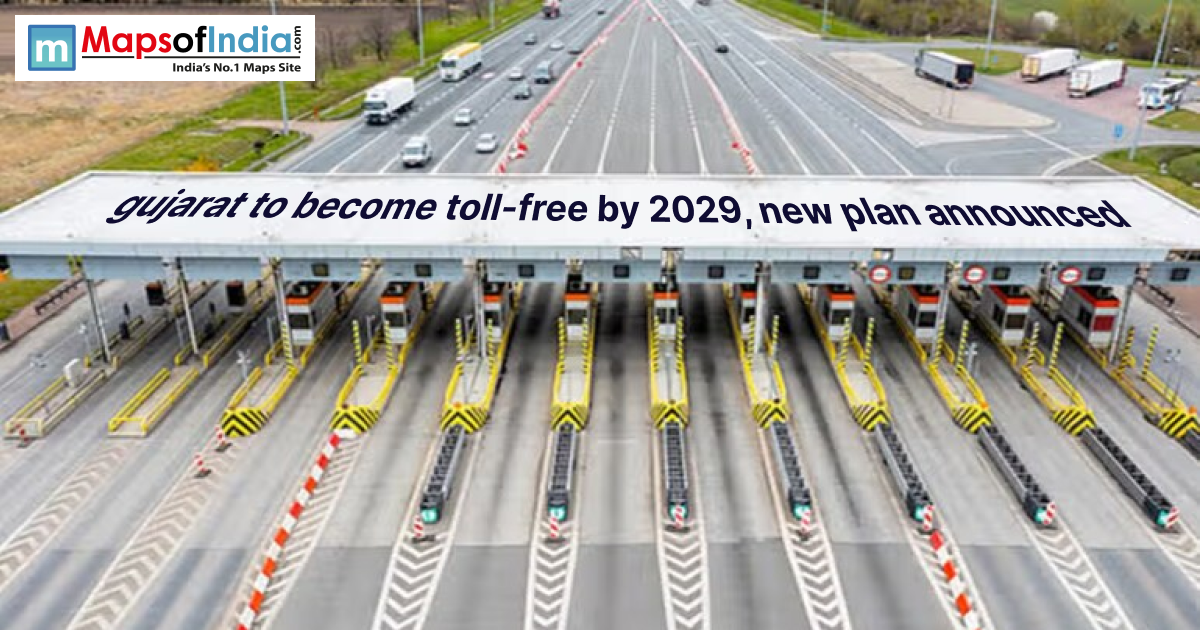
The Gujarat government has also declared that it has ambitious plans to make the highway travel experience in the state barrier-free by 2029 through eliminating the physical toll plazas in the state and implementing a barrier-free toll collection system. The relocation will help to ease traffic, save time on the road, and make road transportation congestion less difficult for motorists throughout the state.
The officials argue that the initiative will be used to upgrade the traditional toll booths into an entirely digital tolling system, which will enable vehicles to travel through highways without the need to stop and pay tolls at the toll booths. Although a charge will still be paid, the funds will be automatically deposited by the use of high-tech electronic infrastructure, which will effectively make the highways consume no-toll roads.
The new system will be based on new technologies, like RFID-based FASTag, automatic number plate recognition (ANPR) cameras, and smart traffic monitoring systems. The tools will scan vehicles when they drive over special toll areas and subtract the toll value automatically from the associated accounts. Consequently, vehicles will achieve the capabilities to proceed with their normal driving speed without the need to reduce their speed and form queues in lengthy queues at the toll booths.
According to the authorities, the plan is a component of a larger project to modernize highway infrastructure and enhance the efficiency of transportation in the state. Long queues at the toll plazas also create traffic jams, particularly during rush hours and during holidays. Elimination of the physical barriers with the help of tools will enable the government to significantly increase the volume of delays and make the travelling process of commuters and commercial vehicles more comfortable. The project will be carried out in stages over a period of years. The system will be implemented across the state. Firstly, pilot projects and technological upgrades will be introduced on selected highways. Provided that the model is successful, it can be an example of implementing highway reforms in other regions of India.
The authorities also emphasize environmental advantages related to the plan. Cars in the toll plazas consume more fuel and emit more emissions. A system free of barriers would enable the constant flow of traffic, which would potentially contribute to the formation of considerable fuel savings and the decreasing number of pollutants in the areas of tolls.
The move has been embraced by transport experts as many nations have already implemented similar multi-lane free-flow tolling systems, which have been mostly successful in enhancing the efficiency of the highways. They, however, emphasize on well built digital infrastructure and a precise vehicle tracking mechanism to facilitate a hassle-free implementation.
Assuming that the plan continues to go according to plan, then Gujarat would be one of the first states in India to roll out a statewide barrier-free tolling network, revolutionizing the way individuals use highways. It is possible that in 2029, the state will progress to a modern, technologically advanced road transport system with commuters enjoying congestion-free commuting.