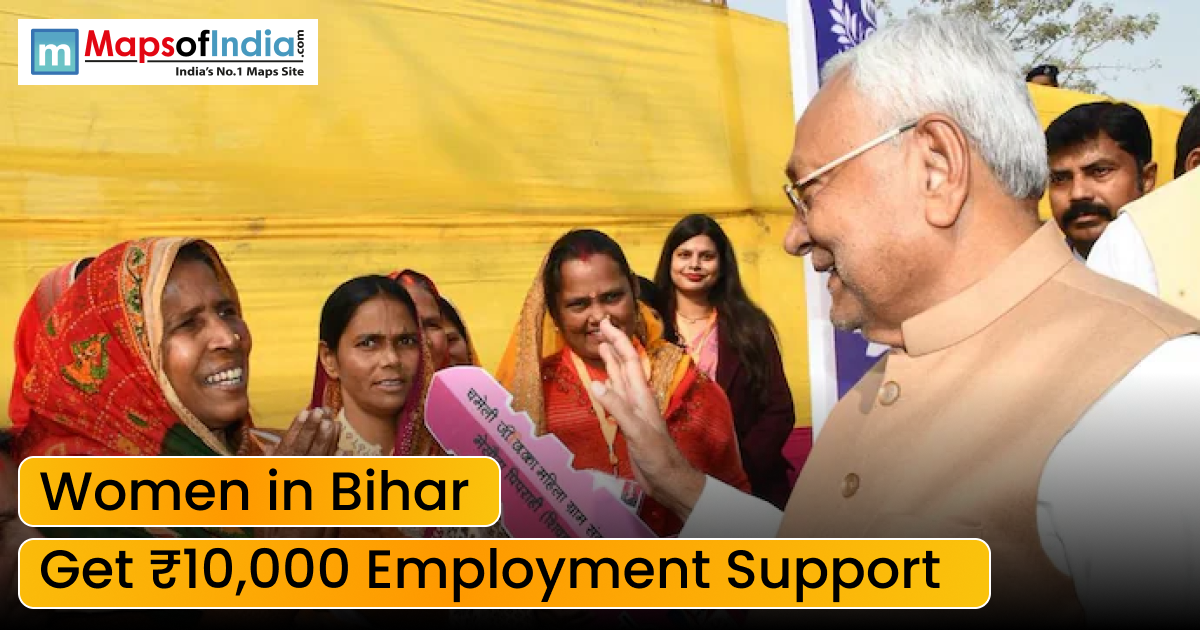
Bihar Chief Minister Nitish Kumar has declared his plan to transfer 25 lakh women in the Women Employment Scheme of the bank accounts of 25 lakh women in the state under the banner of a major welfare initiative that is meant to empower women with their economic needs. Direct Benefit Transfer (DBT) also saw the release of a total sum of 2,500 crore, which became one of the most significant financial assistance programs to the state population aimed at women.
The program aimed at promoting self-employment and entrepreneurship among women will offer the first financial assistance, which can be used by recipients to open small enterprises or income-generating opportunities. It is also assumed that the help will reach those women who belong to the economically weaker families, particularly in the rural regions where employment opportunities are still scarce.
The officials said that the money was directly transferred to the beneficiaries’ accounts to be clear and to provide an opportunity to avoid any delays and intermeddling. The relocation is a component of the larger moves by the government to enhance financial inclusion and promote women-led economic development in Bihar. The amount can initiate small businesses by women, such as tailoring, dairy farming, handicrafts, retail stores, or other related businesses in their local communities, based on their abilities and the local requirements.
According to the statements of Chief Minister Nitish Kumar, women should be empowered economically so that the overall development of the state can be achieved. By empowering women to earn their own, the government feels that not only will the household income be enhanced, but also, it will lead to social and local economies. The scheme also targets more women to join the labour force and, at the grassroots level, to become entrepreneurs.
The authorities stated that this was not a single project. Women who manage to use the initial financial support and continue with income-generating skills can be offered further support in other stages of the program. This is a gradual strategy to provide long-term jobs instead of short-term financial assistance.
The news has caused much publicity in the state, with most people considering it as one of the biggest strides toward inclusive development and empowerment of women. Policy analysts observe that direct financial assistance schemes can be very effective in influencing the rural economies, as they increase the purchasing power and promote micro-enterprises.
The scheme also has political implications, with the women voters making a huge and influential vote in Bihar. The government will ensure that it is addressing the socio-economic issues of great importance by using employment and economic independence as a measure that will encourage sustainable development.
The ₹2,500 crore transfer has given the Bihar government a good indication that there is a strong drive towards women-based policies. During implementation, the initiative will need to work efficiently to monitor the initiative, provide skills, and financial mentoring so that beneficiaries may convert aid into sustainable livelihoods.