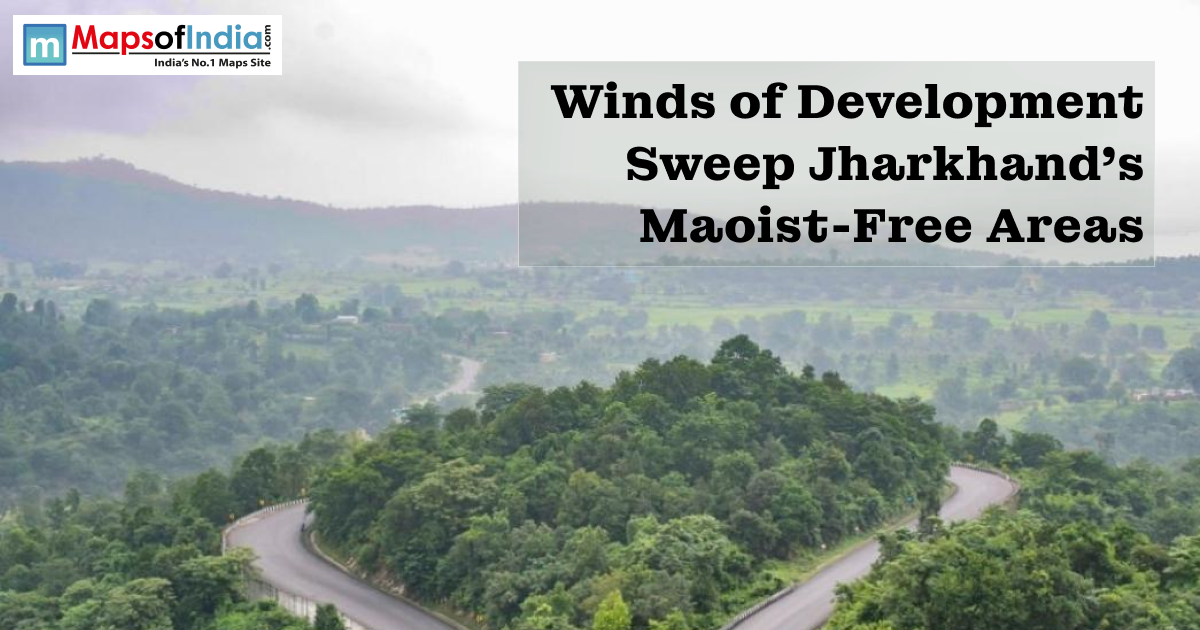
Jharkhand is undergoing a major change as areas that were previously hit by the Maoist (Naxal) insurgency are starting to record a gradual growth. As the security forces manage to minimize the influence of the extremists in much of the state, the government has turned its attention to infrastructure, connectivity and welfare projects in these hitherto underserved regions.
Some of the Jharkhand districts have been in the Red Corridor of India for decades, where the Maoist activities have hampered the governance and the developmental projects. The lack of a good road network, inaccessibility to medical services and education, and lack of administrative capacity characterized the daily life in most of the tribal and remote areas. Nevertheless, a long-term counterinsurgency approach over the years has undermined Maoist networks, which allows the residents and the officials to feel secure.
Authorities have also hastened infrastructure projects with better security. The development of roads has become one of the priorities, which is expected to unite the far-off villages with the district heads and markets. More connectivity will improve local economies, access to basic services, and connectivity of these areas to the bigger development system.
Besides the roads, the growth of mobile networks and internet services is also closing the digital divide. Telecom towers are being set up to make sure that people are able to access online education, digital banking, and government services. This online ambush is especially significant among the younger generations who are finding other ways of earning a living other than the conventional ones.
There is also a new focus on healthcare and education. The government is establishing health centres, improving schools and making sure that the remote areas have teachers and medical personnel. In other instances, the territory that was once conquered by security camps is being reused as community space, which signifies the transformation of war into development.
The officials state that it is not merely about the physical infrastructure but about the improvement of governance. Housing, employment and food security welfare programmes are now being made available to beneficiaries more efficiently due to better administrative accessibility and computer systems.
However, analysts warn that this will only ensure peace is maintained by working hard. It is important to eliminate the root causes of problems like poverty, unemployment, and social inequality so that any form of extremism does not resurface.
The current transformations in Jharkhand indicate a shift in policy on a larger scale- from security-based interventions to inclusive development. With roads widening, connectivity increasing, and the provision of public services extending further into the rural regions, the Maoist free regions of the state are gradually becoming stable and growing, bringing new hope to the regions that have been left behind.