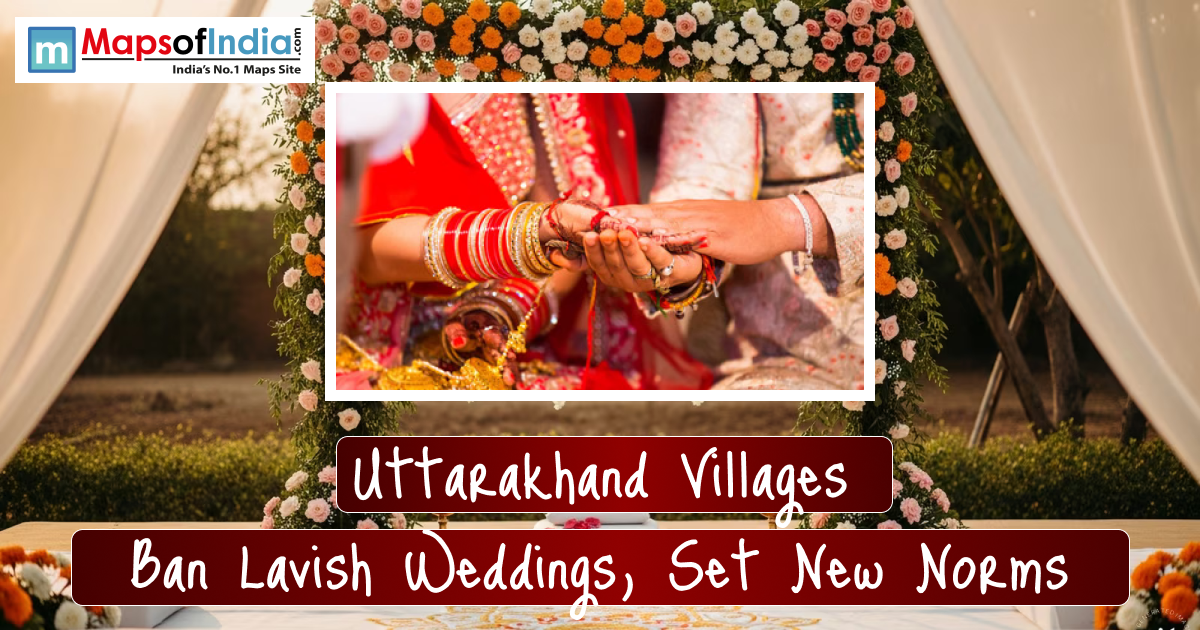
To control the high wedding costs and maintain the traditional values, some villages in Uttarakhand have come up with stringent new regulations for the marriage ceremonies. The rules forbid the application of commercial wedding points, alcohol, and fast food at weddings and the number of jewellery items women should wear during wedding ceremonies.
Village councils (gram panchayats) in rural and tribal regions have made the choice, especially in such areas as Chakrata and the Jaunsar-Bawar belt. According to the local officials, the regulations came into place following the community consultations that uncovered increasing issues of escalating wedding expenses and societal pressure on families to put on expensive celebrations.
According to the new regulations, marriages should be held in the villages or in some other traditional community area, and it is not advisable to have the ceremony at the commercial wedding venues or resorts. The consumption of any type of alcohol has been absolutely prohibited in weddings and other associated events. Also, the contemporary fast foods like pizza, burgers, chowmein and momos are no longer promoted, but families are advised to prepare the local food instead.
The most popular rule is the ban on jewellery. The women who attend such a wedding ceremony are allowed to carry with them five pieces of jewellery, such as the mandatory earrings, nose rings, mangalsutra, ankle rings or rings. According to the explanations by the village elders, the rule is meant to minimize unwarranted rivalry and financial strain due to the exhibition of costly gold jewellery.
The laws also contain restrictions on the gifts given during a wedding. Silver coins, luxuries and costly dry fruits have been discouraged as expensive gifts. Rather, the families are recommended to swap common and traditional goods, such as food grains or other necessities, facilitating equality and affordability.
Village councils have threatened to impose hefty fines for breach of these rules and, in certain incidents, some social punishments like a social boycott of non-compliant events. This will primarily be enforced through the community, which will make the initiative a community-driven program instead of being a top-down administrative mandate.
The decision has been well received by many residents because it will help to revert weddings to their original form of social and cultural ceremonies, rather than an expression of affluence. Nevertheless, others have expressed the issue of personal liberty and the feasibility of exercising such norms.
The relocation is indicative of a larger trend in rural India, in which communities are making more and more efforts to streamline social behaviours, decrease the amount of money spent by families, and maintain cultural values in the face of the evolving environment.