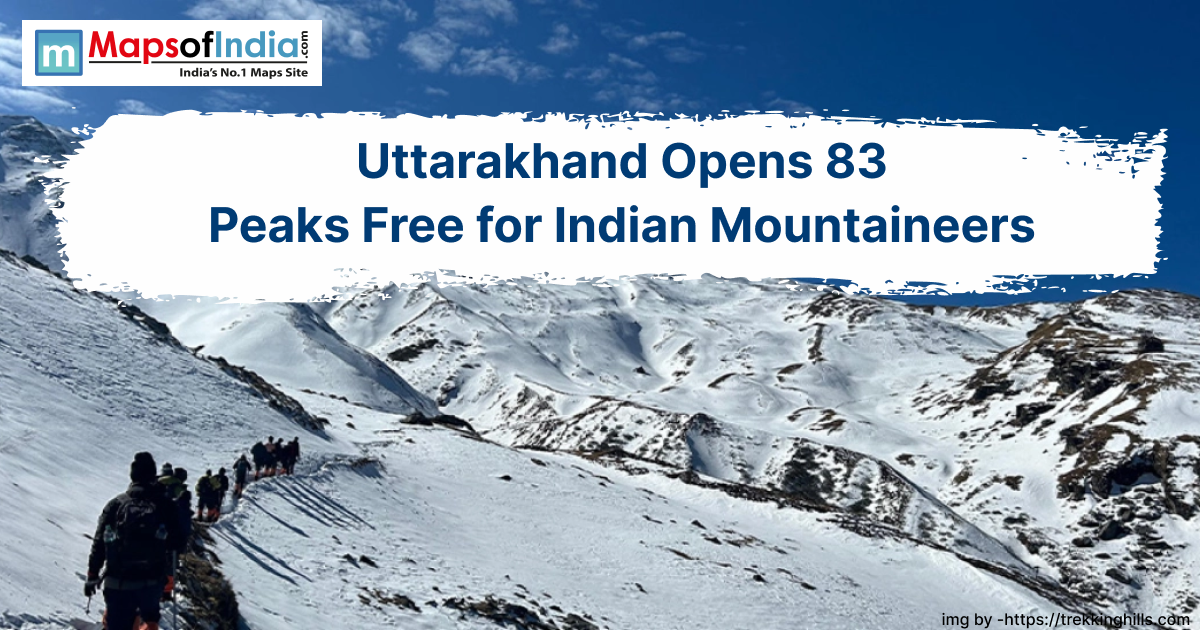
A big push to the adventure tourism sector and the grassroots mountaineering, the Uttarakhand government has recently declared that Indian climbers would be free to climb the 83 Himalayan peaks in the state with no peak or expedition charges. The transition will focus on rendering high-altitude mountaineering affordable and accessible, especially to the youthful climbers, training schools, and home-based adventure teams.
With the new policy, Indian nationals will not pay any charges that are charged by the state, like peak fees, camping fees, or environmental fees on expeditions to the chosen summits. According to the authorities, the move is meant to bring more people into the field of mountaineering and position Uttarakhand as a leading adventure sport and alpine training destination.
The 83 peaks spread across the Garhwal and Kumaon Himalayan ranges, as well as a high-altitude spectrum that includes mid-range technical climbing and high-altitude climbing that exceeds 7,000 metres or higher. Some of the popular mountains in the initiative include Nanda Devi East, Kamet, Trishul, Shivling, Chaukhamba and Satopanth. The varying terrain and the level of difficulty should appeal to a group of climbers of different levels of experience, including intermediate mountaineers and professionals.
Although the Indian climbers will enjoy the fee waiver, the foreign nationals will still pay the expedition charges as per the guidelines that are given by the Indian Mountaineering Foundation. The state government has made it clear that all climbers, irrespective of their nationalities, are still required to follow the safety measures, environmental policies and permit policies to guarantee responsible and sustainable tourism in delicate high ecosystems.
The process of application of climbing permits will be undertaken under the Uttarakhand Mountaineering Permission System, by which the expedition organizations and individuals submit the route plan, team information, and safety arrangements through the internet. Governments will still keep a track of the expeditions in such a way that they have a check on the environment and that the climbers adopt the set of regulations concerning their waste disposal and conservation.
The tourism and sports authorities are of the opinion that the policy will create a massive economic boost to the remote mountain areas by raising the number of visitors as well as offering job opportunities to the locals in the form of guides, porters, hospitality providers, and transportation service providers. Better footfall is also likely to boost homestays, base camp services and small businesses in high altitude districts.
The project is part of the larger plan to make Uttarakhand a national adventure tourist destination and outdoor sporting location in the state. By reducing the entry barrier of the Indian mountaineers, the government is optimistic that it will develop in-house talent, the strength of the mountaineering institutions, and responsible exploration of the Himalayas.
As 83 free peaks were opened up to Indian climbers, Uttarakhand has made a major stride in ensuring the world of high-risk adventure is more inclusive, and the growth of tourism is made to go hand in hand with environmental management.