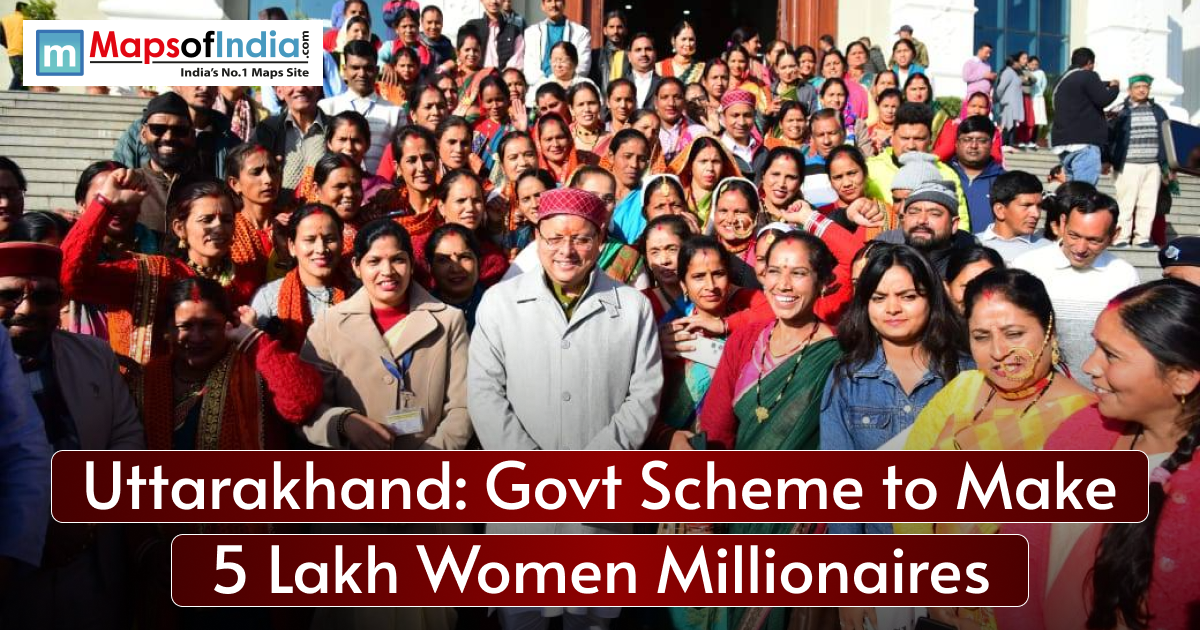
The government has introduced a transformational livelihood scheme in a huge move to empower women and enable them to become close to a million women. The project aims at empowering women, especially rural and semi-urban women, to establish sustainable sources of income by means of entrepreneurship, skill building, and financial inclusion.
The scheme mostly focuses on the women who are affiliated with the Self-Help Groups (SHGs), and this is the scheme that tries to enable these individuals to make good incomes by providing them with small businesses and local enterprises. The government plans to make women beneficiaries have a stable and high annual income by giving them some form of structured support, training and access to markets, and this way they will be economically independent.
The women are being empowered under the programme to engage in income-generating businesses like agricultural-based businesses, animal rearing, dairy farming, tailoring, handicraft, food processing, retailing services, and small-scale production. The government is also providing skills development training, financial aid, cheap credit, and mentorship to enable women to grow their businesses to a higher level.
According to the officials, the scheme is beyond the conventional welfare schemes and aims at creating wealth and entrepreneurship. Rather than offering periodic benefits, the effort will provide long-term earning power among women by exposing them to markets, enhancing product quality, and fostering branding and online selling.
The programme is already producing encouraging outcomes in the states where similar patterns have already been adopted, and thousands of women have already made important steps in their earnings. Based on this achievement, the government has today laid a challenge of empowering 5 lakh women so that they can earn at a level that allows them to be in the category of emerging small entrepreneurs in the country.
Analysts hold that the project may be quite instrumental in enhancing rural economies, empowering women to work, and decreasing income inequalities. The scheme also empowers households, leads to better educational outcomes of children and overall development of the community by empowering the women financially.
The government has termed the programme as a pillar of a women-based development programme, which would go hand in hand with national objectives of gender equality and inclusive development. Authorities also included that frequent monitoring and assessment systems are being established to make sure that there is transparency and effective application.
The scheme will beneficially not only in transforming the economic position of lakhs of women, but it will also reorganize the role of women as creators of jobs and not seekers of them, a significant milestone in the Indian quest for women’s empowerment.