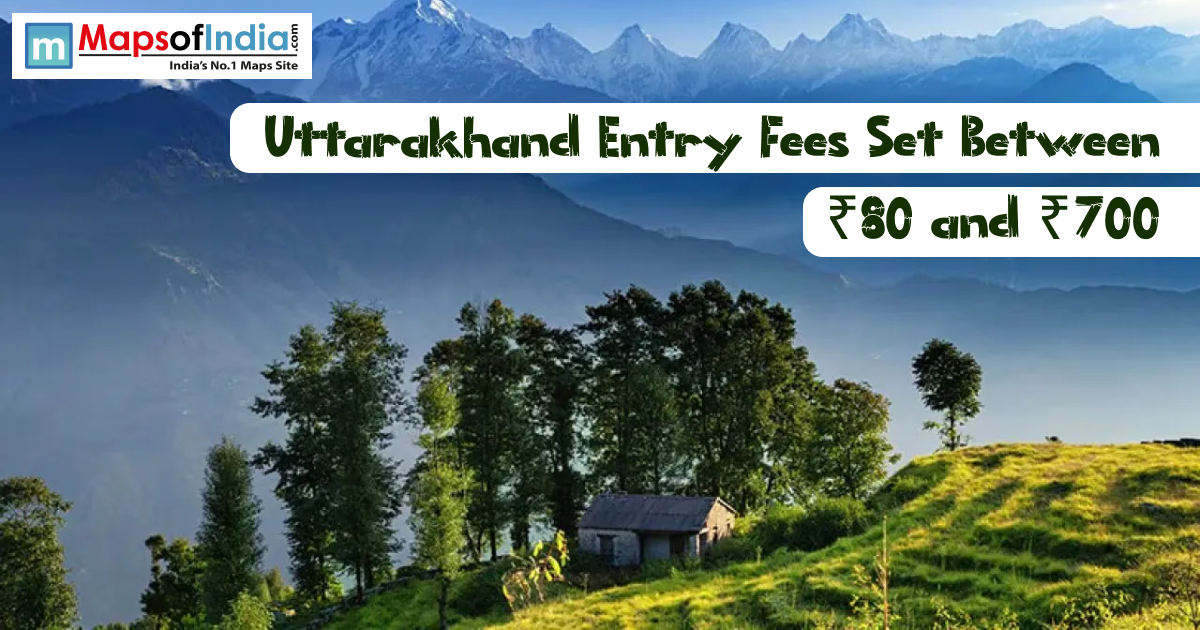
The accessibility of Uttarakhand by road will become costlier since the state government has initiated a new entry fee, otherwise called green cess on vehicles entering the state. New prices are set between ₹80 and ₹700 according to the nature of the vehicle and its size. The relocation will help to inhibit pollution, ease the strain of traffic and preserve the delicate Himalayan ecosystem.
The green cess will be applicable to out-of-state vehicles that enter Uttarakhand at its border checkpoints, according to the officials. The government has made it clear that the fee is also a component of its overall environmental protection policy, particularly considering the large number of tourists that the state receives annually during pilgrimage seasons and peak holidays.
In the new arrangement, cars, taxis, and light motor vehicles will be required to pay an entry fee of about 80 or above. There will be a higher charge for buses and medium commercial vehicles, but heavy goods vehicles and trucks will get the highest charge of up to ₹700. This is dependent on weight, category of vehicle, and usage. The charge in the majority of cases will be over a short period of time (like 24 hours), and there will be possibilities to get longer-term passes at a greater price.
The Uttarakhand government has installed Automatic Number Plate Recognition (ANPR) cameras at all significant entry points to facilitate easy and transparent collection. The entry fee will be deducted automatically by FASTag, and therefore, there is no need to pay by hand; hence, congestion at the border check posts will be reduced.
There are, however, a number of types of vehicles that have been spared from the green cess. These are two-wheelers, electric vehicles, CNG-powered vehicles and other necessary services like ambulances, fire tenders, defence vehicles, and government vehicles. The fee framework has also been spared the agricultural vehicles and some special-purpose vehicles.
The government officials indicated that the revenue collected by the green cess will be utilized in protecting the environment, waste management, road repairs and the development of infrastructure in tourist-intensive places. The government hopes that the move will make travellers choose more environmentally friendly means of transport and will help combat the growing environmental strain resulting from the growing vehicular traffic.
Although the move has elicited varied responses among travellers and transporters, the environmental experts have also praised the move, describing it as a step that should be taken so as to harmonize the growth of tourism and sustainability. As Uttarakhand is increasingly gaining visiting numbers each year, the entry fee policy represents a major step in making the hill state environmentally conscious in regard to the management of the travelling business.