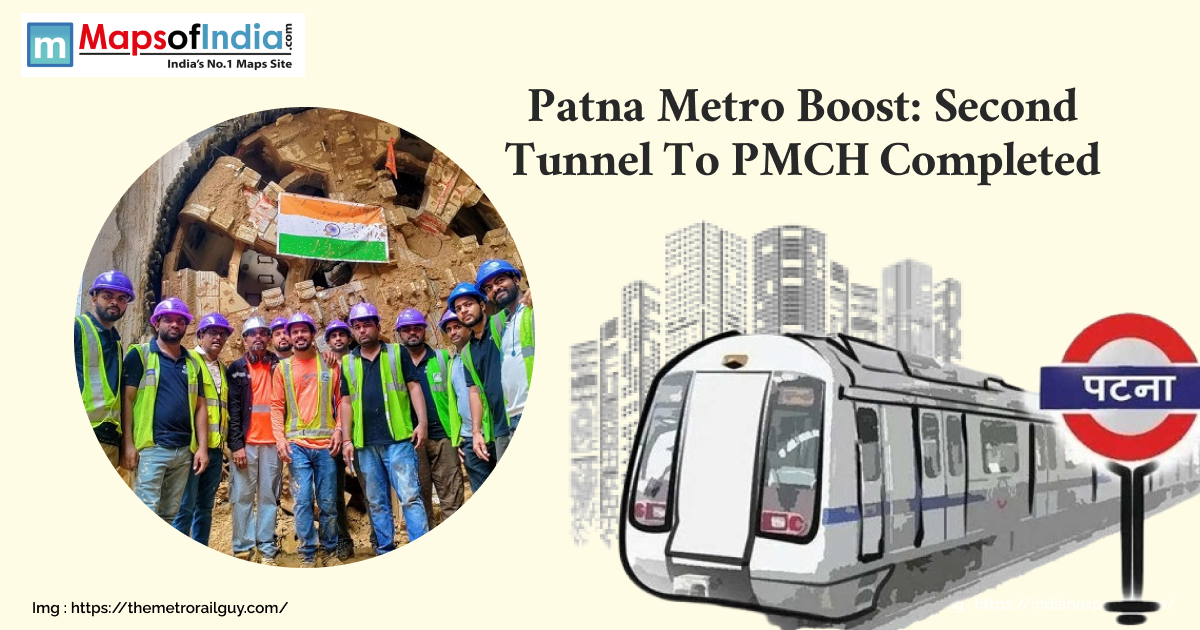
The Patna Metro Rail Project has reached a major milestone in its construction (the second underground tunnel), which has culminated in the Patna Medical College and Hospital (PMCH) station. According to the officials, the milestone is a significant improvement in the progress of the metro project, especially on the Corridor-II (PC-03), where the underground engineering operations are some of the most complicated in the state.
The Tunnel Boring Machine (TBM) that has been tunnelling beneath densely populated sections of the city is what has made this breakthrough possible. This leaves the two tunnels that were needed in the PMCH underground section structurally complete. Engineers referred to the development as a moment of momentum for the metro because the parallel development of stations, laying tracks, and installations of the system can now be developed at a quicker rate.
The tunnel route to PMCH is believed to be one of the most technically tricky areas of the Patna Metro network, with overcrowded roads and outdated buildings, with important medical and educational facilities being situated there. Regardless, the TBM was able to bore the tunnel through the conditions without affecting the surface activities, and that is a plus to the safety and continuity of the residents and operations of the hospital.
The DMRC officials handling the project mentioned that the TBM part will be ready to continue with the construction and integration of the systems in the next six months, with the completion of the second tunnel. This stage will entail the laying of tracks, installation of electrical systems, building of platforms and preparation of tunnels to be tested during subsequent stages.
The PMCH station will be strategically located since it will be serving one of the busiest medical centres in Bihar. The station will go a long way in relieving the commuting challenges of thousands of patients, healthcare staff and students, as well as local commuters once it is operational. It will create a crucial connection between places like Rajendra Nagar, Gandhi Maidan, Patna University, and Akashvani, thus making things more connected within the underground corridor.
The metro project, with its combination of elevated and underground routes, is an attempt to transform the urban mobility image of Patna by eliminating congestion and providing modern and fast transportation, as well as environmentally friendly transport. Tunnelling is now underway at various locations, with the officials very confident that the time frame on the project will be accelerated.
The development has been embraced by residents and local businesses with optimism that the metro will help them in the long run to get out of traffic jams and congested roads. With the progress of construction, it is possible to expect even more breakthroughs that are to be made in the next months, and Patna continues its transformation to a modernized metropolitan mobility system.