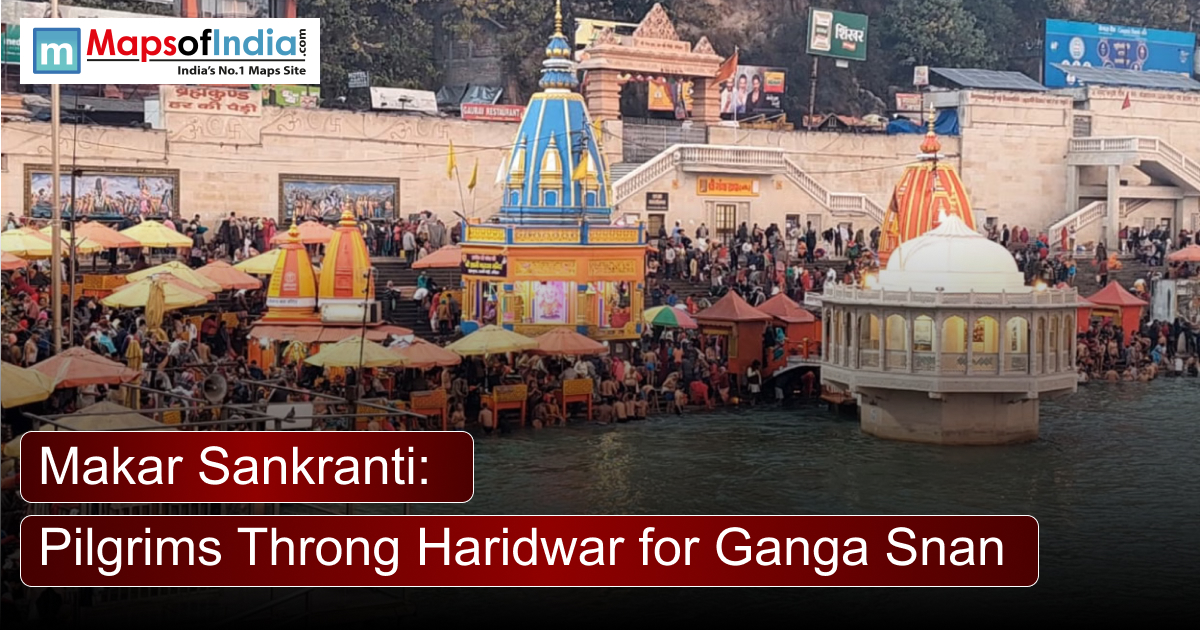
The Makar Sankranti brought a huge number of worshippers to Haridwar, where thousands of people flocked along the shores of the Ganga River to have a holy bath despite the biting cold and the chilly winds. Pilgrims started coming to Har Ki Pauri and other great ghats in the early morning hours of the morning which was one of the most important religious celebrations in the Hindu calendar.
In mid-January, Makar Sankranti, which is celebrated annually, denotes the change of the sun to the zodiac sign Makara (Capricorn) and the onset of increased days. The festival is of great spiritual essence, and taking a dip in the holy Ganga on this day is said to purify sins, instigate spiritual goodwill, and give rise to prosperity and good fortune.
The attitudes of faith did not deprive, even in the conditions of low temperatures and cold waves, which dominated the country. Shawls, woolen clothes and blankets were used to wrap the devotees who patiently waited until their turn came before going into the icy waters. Most of the rituals were done early in the morning, with their prayers and water to the rising sun, observing hymns and mantras upon the banks of the river.
The management ensured that they made detailed preparations to deal with the huge numbers of people and security measures. There were also massive deployments of police staff, home guards and volunteers to control people’s movement in the ghats and eliminate overcrowding. The use of barricades, specific areas of bathing, and constant announcements ensured order during the peak hours of the ritual bathing.
Medical teams and ambulatory services were deployed at strategic places, too, in order to render help to pilgrims, particularly the elderly and children who were more susceptible to the cold. Tents, drinking water points, and toilets were also installed to help the smooth running of the events.
Authorities claimed that the demonstration was peaceful, and no significant groundless events were reported. The free interaction between the local government, the police and the religious groups was critical in managing the large number of people.
The three-day festival once again reflected the strong cultural and spiritual bonding the devotees have with the Ganga. To most pilgrims, the hard weather is considered to be a challenge of faith and devotion, and it makes the pilgrims believe that spiritual fulfilment is more important than physical suffering.
Makar Sankranti festivities ended with happy people who were so pleased to be able to carry out the holy ritual. It was the festival that not only reestablished old traditions but also revealed the spirit of faith that has been continuing to attract millions to Haridwar every year.