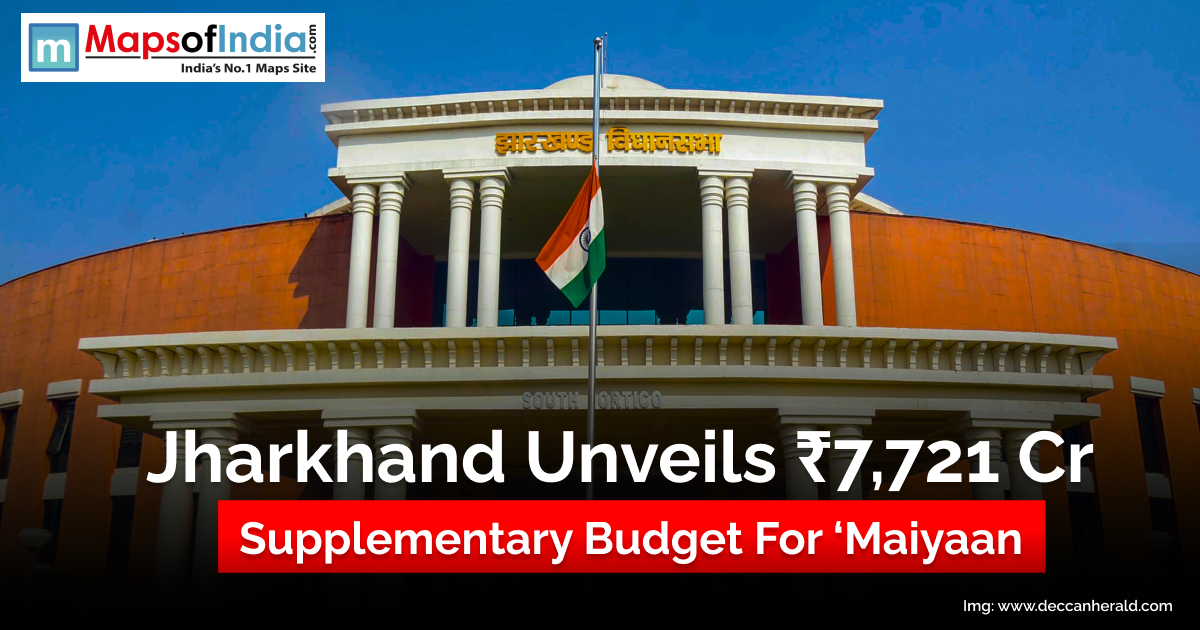
On Monday, the Jharkhand government tabled an additional budget of 7,721 crore in the ongoing financial year, which is strengthening its theme of welfare-based governance and women-based programs. The supplementary budget, introduced in the state assembly at the winter session in Ranchi, is to offer more financial aid to priority areas and new agendas that were not adequately addressed in the annual budget.
One of the key attractions of the supplementary budget is that it pays so much attention to the scheme of Maiyaan, which is a women’s welfare program that aims at providing direct monetary assistance to the needy women of the state. Out of the added funds, the government has allocated a large section of the funds to the Women and Child Development and Social Security Department, which means that the programme is an important part of the overall welfare strategy of the government. One of the flagship initiatives of the state has turned out to be the “Maiyaan” scheme, offering monthly financial aid to women and mostly to the economically weaker and marginalized groups. With the help of this programme, thousands of women will be able to achieve financial independence, enhance their economic stability in the family, and become more active participants in the financial life of the state.
The additional budget also demonstrates the efforts by the government to empower the continued welfare programs, cover the shortfalls in budgets of major departments and address urgent developmental requirements. This involves a greater rural development allocation, social security, government services, and programs, which have a direct effect on vulnerable groups. This is, however, centred on the need to make sure that the “Maiyaan” scheme is well funded to help it carry on with its outreach and broaden its base of beneficiaries.
The way the budget was presented elicited political responses within the assembly, with the members of the opposition challenging the priorities of the government. Opposition members claimed that the budget had very few allocations to important sectors of the economy, like agriculture, infrastructure and education. They attacked the government over its overdependence on the welfare plan and the supposed inability to plan long-term development. In spite of the criticism, the ruling side justified its methods, saying that the welfare programs, such as the Maiyaan ones, are a crucial back-up program to millions of families and help to decrease the socio-economic inequalities.
The additional budget has been passed, and the government is projected to accelerate the processes of funds allocation and implementation within the next few weeks. The effectiveness of the allocated funds and the beneficiaries, especially women who will be covered by the scheme of Maiyaan, will determine the success of the budget in the end. The contributions of the upcoming months will be instrumental in deciding on the social and economic context of the wider effects of this additional financial stimulus.