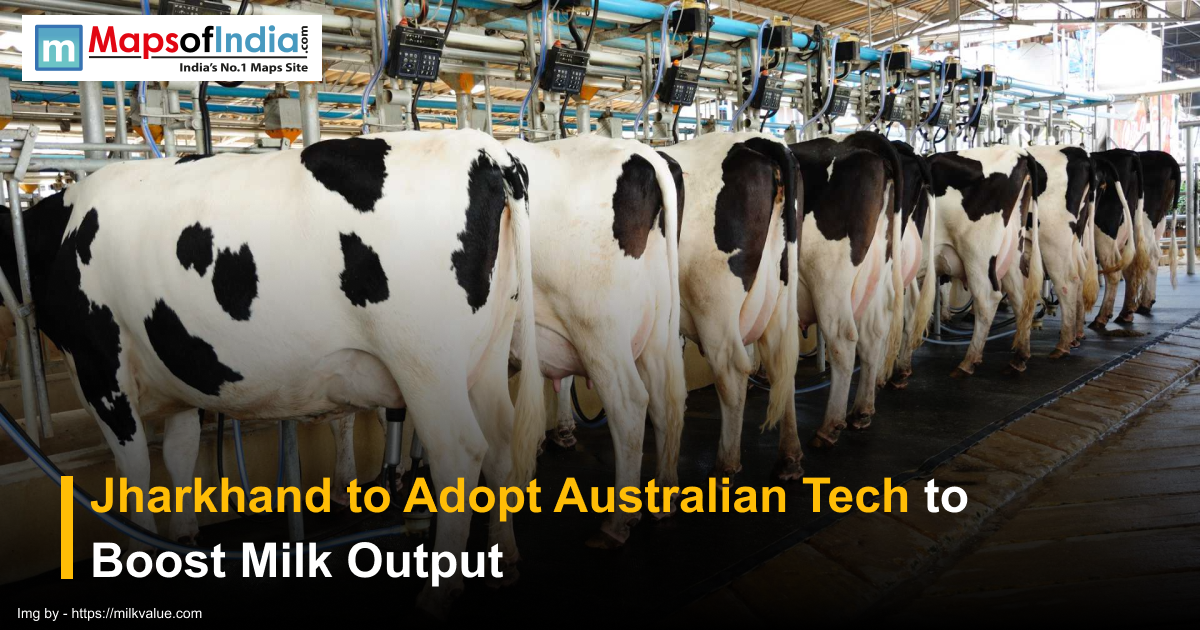
The Jharkhand government has prepared a major boost to the livestock and dairy sector when it announced that it will soon upgrade the animal husbandry technology in Australia with the intention of boosting milk production in the state by a huge margin. The relocation will help thousands of cattle farmers increase their production, breeding and efficiency of their farms.
The move was arrived at after consultations between the Department of Animal Husbandry of Jharkhand and the Australian livestock and agriculture industry officials. Australia has a reputation worldwide of having modern dairy farming systems, breeding practices that are scientifically advanced and livestock management systems that are efficient. Through these technologies, Jharkhand envisions enhancing its techniques of animal rearing and boosting the economy of the rural people.
One of the areas of the suggested cooperation is breed improvement. Genetic selection, artificial insemination and herd management techniques, which are practiced in Australia, are likely to be used to come up with healthier and more efficient cows. This might lead to an observable increase in per-animal dairy production, which has been relatively small in some areas in Jharkhand as opposed to the national levels.
Besides reproduction, other transfer of technology might also involve advanced practices associated with the feeding of animals, animal diseases and farm fittings. The lifespan and productivity of livestock can be enhanced through proper feeding systems, frequent health check-ups, and scientific housing procedures, which have direct effects on the incomes of farmers.
State authorities indicated that knowledge-sharing and training initiatives could be implemented so that the local farmers and veterinary personnel can successfully operate the new technology. The introduction of workshops, demonstration farms, as well as expert-led sessions could be implemented to introduce farmers to the modern trends in dairy management that have been effective in Australia.
Animal farming is a significant additional income for the farmers in Jharkhand, particularly in the rural and tribal regions. As farming is largely reliant on monsoons, livestock rearing is a way to offer year-round sources of income. The government is convinced that not only will the earnings of farmers increase based on more milk production, but the dairy supply chain will also be enhanced in the state.
The project is also part of the wider changes to ensure the increased self-sufficiency of Jharkhand in terms of milk production and minimizing reliance on the supply of other states. When introduced properly, the adoption of the Australian animal husbandry technology would be a tipping point for the dairy industry in the state, which would continue to have a lasting impact on both the farmers and the rural population.
Currently, officers will provide more information on schedules and implementation plans in the next few months.