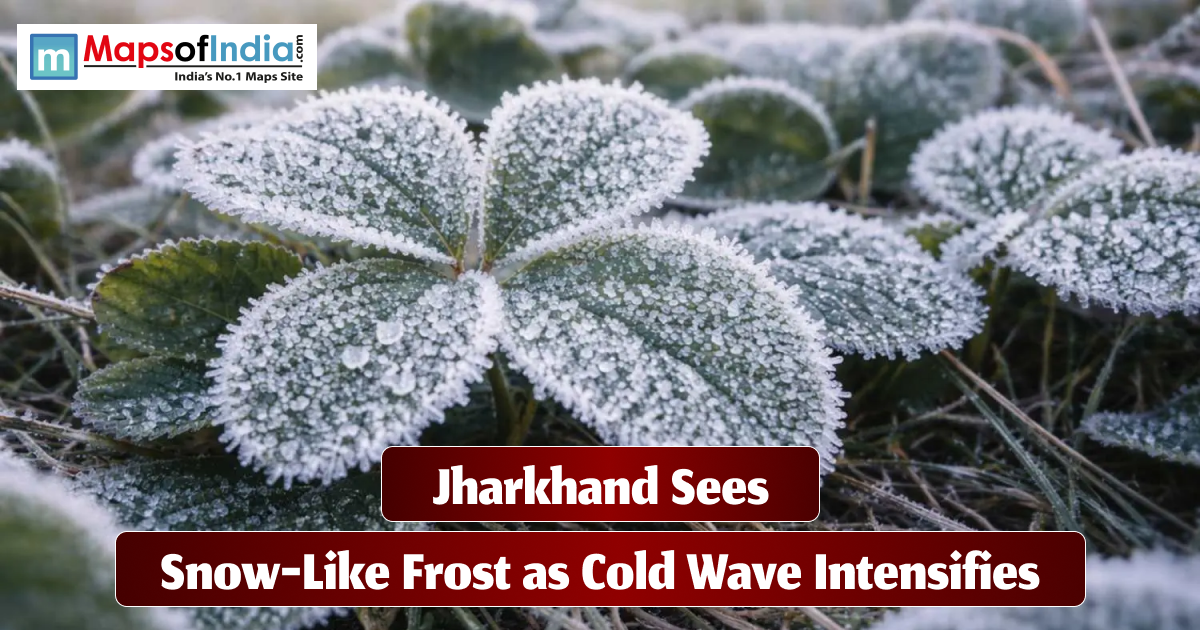
Jharkhand is already in the grip of a severe cold wave, and some districts of the state are witnessing a rare occurrence as agricultural fields and open spaces are visible and covered with a white, snow-like film. Although the actual snow does not fall on the state, the night temperatures are very low and frost is formed, which makes fields frozen in the appearance of snow in early morning hours.
Weather officials reported that in some areas of Jharkhand, there was a minimum temperature that was approaching or below the freezing point over the last few days. Ranchi, McCluskieganj, Khunti, Gumla, Lohardaga, Simdega and West Singhbhum were the areas where a severe cold condition was reported. In other parts, it dropped down to around zero degrees Celsius, which is uncharacteristic of the area. With moisture in the air that had frozen on the grass, crops and soil surfaces overnight, a layer of white frost was left, which shocked both the residents and the farmers.
The India Meteorological Department (IMD) has already given a cold wave warning to various districts, and they should exercise caution in the coming days. The situation has also been aggravated by dense fogs in the early mornings and late nights, which have diminished the visibility of the roads and influenced people in their everyday lives. Officials have urged citizens, particularly children, seniors, and individuals with underlying illnesses, not to be exposed to cold over long periods of time.
The abrupt decrease in temperature has caused alarm among the farmers, because frost may destroy the crop that has already been planted, like vegetables, pulses and oilseeds. To reduce such losses, agricultural experts have recommended the use of protective measures such as light irrigation and the use of covers to cover sensitive crops where there is a possibility of loss. The state agriculture department is keeping a close watch on the situation and can issue an advisory in case the situation deteriorates.
The extreme cold has affected the day-to-day life in Jharkhand. In some of the districts, schools have been closed, or timetables have been changed to ensure that the students are not exposed to unfriendly morning weather. Local governments have been instructed to make proper provision in night shelters as well as to offer blankets and warm food to the homeless and vulnerable groups.
The cold wave is caused by meteorologists due to winds of icy conditions blowing in the northern areas and western disturbances in northern and eastern India. Although there is a slight increase in temperatures that would be anticipated after a few days, it is likely that cold conditions would prevail in the short run.
The residents have been encouraged to keep abreast of the weather advisories, wear warm clothes, and take the precautions that are required. With Jharkhand experiencing this extreme winter phase, which is rare and brutal, the authorities have been on their guard to ensure that the winter does not affect the health of people, agriculture, and their normal lives.