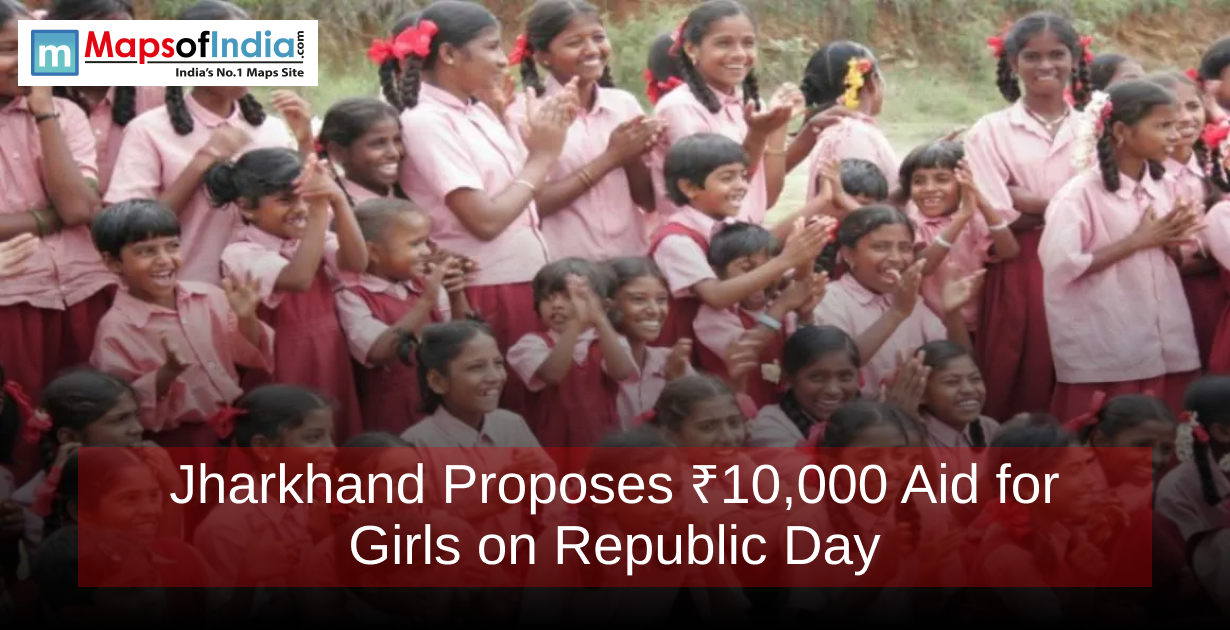
On Sunday, the government of Jharkhand came up with a new financial aid program, which would empower the girls in the state, with the Finance Minister Radhakrishna Kishore announcing that all the eligible girls would get 10,000 rupees under this initiative. This was announced on the state Republic Day celebrations, and it attracted attention to the gender equality and economic support of young women in the government.
In his address to the gathering, Kishore explained that the proposal is meant to encourage the girls to be self-reliant, and also offer them a financial cushion to either fund education, develop business skills or engage in small entrepreneurial endeavours. He pointed out that daughters of the country were equal and demanded equal treatment and support of the girls in Jharkhand, just as assistance schemes were offered to girls in some other states.
State government officials reported that they have already drafted a formal proposal and are planning to get financial support from the central government in order to execute the scheme. Although the announcement has brought about optimism, the authorities had to clarify that although the scheme is still in the proposal stage, it must be approved and funded before it can be implemented.
The 10,000 aid suggested is being viewed as part of a stumbling attempt by the Jharkhand government to enhance the initiatives of women’s welfare programs. The state already implements the Mukhyamantri Maiya Samman Yojana, which allows providing monthly financial aid to women whose age is between 18 and 50 years old and who have an appropriate right to such support. The officials are of the opinion that the proposed change should be improved to be added to the already existing programs to provide a one-time stimulus that would specifically benefit girls.
According to policy analysts, other states with comparable financial assistance programs have been observed to assist in enhancing school attendance, promoting skills training and assisting women to establish small enterprises. Nevertheless, they also emphasize effective eligibility requirements, open implementation and prompt payment so that the benefits are delivered to the target beneficiaries.
The leaders of the opposition were open to the idea of the proposal and warned the government not to turn it into just a declaration. They demanded a roadmap, budgetary allocation and liaison between them and the Centre to eliminate time waste in implementation.
As of now, the 10,000 assistance plan is a statement of purpose, and it is remarkable how Jharkhand is trying to focus on the betterment and empowerment of girls. The weeks ahead will probably be critical as the state government will deal with the central authorities to get the needed support and bring the proposal closer to implementation.