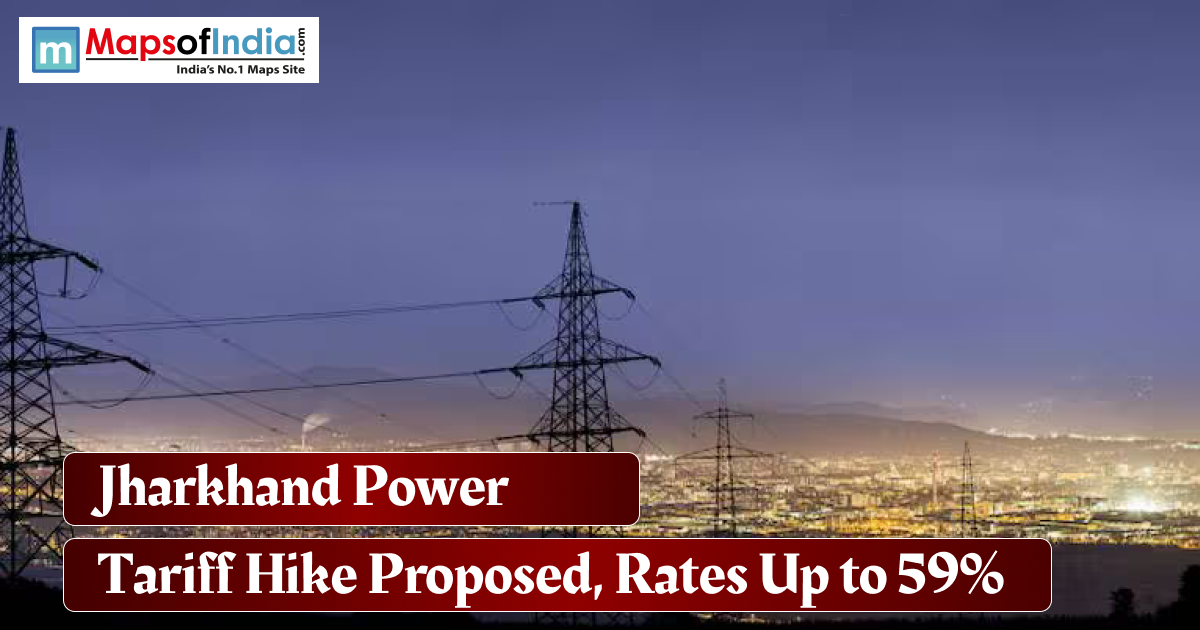
Electricity bills of the citizens of Jharkhand are going to skyrocket soon since the state-owned power distributing company Jharkhand Bijli Vitran Nigam Limited (JBVNL) has plans to raise the tariff by about 59 per cent. This is presented to the Jharkhand State Electricity Regulatory Commission (JSERC) so that the proposal is approved, which will affect domestic, commercial, and industrial consumers.
Officials have said that JBVNL has been demanding an excessive increase to cover the revenue shortfall, which is widening, and to provide financial sustainability of the power distribution system in the state. The utility has attributed increasing operational expenses, escalating power acquisition expenses, as well as years of accumulated losses as the main causes of the planned increment.
In its tariff petition, JBVNL was saying that the existing electricity rates are too low to cover power generation, electricity provision, and maintenance costs. The rise in the cost of fuel, coal transportation expenses and contractual commitments with power producers were also cited by the company as some of the major financial pressures. JBVNL has asked for tariffs to be changed significantly to recover such costs and in order to meet the regulatory and judicial requirements.
Assuming this is passed in the full extent, the electricity rates in Jharkhand are subject to soar with the notification showing that the unit charges are set to be moved out of the current scale of 6-7 to more than 10 per unit as applicable to some consumer groups. The suggested increase would affect the urban and rural households, small businesses, and industries, with the effect of raising the monthly electricity payments in the state.
The proposal is, however, not final. JSERC will now question the petition, investigate the financial claims of JBVNL and hold public objections or suggestions hearings where the consumers and other stakeholders can voice their objections or suggestions. Depending on its evaluation, the regulatory commission can either approve the hike entirely, in part or not at all.
According to experts, over the past years, JSERC has passed tariff increments that are significantly lower than those requested by JBVNL, with consumer interests considered. The power utility wanted to see a significant increase in the tariff, which was only slightly increased by the commission during the previous tariff revision.
The proposed increment is in a period when inflation and cost of living in the household are already on the increase, and the affordability of electricity is among the principal considerations. Consumer groups will be against the steep increase in terms of public consultations, whereby the state government should save the low-income households with subsidies and targeted relief.
The ultimate outcome of the increase in electricity rates will be reached following the regulatory hearings, and the sanctioned rates will probably be implemented from the next financial year.