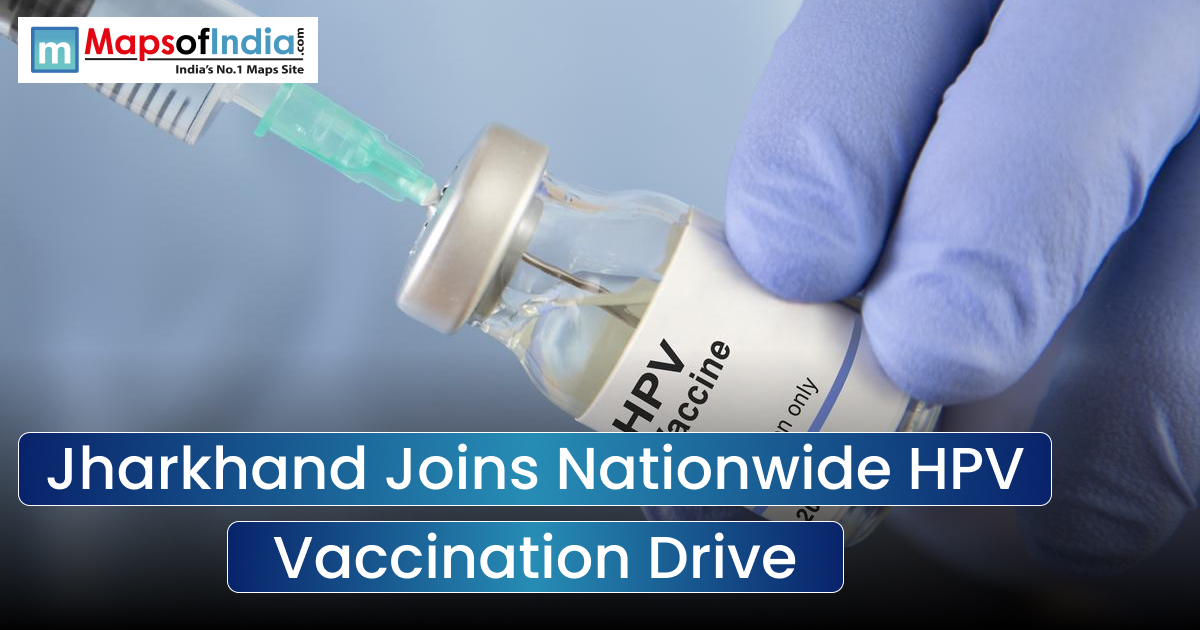
The Jharkhand government has taken a major initiative in the health of women with a massive vaccination of HPV (Human Papillomavirus) against cervical cancer in the state by offering free vaccination to teenage girls in the state. This project is one of a larger country-wide initiative to curb cervical cancer, which is one of the most widespread types of cancer in women in India.
The campaign mainly focuses on girls aged between 14 and 15 years, and they are provided with the vaccine at the government health facilities, like the community health centres and district hospitals. At the event of launch in Ranchi, state health officials stressed the need to vaccinate girls as early as possible to protect them against high-risk strains of HPV that may cause cervical cancer later in life.
Persistent infection with high-risk types of HPV causes cervical cancer and is one of the leading causes of cancer-related deaths in women in India. The most effective method used to minimize the burden of this disease has been the promotion of preventive vaccination recommended by health specialists. It has been demonstrated that the HPV vaccine is safe and effective; moreover, it is most effective when administered prior to exposure to the virus, so the group that is most appropriate to take advantage of the vaccine is adolescent girls.
Through the Jharkhand program, some 400,000 teenage girls will be vaccinated under the cost of the Jharkhand program. Parents or other guardians must give informed consent during the vaccination, meaning that the programme should be voluntary and available. The campaign implementation is taking place in mission mode and over a number of months and will ultimately incorporate the HPV vaccine into normal immunisation programmes.
This is a state-level initiative, which is in line with the vision of the national government to provide free HPV vaccination to girls in India. Some other states have already begun similar programs with hundreds of thousands to millions of girls as a target, which is also a commitment of the country to long-term prevention of cancer.
Jharkhand health authorities are also carrying out a campaign in schools and communities in an attempt to sensitize parents and guardians on the advantages of the vaccine. With the use of vaccination in conjunction with education, the officials expect to cover as many as possible and provide protection as much as possible against cervical cancer in the long-term.
According to experts, this campaign can potentially help achieve a tremendous decrease in the number of cervical cancer cases in the next several decades, which is a milestone in the public health campaign in India. With the free vaccines, extensive knowledge, and government support, Jharkhand is leading by example to other states to join in the war against cervical cancer.