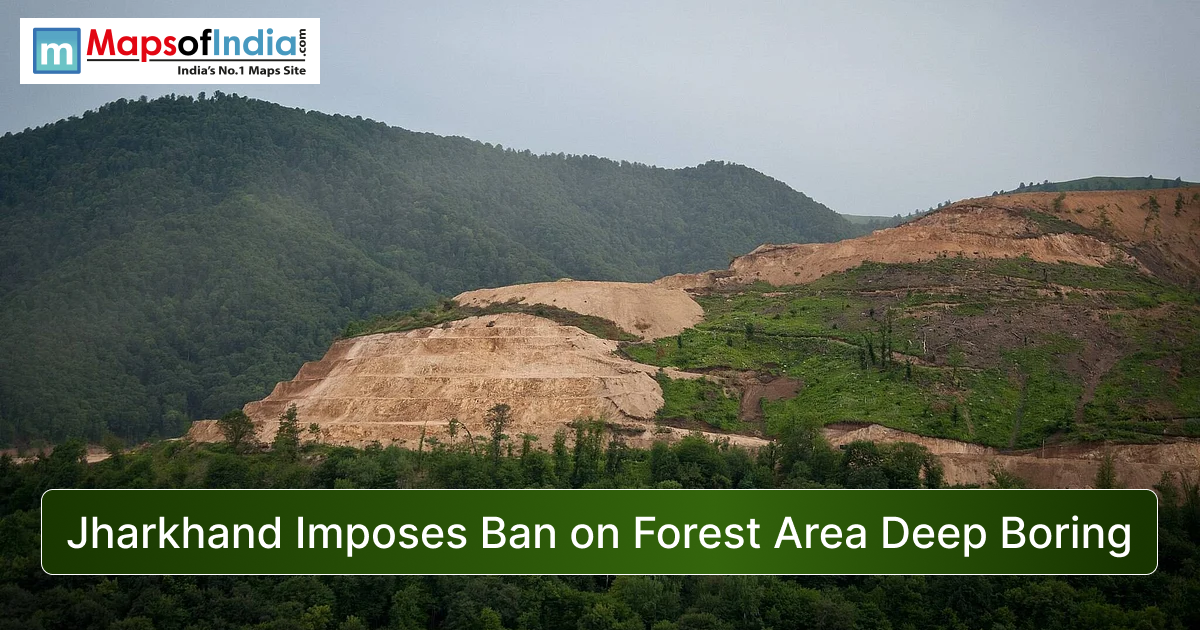
The Jharkhand government has made a significant step towards the conservation of the water resources and environmental protection by banning deep boring in forest lands and limiting the extraction of water from rivers and ponds. The relocation is aimed at containing the increasing worry about the scarcity of groundwater resources and the destruction of natural water bodies all over the state.
Deep drilling and over-drilling in forest areas, according to the authorities, have had severely adverse effects on the underground water resources. These activities disrupt the natural recharge system of water, dry up springs and have an adverse impact on forest ecosystems. Using the new order, there will be no deep boring permitted in special forest areas, whether it is for construction, agricultural or commercial.
Besides the prohibition on deep boring, the state government has also put strict measures on the extraction of water in rivers, ponds and other water bodies. Governments observed that the unmanaged harvesting of surface water has resulted in a lower supply of water, particularly during the summer seasons, which has impacted the rural population, animals and agriculture. The restrictions are intended to make water bodies sustainable sources of drinking water and also to sustain aquatic life.
Green activists have celebrated the move by the government by saying that Jharkhand has been experiencing water stress in some of its districts in spite of its forest cover and river basin. The situation has been further aggravated by rapid urbanization, mining and climate change. The prevention of groundwater and surface water is considered the key to maintaining the ecological balance and securing water in the long run.
According to the officials, the move is in accordance with the guidelines given by the Jharkhand High Court, which has repeatedly emphasized the need to conserve water bodies against abuse and encroachment. The government has threatened to warn those who breach the new rules against serious consequences such as fines and legal penalties.
Although the ruling might be problematic for some development and infrastructure projects, the government has made it clear that the review of the essential public works would be conducted on a case-by-case basis. It will focus on the other solutions like rainwater harvesting, water recharge systems, and sustainable water management practices.
The relocation indicates that the Jharkhand government is increasingly concerned with environmental conservation and good governance. Conservation is one of the priorities of the state, which will help in protecting the natural resources of the state and guaranteeing a sufficient water supply for future generations.