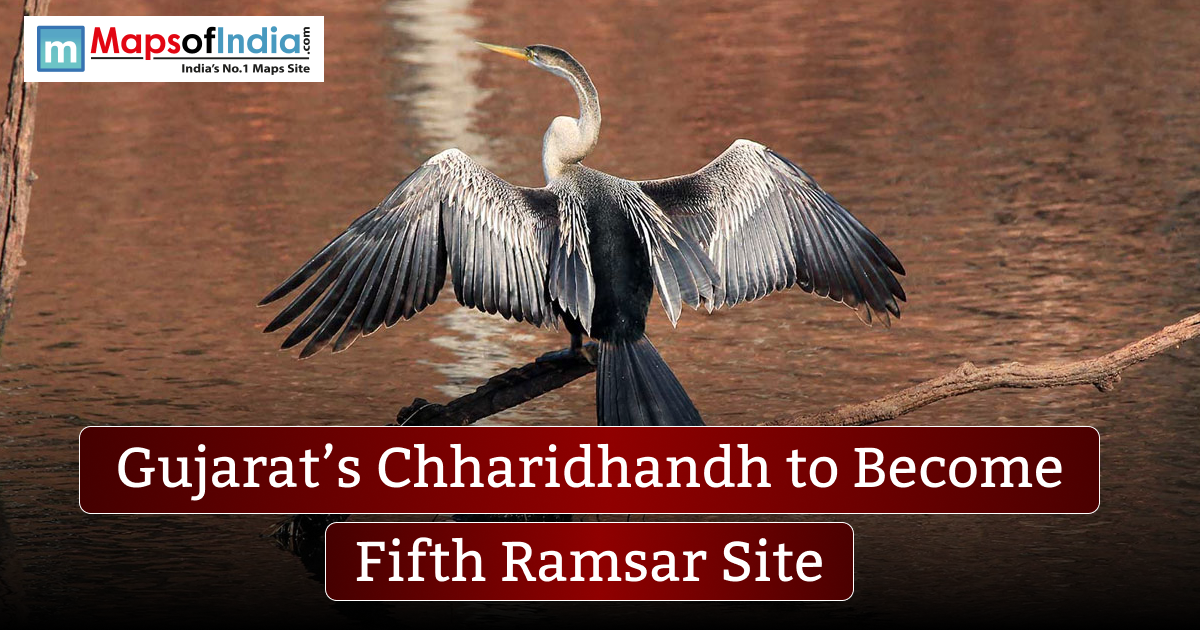
The Gujarat government has also announced that Chharidhandh, a major wetland in the Kutch district, is soon to be declared as the fifth Ramsar site in the state, which will be a milestone in the conservation of wetlands and sustainable tourism development. It is believed that the relocation will help in enhancing the conservation of the ecologically rich region, in addition to attracting nature enthusiasts, scientists and birdwatchers in India and other parts of the world.
A Ramsar site is a wetland that is considered to have international importance under the Ramsar Convention, which is a treaty signed by countries all over the world to conserve wetlands and to ensure their proper use. This recognition assists in attracting international attention, preservation funds, and a chance to do scientific research on the site, which can improve the long-term ecological management of the site.
A seasonal wetland called Chari-Dhandh near the Banni grasslands and the Great Rann of Kutch is called Chharidhandh or Chari-Dhandh. The salty flats at low level are flooded during the season, and this provides a perfect ecosystem with a great diversity of flora and fauna. It is also a big birdwatching and wildlife photography location, most especially because of the existence of thousands of migratory and resident birds in the wetland.
Those species prevalent in the region are flamingos, pelicans, cranes, storks, spoonbills and raptors, as well as some of the threatened and endangered species. Desert animals get served by the region too, like chinkara and foxes, which are a critical ecological link in the barren terrain of Kutch. Chharidhandh is also a conservation reserve, which has been banned since 2008, and the Ramsar status is likely to enhance legal and environmental protection.
Under the new name, Chharidhandh will be added to the existing Ramsar sites in Gujarat, such as Nal Sarovar Bird Sanctuary, Thol Lake, Wadhvana Wetland, and Khijadiya Bird Sanctuary. It is believed by officials that the inclusion of an additional internationally recalibrated wetland will further improve the state’s image as a leader when it comes to environmental conservation and eco-tourism.
Economic benefits are also likely to come to the local communities because of the Ramsar tag. The government will also encourage sustainable tourism projects, including guided birding trails, visitor information centres and better access amenities with minimum ecological implication. These attempts are intended to promote responsible travelling and provide travellers with a job.
The environmentalists have hailed the move, indicating that the international status will help in improving monitoring processes, research and conservation. Gujarat is living in hope that Chharidhandh will become a thriving natural habitat in the future since the environment is being conserved, and tourism will keep advancing.