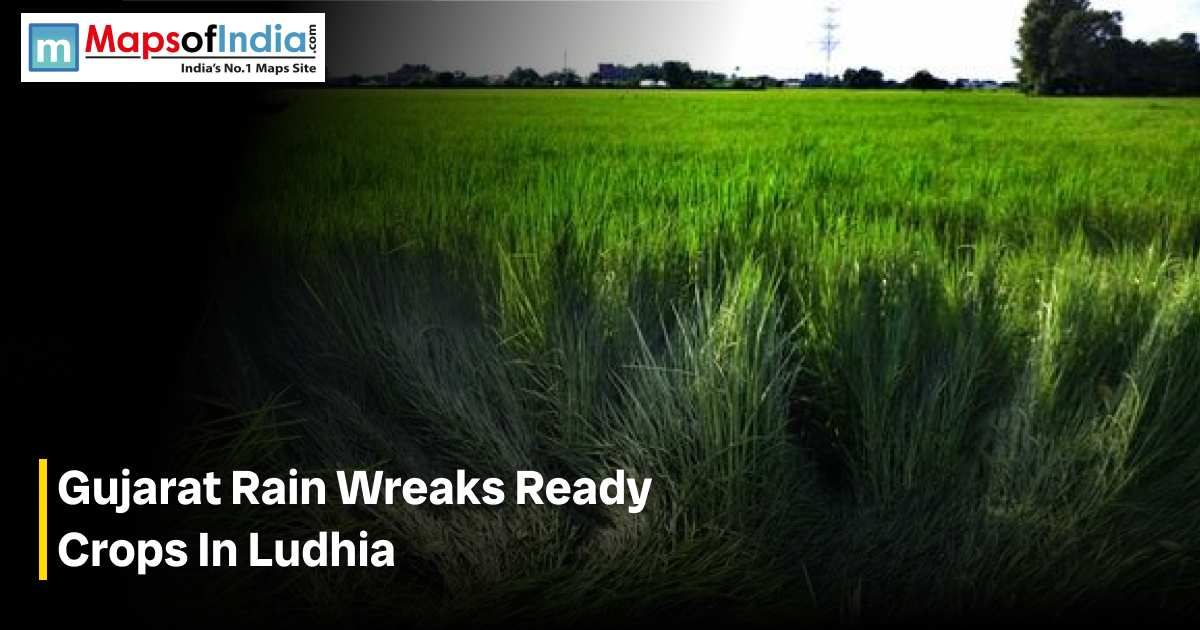
The massive downpour in the Amreli district of Gujarat has raised eyebrows among the farmers who have seen ready crops being destroyed in various places, such as the Ludhia village. About 4 inches of rain was reported in bagasara taluka and made the fields waterlogged and impacted crops that were on the verge of harvesting.
The downpour did not come when people anticipated it, as many farmers were about to reap their products, and the losses were devastating. In other places, such as Ludahedi, where crops were almost ready to harvest, they were destroyed by constant rains and poor weather conditions. In other cases, the produce may be made unsaleable. Farmers who had anticipated harvesting their harvests in the next few days are now afraid of making huge losses.
The rain has been termed as unseasonal and coming at the opportune moment when it was critical to the agricultural activity within the area. Both seasonal crops like wheat, gram, coriander and other crops are suspected. Rain immediately before harvesting may cause damage to the quality of the crop, flatten the plants, and cause moisture issues that will lead to a low price in the market. In other instances, the produce might be rendered unfit to sell.
Farmers in the area have been complaining of the diminished productivity, claiming that months of labour have been impaired in a span of a few days. Most had already been through the greater part of the cultivating year and were looking forward to a good harvest. In its place, the heavy rain has caused them to be concerned about crop recovery, income and payment of agricultural bills.
Besides the destruction of crops, the rain has also interfered with the normal village life in some sections of the Amreli district. The low-lying land floods and muddy fields are some of the factors that have hindered farmers from visiting the land and initiating any rescue actions for the produce. The weather also caused the fear of further damage in case of the continuation of the rain or when strong winds come behind.
The accident has once again brought to the fore the increasing threat of unpredictable weather for farmers. Unforeseen rainfall during the harvesting period is usually a huge inconvenience to the rural population, who rely a lot on the harvest period to harvest and sell their produce. Months of effort and investments can be washed off in a few moments of heavy rain.
The authorities will have to evaluate the destruction in the impacted villages and keep a close eye on what is going on. Farmers now will seek rapid surveys, potential relief options and administration assistance. The unexpected rainfall has changed what could have been a harvest season into a season of uncertainty and loss to the people of Ludhia village and environs.
The most recent rainfall in Bagasara is a reminder of how agriculture is exposed to uncharacteristic climatic changes, particularly when crops in the fields are at their mercy.