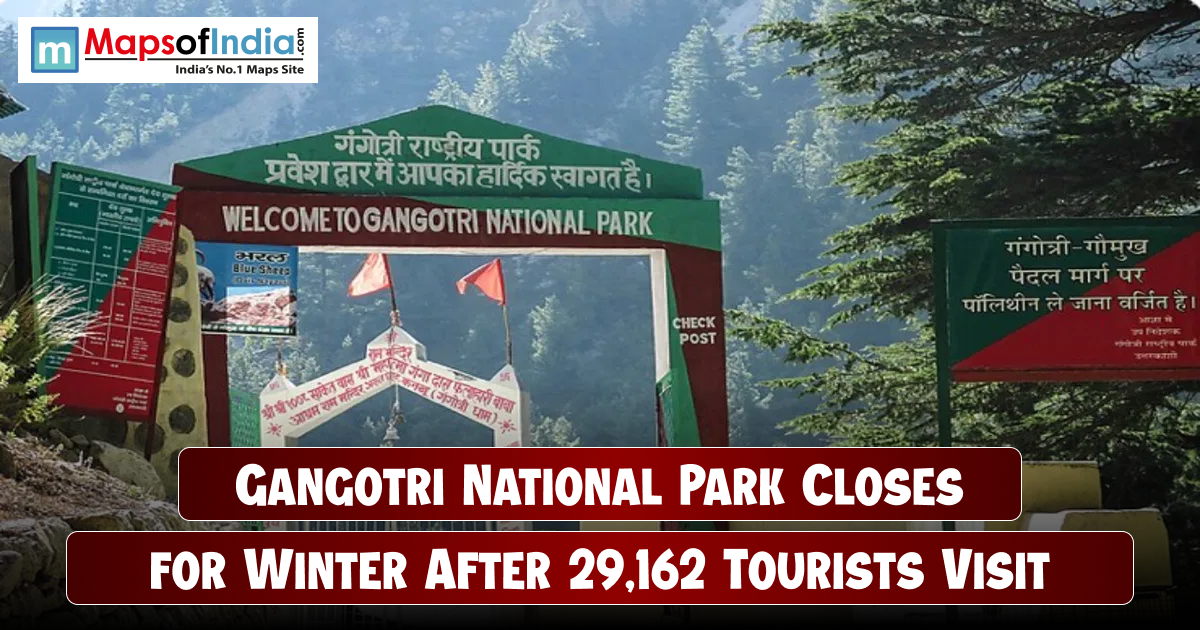
Gangotri National Park, the most popular high-altitude destination in Uttarakhand, has actually been closed down in the winter season, and it is the last stop in another busy tourist season. The park is located along the India-China frontier and is known for its beautiful Himalayan scenery, glaciers, and biodiversity.
This year, the park has recorded an impressive number of footfalls, with 29,162 tourists visiting during this open season. The revenues received as entry fees were reported to be around 80.96 lakh in nature, indicating a stable growth in tourism relative to other years. The figures indicate the increasing popularity of the Gangotri National Park as a trekking and nature tourism destination, attracting both adventure lovers and nature lovers as well as pilgrims.
Officials have again emphasized that the winter shutdown is a normal precautionary exercise. Snowfall, icy trails, as well as severe temperatures, make trekking and tourism risky in the high-altitude terrain, which becomes even more dangerous. The closure will keep the visitors safe as well as ensure that the delicate alpine ecosystem is safeguarded during the extreme winter seasons.
The closure also caused the park authorities to lose their interest in tourism; therefore, they focused on wildlife surveillance and preservation. The endangered species include snow leopards, Himalayan brown bears, red foxes and the Himalayan tahr found in the Gangotri National Park. Due to the decreased human activity, conservation teams will be able to do research, track wildlife movement with the help of camera traps and preserve natural habitats. Winter vacation also enables the delicate flora of the park to regenerate without any disturbance.
This year has seen the highest number of visitors, which highlights the fact that the park is increasingly becoming popular, but it also creates an environmental impact issue. When tourists visit sensitive sites in large numbers, they can eradicate wildlife, produce waste and impact delicate ecosystems. The government has stressed that it should provide encouragement to the tourist industry, but tourists are supposed to follow strict rules to reduce ecological harm.
In the future, the park is planned to reopen to tourists on April 1, 2026, with the receding snow and the trails opening. One can then continue with the trekking, glacier tours and exploration of nature in the unblighted Himalayan setting. In the meantime, the winter shutdown is a crucial time during which the authorities have to cover the infrastructure in the park, provide safety measures, and get ready for the next tourist season.
Authorities have encouraged visitors and the local population to abide by the closure as these actions are necessary to protect the safety of the visitors and the sustainability of the park in the long term. As Gangotri National Park gears up for another season, the stress is on how to balance the development and conservation of the park so that future generations will be able to experience the unique beauty of this park.