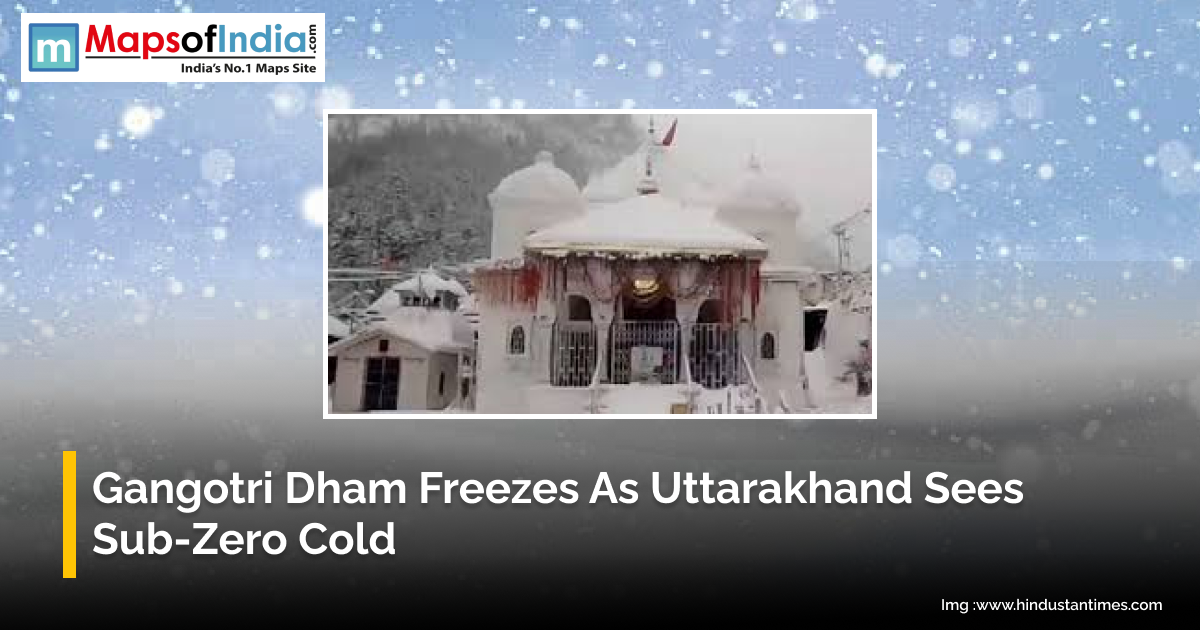
Gangotri Dham in Uttarakhand has been hit by a severe spell of cold winter with the temperature dropping below zero degrees Fahrenheit, rendering rivers, waterfalls and water pipes potable to ice. The extreme conditions, being witnessed in high altitude regions of the Uttarkashi district, are among the coldest in the history of the season, providing challenges to the people and impressive winter scenes in the entire area.
The local authorities and weather watchers state that the night temperatures in Gangotri and surrounding areas have fallen to sub-zero temperatures, with a few areas registering lows of almost -9 °C. The sharp cold has caused ice beds to form over the running rivers, small falls to turn into frozen falls and top layers of frost to fall upon roads and walks. Even in some locations, water in open containers, tanks and natural springs is also frozen into ice.
One of the direct effects has been the freezing of drinking water lines, which has disrupted supply to the residents, forest personnel and workers located in and around the Gangotri National Park area. The locals are compelled to turn to other sources, such as using unfrozen parts of streams or ice melting, to get basic domestic requirements. Authorities said freezing of pipelines is a common occurrence during peak winters, but this year it started earlier than normal because of the drastic weather changes.
The Gangotri National Park has also been hit by the extreme cold, with winter already being closed. Forest teams carrying out normal functions stated that trails were frozen and the ground was slippery, making it hard to move. Although the park is not accessible to tourists during the winter season, natural water bodies freeze, posing additional problems to the patrolling and maintenance work.
Images and pictures taken at Gangotri depict water in a fast flow and suddenly frozen into ice, which caught the imagination of social media with its stunning, although cruel, display of the winter in the Himalayas. The ice-covered rocks and the frozen waterfalls remind one of the deep winter scenery of Ladakh and upper Himachal Pradesh.
The weather officers explain the fall in temperature as a combination of clear weather, high elevation, and the natural occurrence of the Himalayan winter. No cloud cover to trap heat causes temperatures to drop significantly when the sun goes down, causing frosts to be prevalent.
Precautions have been advised to people in heightened regions to be careful, not to move about unnecessarily, and to have enough winter stocks. With the region preparing to take more drops in temperature, the local communities keep adapting to the situation brought by the freezing conditions, as such dips are likely to continue till the climax winter seasons.