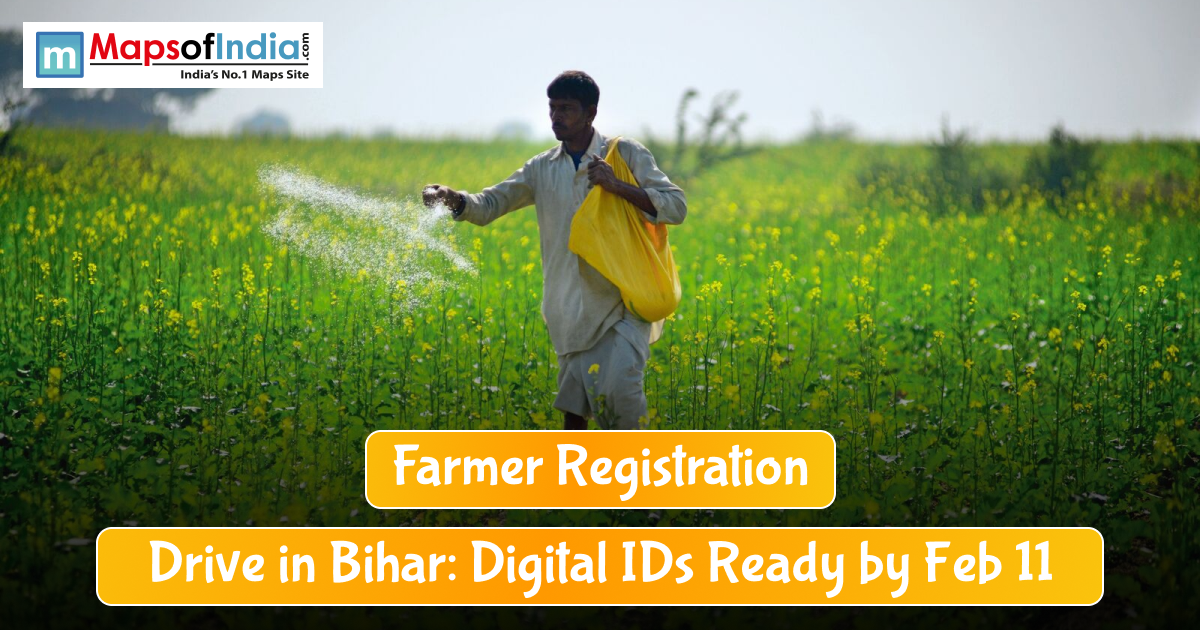
This is the final stage of the government farmer registration campaign, and the authorities have confirmed that Digital Farmer IDs will be created by February 11. In addition to this rollout, the authorities are also keeping a keen eye on performance district by district because of the initiative, with the aim of determining which district has registered the highest number of farmers.
The registration exercise will target the registration of farmers on a common digital platform through verification of personal information, land record and bank information. After registration, a Digital Farmer ID will be given to the farmers, which will be utilized as one point of reference to access other government schemes, subsidies, crop insurance, and other financial support.
The officials argue that the Digital Farmer ID system is meant to enhance transparency and efficiency in giving benefits related to agriculture. The development of the verified database will see the government eradicate duplicate or ineligible beneficiaries and make sure that welfare schemes are delivered to real farmers in the form of the Direct Benefit Transfer (DBT) scheme.
District administrations have been assigned set targets, and this has brought healthy competition to the districts to make registrations before the deadline. The debate as to the district that is spearheading the registration process has been a major concern, with the high-performing districts being rewarded in terms of effective implementation. The officials added that the ranking system also assists in determining the areas where the registration progress is sluggish, and corrective measures can be undertaken.
The 11 February deadline is important, as it is the deadline for creating Digital Farmer IDs within the present stage. Farmers who fail to do so before the deadline might delay accessing the benefits attached to the new digital system. The government has encouraged the qualified farmers to be registered as soon as possible by visiting the established centres or through the online systems provided to them by the government.
According to agriculture department officials, increased awareness campaigns are being done in the rural areas to make sure that maximum participation is done. The local revenue and agriculture employees are helping farmers upload the documents, land information, and address technical problems throughout registration.
Experts reckon that the Digital Farmer IDs will assist the policy makers to formulate improved agricultural policies through offering real-time and precise data on farmers, land areas and patterns of crops. The system will, with time, make processes like loan approval, compensation for crop damage, and insurance claims easy.
District administrations are scrambling to cover all the grounds as time runs out. The registration drive is being regarded as an important move towards the modernization of agricultural governance and the fortification of support systems of the farmers in the region.