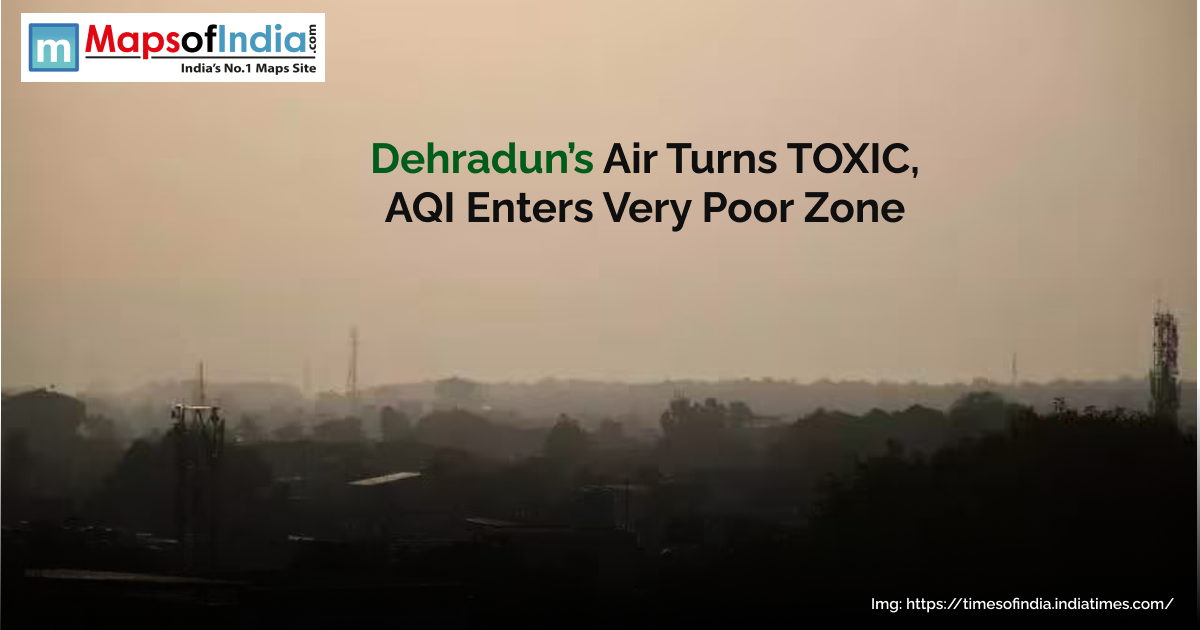
The concentration of air pollution in Dehradun is alarming, and the Air Quality Index (AQI) in this city has exceeded 300, which is the level of the Very Poor category. The rapid decline in the quality of the air has placed a grave health and environmental issue, since Dehradun is considered to be a city with clean air and a pleasant climate.
The sharp increase in the level of pollution, according to the statistics of air quality surveillance stations, is primarily because of the increased levels of PM2.5 and PM10 particles, which are said to be extremely dangerous when inhaled. When the AQI is over 300, even healthy people may experience breathing discomfort, and children, the elderly, people with asthma and heart disease, and other respiratory disorders are at serious risk.
Scholars point to a multiplicity of causes of the deterioration of the quality of air. The swift urbanization, the increase in the number of vehicles on the urban streets, and the constant construction works have contributed greatly to the dust and emissions. Moreover, poor weather conditions, including low wind speed and inversion of temperatures, have also ensnared the pollutants near the ground, and thus they are not dispersed. The situation has been further made worse with reports of garbage and biomass burning in neighbouring areas.
The sudden increase in air quality has raised the concern of the locals, who compare the quality with the levels of pollution they would have normally encountered in other urban centres such as Delhi. Most of them have been complaining of irritation of the eyes, coughing, sore throat, and difficulty breathing in recent days. Increased cases of patients with respiratory complaints have also been observed in hospitals and clinics.
Health analysts have encouraged citizens to exercise caution, such as engaging in limited outdoor activities, using masks when going out, and closing windows during the peak hours of pollution. Individuals with existing medical conditions have been encouraged to strictly adhere to medical recommendations and not to be exposed to polluted air over a long period of time.
The Uttarakhand Pollution Control Board and the district authorities are keeping a close watch over the situation. Authorities have encouraged the population to cooperate by not burning waste, not using their own automobiles and by adhering to the pollution control measures. The authorities are also supposed to revise short-term strategies to reduce emissions in case of high levels of pollution.
Environmentalists caution that unless some preventive measures are put in place, there are high chances that high levels of pollution will be a regular occurrence in Dehradun, particularly during the winter seasons. They emphasize the necessity of sustainable urban planning, stricter controls on emissions, and better transport to avoid further decline.
The recent skyrocket in AQI has acted as a wake-up call to both policymakers and citizens, reminding them that even the hill cities are no longer safe from the rising menace of air pollution.