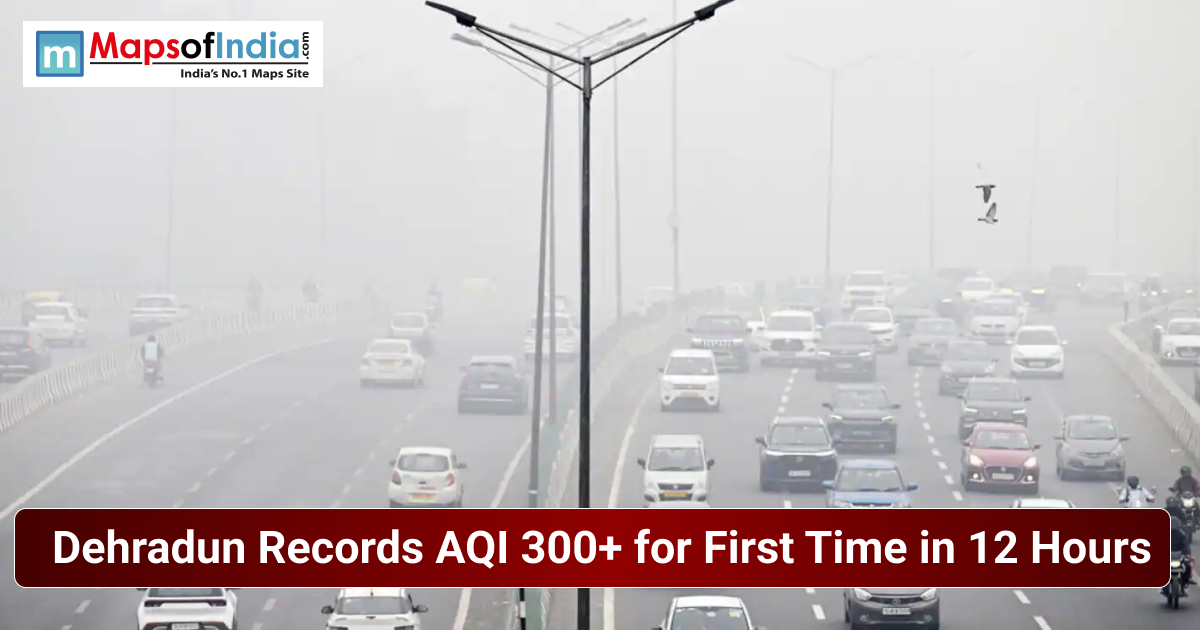
The spread of the Air Quality Index (AQI) over 300 was the first time in almost 12 continuous hours in Dehradun, which is why serious environmental and health concerns were raised. The professionals have cautioned that under the condition that the trend remains the same, the circumstances in the Uttarakhand capital might start resembling the extreme level of pollution that is experienced in the winter months in Delhi-NCR.
The air quality level in Dehradun, judging by air quality monitoring data, was very poor, which means that the concentration of such harmful substances as PM2.5 and PM10 is dangerously high. These microscopic pollutants may enter deep into the lungs and blood, which is very dangerous to health, especially to children, citizens who are elderly citizens and individuals with respiratory or heart-related illnesses.
Environmental analysts have caused the rapid increase of pollution with the unfavourable weather conditions, particularly the temperature inversion, in which cooler air below the ground entraps pollutants below a blanket of warmer air. The low rates of wind at night and at the initial days of the morning also make dispersion of the pollutants impossible, and the levels of pollution increase rapidly. The same weather phenomena can be attributed to the constant smog problems in the Delhi-NCR.
Dust generated in construction work, vehicular emissions and pollution floating in the surrounding areas are also said to be sources of pollution. With the fast urbanisation and the growing traffic, the quality of air is being affected, even though Dehradun is situated in the foothills of the Himalayas and is traditionally associated with cleaner air.
Health professionals have recommended that they should not engage in outdoor activities, especially in the early morning and late evening hours, since this is the time of the day when the level of pollution is at its peak. Asthmatic patients, chronic obstructive pulmonary disease (COPD) patients and other respiratory patients have been encouraged to be cautious and medical guidance has been encouraged.
The poor quality of the air has caused environmental concern among environmentalists, who are apprehensive of the fact that, unless something is done immediately, Dehradun would have to encounter the long-term problems of air pollution like other big metropolitan cities. They have demanded closer supervision, improved management of bulky traffic, dusting, and sensitization of the masses to avoid further degradation.
The situation is strictly observed by the authorities, and further preventive measures can be discussed in case the pollution levels are high. Even the recent spike can be taken as a signal that even the cities located on hills are not immune to air pollution anymore, and sustainable urban planning and environmental protection are urgently needed.
With the onset of winter, the experts warn that the quality of air may continue to deteriorate unless the weather patterns or remedial actions come to the rescue and monitoring of air quality assumes urgency as an issue in the city.