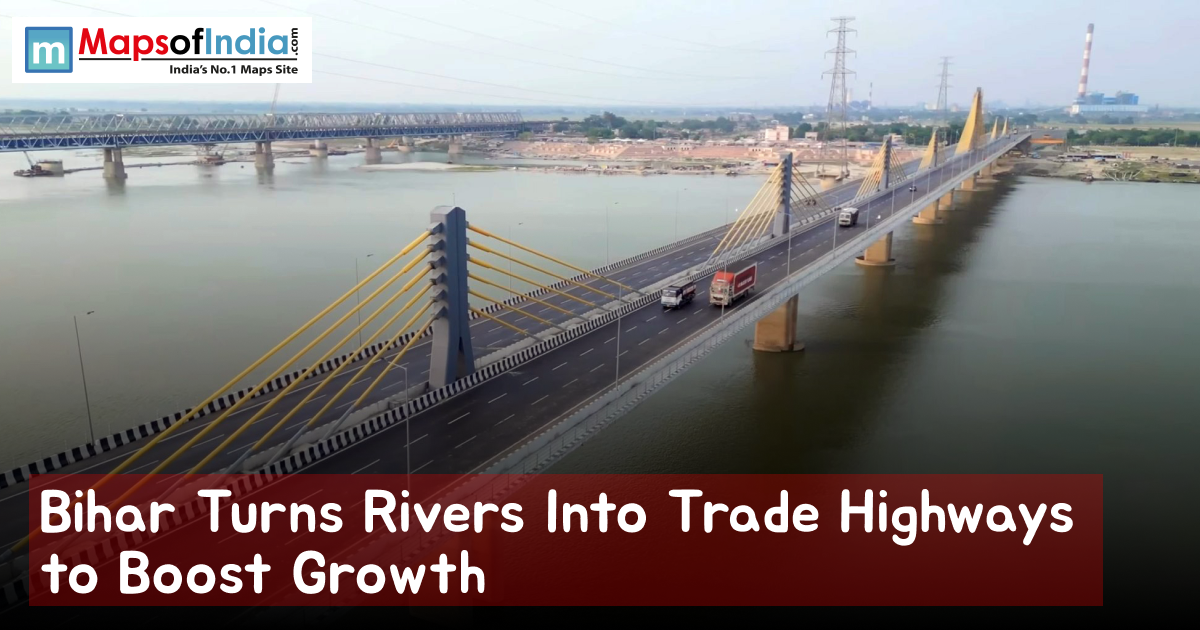
Bihar is also making the extra effort to develop its rivers into important trade routes, making the inland waterways one of the crucial engines of economic development, communication, and sustainable transportation. The project is focused on the renewal of river transport on the Ganga and its branches, cost reduction of logistics, load transfer and other significant advantages on the road and rail infrastructure, as well as providing new market opportunities to farmers, traders, and small business enterprises in the state.
Central to the strategy is the widening of the National Waterway-1 (NW-1) that passes through several key areas of Bihar, stretching between Haldia in West Bengal and Varanasi in Uttar Pradesh. The project falls under the umbrella of the Jal Marg Vikas Project, which is a national initiative of modernizing the river navigation by enhancing better terminals, navigation resources and dredging to provide the year-long vessel-flow.
The state and central agencies are aiming at developing a web of river terminals and community jetties on the Ganga and other waterways. These plants should facilitate the transportation of bulk cargo, including food grains, cement, fertilizers and construction materials at reduced costs than the conventional road transport. According to the officials, it will ensure that the local industries become more competitive and enable farmers to enter distant markets more effectively.
The flagship projects currently considered include the modern and eco-friendly vessels that are a part of a Water Metro in Patna to offer transport services to people aboard the river. The system will enhance mobility in the city and will also promote tourism and riverfront development. There is also a plan to establish an inland vessel repair and maintenance centre to serve the increasing number of cargo and passenger boats, which generates new jobs in the maritime services.
The government draws attention to the environmental advantages of moving freight and passenger traffic to waterways. The river transport is associated with reduced carbon emissions per tonne of cargo compared to heavy road vehicles, which is in line with the sustainability objective and climate obligations.
Nevertheless, the authorities do not ignore such challenges as seasonal changes in water levels, constant dredging operations, and safe navigation in heavily populated riverbeds. The interaction and collaboration with the local administrations will be essential to consider the land use, security, and environmental issues related to new terminals and jetties.
Provided it is successfully adopted, the waterways push will see Bihar integrated into an extended multi-modal logistics network linking river routes with highways, rail corridors, and industrial centres. The policymakers hope that this strategy can provide the opening to new investment, enhance regional trading relationships and make Bihar a prominent station in the transport and supply chain network of eastern India.
With the pace of infrastructure work, the next several months are determined to turn the grandiose vision of the rivers as highways into the reality of the economic profits of the state and its citizens.