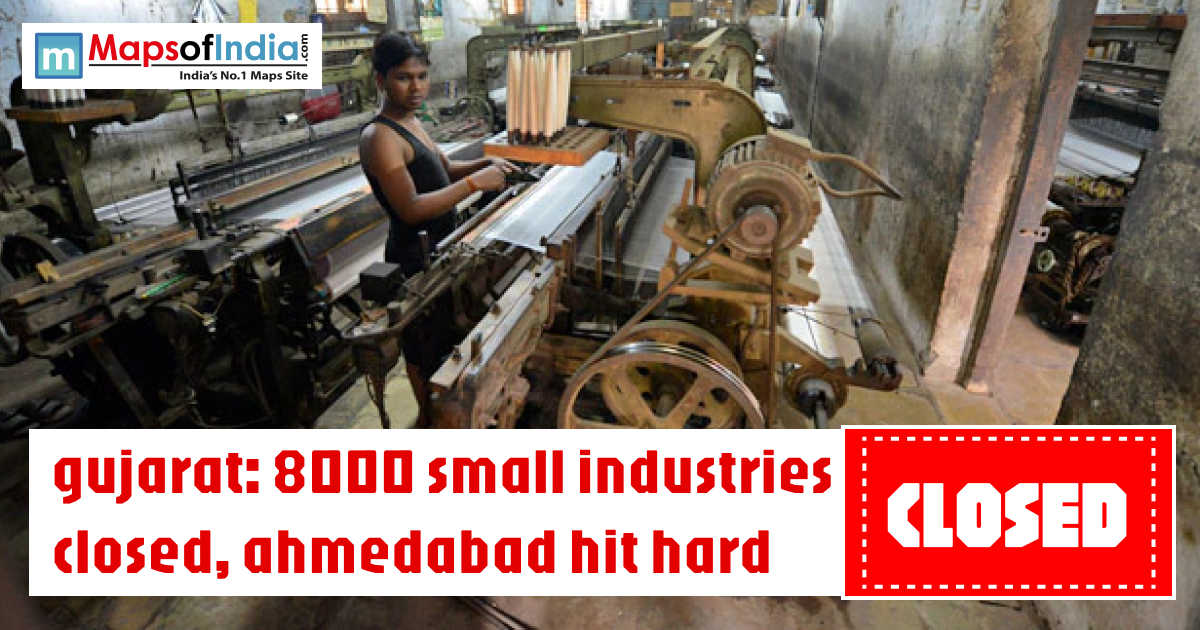
This reputation of Gujarat as one of the most industrially dynamic states in India is under fresh scrutiny after it was reported that the number of small industries that have been closed in the state has been on the rise to almost 8000 in the past five years. The growth has raised the issue of the true health of the micro, small, and medium enterprises (MSME) sector in the state, in spite of the high-profile investment schemes by the government, like the Vibrant Gujarat Global Summit.
Based on official statistics released in Parliament and sector publications, since 2020, thousands of MSME units have shut down in Gujarat. These shutdowns have caused massive effects on the employment front, with the estimates indicating that tens of thousands of workers could have lost their jobs in the process. A major industrial city such as Ahmedabad, in which there are textile, chemical, and engineering industries, is one of the worst-hit regions.
It has been argued by experts that the downfall of small industries unveils the rising issues of MSMEs in the state. Even though large corporations still enjoy the benefits of investment incentives and infrastructure affordance, smaller business entities tend to deal with increasing operational expenses, lack of access to credit, and dwindling market needs.
The industry leaders cite a number of reasons that have led to the fall. Small businesses were hit hard by economic disruptions like demonetization, the introduction of the Goods and Services Tax (GST) and the COVID-19 pandemic. The lockdowns and supply chain disruptions led to many units being unable to recover from financial shocks.
Moreover, MSME owners have also complained of problems in obtaining timely loans and working capital. Profit margins of small manufacturers have been further tightened by an upsurge in electricity bills, an increase in the price of raw materials, and threats from bigger firms and imported products.
The city of Ahmedabad, with its thousands of small manufacturing industries, has been affected especially. The old textile and garment industries, which were part of the industrial developments of Gujarat, have seen the dropping demand and an increase in cost, and this has compelled a number of entrepreneurs to close their organizations.
The scenario has also raised the question of the long-term effects of investment-driven events such as the Vibrant Gujarat summit. Although the summit is attracting international investors and making huge announcements of investments, a big portion of the gains is not well distributed to smaller businesses that create a good percentage of jobs in the state, as those of the global investor aim to drive the economy.
Economists note that the industrial development in Gujarat is dependent on the MSME sector, which should be strengthened. They propose better access to credit, specific subsidies, and government aid in order to help small businesses revive and compete further in an even more challenging economic landscape.
With the policymakers reviewing the statistics and industrial anxieties, the shutting of thousands of small industries is a wake-up call that keeps the grassroots entrepreneurship alive to prevent losing the facade of Gujarat as an industrial giant.