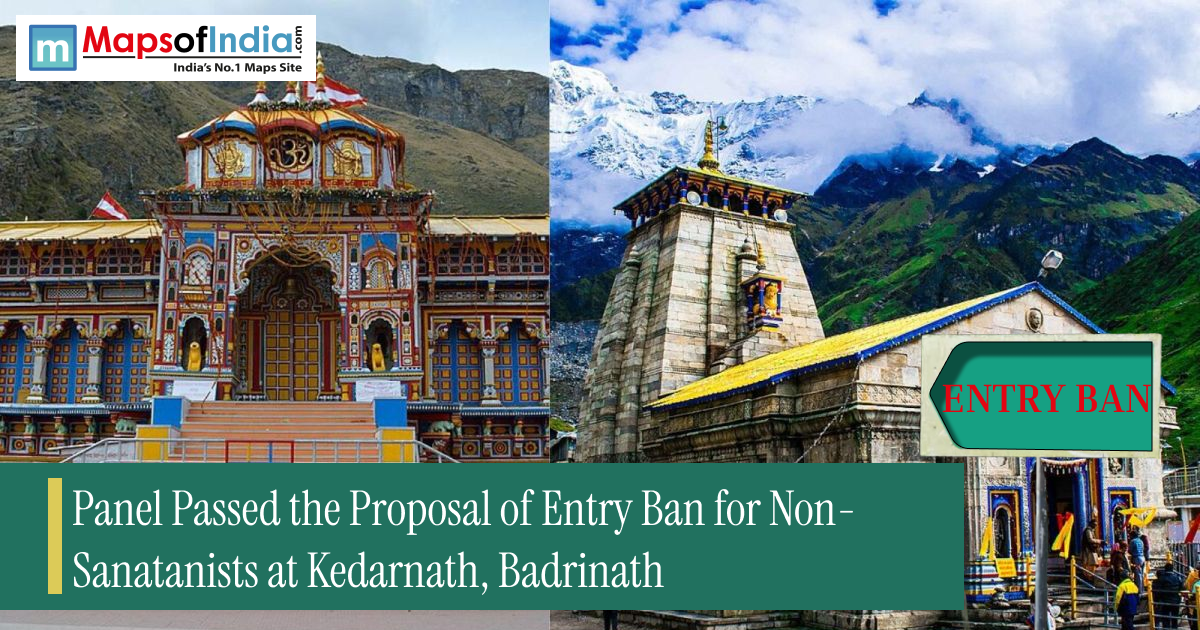
This matter has been brought up by Uttarakhand after the Badrinath-Kedarnath Temple Committee (BKTC) passed a resolution that aimed to prohibit access of non-Sanatan devotees into some of the most sacred Hindu temples in the state. This proposal was passed in one of their latest committee meetings, and it suggests that the entry of non-Sanatanists in the temples under the committee control (the Kedarnath Temple and the Badrinath Temple, which are famous) be prohibited.
As officials said, the committee held some of the issues concerning temple management and arrangements for the next season of Char Dham Yatra that witnesses lakhs of devotees annually. In the course of the meeting, the members enacted a resolution that they would only allow followers of Sanatan Dharma to enter the temple grounds in order to preserve the sanctity and traditions of the religion.
According to the committee members, the temples that they manage are not just tourist attraction sites but highly religious places. They underlined that traditional practices and conservation of the spiritual air of these shrines are the priority. The committee manages over 40 temples in Uttarakhand, and the restriction that is proposed would be applicable to all temples under the committee in case the restriction is effected.
The proposal is, however, not a rule as yet. The resolution has been sent to the Uttarakhand Government by the committee. The legal and administrative issues will be reviewed, and there may not be a final decision made before the authorities ask. Researchers observe that such actions have to adhere to the provisions of the constitution and the current management rules on temples.
The proposal has elicited debates in the religious, political and social circles. As proponents claim, temples can impose regulations to safeguard religious practices and spiritual traditions. They feel that the move would aid them in conserving the sacred nature of the Himalayan pilgrimage sites.
Conversely, the critics believe that the proposal would present a controversy and bring inclusivity issues because most of the non-Hindus have access to such temples due to cultural interest or reverence for religious backgrounds. Other observers also note that most of the temples in India already have customary rules about entry into sanctums or certain rituals.
This is developed before the upcoming pilgrimage type of season, when thousands of followers visit the Himalayan shrines daily. The authorities are also striving to upgrade infrastructure, security and other facilities in preparation for the anticipated influx of pilgrims.
At this stage, this proposal is under consideration, and the ultimate decision will be made in the negotiation between the temple authorities and the state government. This matter is also expected to be in the limelight with the plans for the next Char Dham Yatra still in progress.