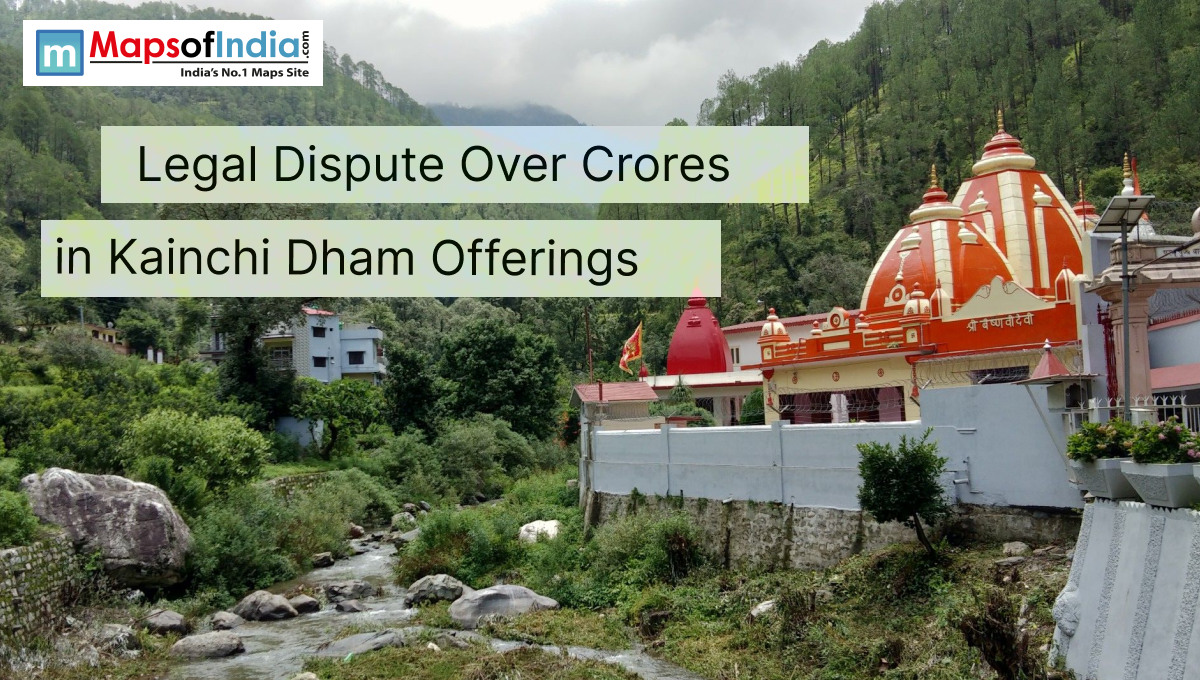
Legal wrangle has been the order of the day with regard to the functioning of the offerings worth crores of rupees at the Kainchi Dham in Uttarakhand, which is said to be a renowned place in the world. It has moved to the High Court, which has asked the state government to provide a comprehensive response to the issue of how the temple trust is run, its financial transparency, and financial regulation.
Kainchi Dham is an area in the Nainital district that is connected with the saint, Neem Karoli Baba. Thousands of devotees visit the ashram every day, and the number of visitors skyrockets during the annual foundation day celebrations. As the popularity of the shrine grew, there have been rampant cash and kind donations over the years to the tune of crores every year.
It was reported that a petition had been launched concerning the manner in which these huge offerings were handled and accounted for. The plea is allegedly doubting the existence of appropriate auditing procedures and the possibility of whether the management of the shrine adheres to the current financial and administrative standards. It also tries to find an understanding as to whether there is any supervisory control of the trust by the state government or whether the temple is functioning independently.
The High Court has taken cognizance of the petition and given a notice to the Uttarakhand government seeking to find out the legal framework within which the temple is run. The court has been on record demanding information on financial audit, disclosure of donations and the general governance system of the institution.
The problem has led to a wider discussion on accountability in religious institutions that have been receiving substantial donations from the public. Although the donations made by devotees are viewed as an act of faith by them, legal experts have indicated that transparency and good financial management are important to make people trust it and avoid misappropriation of funds.
The authorities of the temple have yet to make a formal statement regarding the same. Nonetheless, the sources suggest that the trust has internal records and adheres to the procedures of how the donations are handled. Before the next hearing, the government is supposed to submit its response.
The intervention of the High Court highlights the need to have clarity of regulatory institutions that deal with large sums of money. Other directions that the court will take, depending on the response of the government, will include possible audits or administrative reforms.
With the case in progress, both the local population and the followers are following up keenly, as Kainchi Dham has a spiritual value and is also helping the local tourism and economy in Uttarakhand.