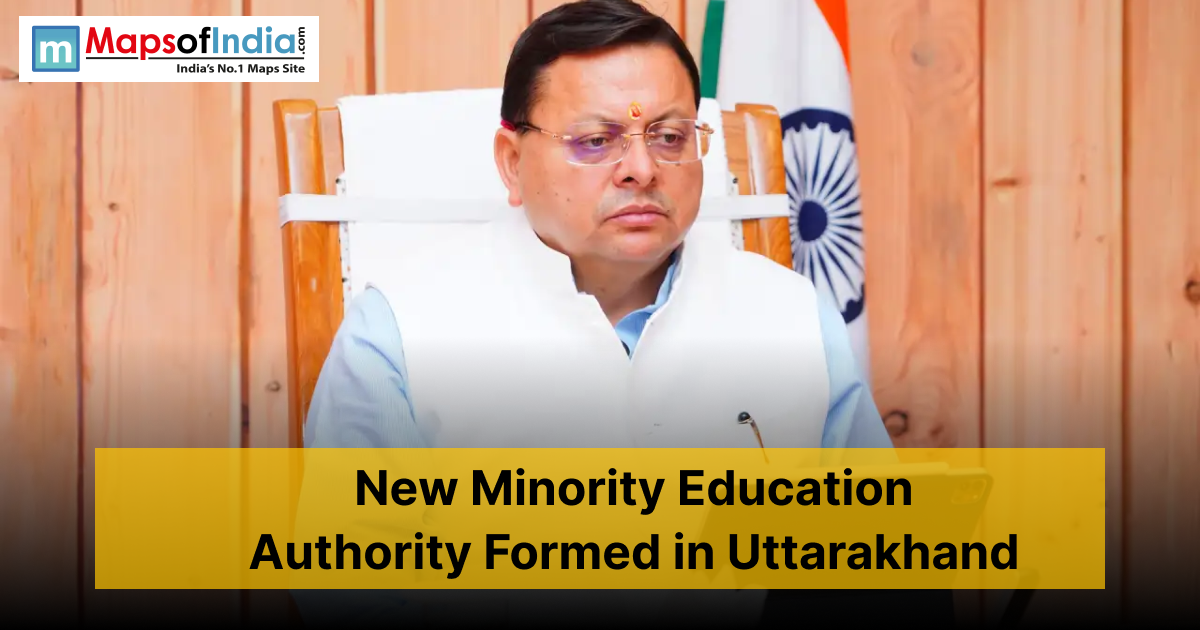
The State Minority Education Authority, which has been formally instituted by the government of Uttarakhand, has formally ended the days of the Madrasa Board of the state and ushered in another legal structure of the minority-run educational institutions. This act is after the enactment and adoption of the Uttarakhand Minority Education Act, 2025, which aims to incorporate all the minority schools into a single and standardized oversight body.
The new system will involve giving the authority the responsibility of recognition, regulation and syllabus control of institutions operated by religious and linguistic minorities, such as madrasas, Christian missionary schools, Sikh and Jain institutions, among others. The current Madrasa Board will be abolished by the end of July 2026, providing an opportunity for the institutions to adjust to the new regulations.
According to the officials, the newly created authority will be a 12-member body, to be chaired by an appointee of the government of the state and assisted by the senior officials of the education and minority welfare departments. Its mandate is to give suitable affiliation, to enforce the requirements of the Uttarakhand Board of School Education and to supervise the standards of the curricula in accordance with the National Education Policy and National Curriculum Framework.
The reform has been said by the state government to be a measure towards modernization of minority education and transparency, accountability, and quality of education. The introduction of madrasas and other minority schools to the mainstream education system is a move by authorities to have students not only taught core subjects like science, mathematics, social sciences and languages, but also any religious or community study.
The officials at the education department indicated that a one-window system will be implemented to assist the institutions in getting registration and affiliation formalities within the stipulated period of time. Teacher and administrator training programs are also likely to take place to facilitate the changeover.
The ruling, however, has led to discussion between the community leaders and opposition parties, with some of them voicing their concerns on institutional autonomy and maintenance of cultural and religious identity. Advocates of the action cite that standardized policing will assist students of minority schools to have increased access to higher education and jobs.
The government has stressed that the reform is not intended to limit the minority rights but extend benefits to all minority communities, including Sikh, Christians, Buddhists, Jains, and Parsi communities, which will now qualify to be minorities in terms of education and assistance programs.
Within the setting of the July 2026 deadline, attention will centre on the ease with which the institutions will acclimatize to the new authority and whether the policy will fulfil the promise of inclusive and quality education to the various communities in Uttarakhand.