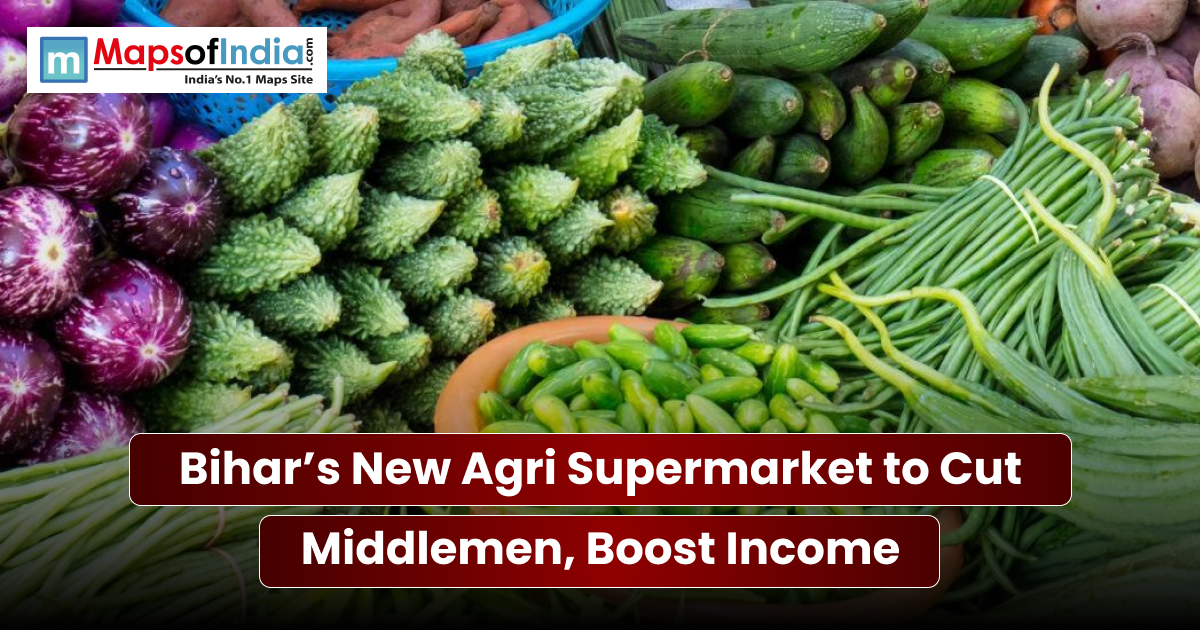
The Bihar government has unveiled a new “Agricultural Supermarket” model aimed at transforming the way farmers sell their produce by enabling direct access to buyers and reducing the role of intermediaries. The initiative is expected to improve price transparency, increase farmers’ earnings, and modernize the state’s agricultural marketing system.
Under the proposed model, farmers will be able to bring their fruits, vegetables, grains, and other farm products directly to organized market outlets, referred to as agricultural supermarkets. These outlets are designed to function as structured selling points where consumers, retailers, and institutional buyers can purchase produce straight from farmers. By shortening the supply chain, the government hopes to ensure that growers receive a fair share of the final selling price.
Traditionally, many farmers in Bihar depend on a network of middlemen and local traders to sell their harvest. While these intermediaries help connect farmers to markets, they often set prices that leave producers with limited bargaining power. The new model aims to change this dynamic by offering farmers a transparent platform where prices are more closely aligned with real market demand.
Officials have stated that the agricultural supermarkets will also integrate digital tools to help farmers list their produce, track demand, and receive timely payments. Farmer Producer Organizations (FPOs) and cooperatives are expected to play a key role in managing supply, maintaining quality standards, and coordinating logistics. This structure is intended to make it easier for small and marginal farmers to participate without facing high operational costs.
The initiative is also seen as a step toward improving access to fresh and affordable produce for consumers. With fewer layers between farms and households, buyers are likely to benefit from better quality products and more competitive pricing. Urban markets, in particular, are expected to see improved availability of locally sourced fruits and vegetables.
Experts believe the model could have a wider economic impact by strengthening rural livelihoods and encouraging farmers to invest in better farming practices. Improved income stability may help growers adopt modern techniques, invest in storage facilities, and diversify their crops, leading to long-term gains for the agricultural sector.
However, successful implementation will depend on building proper infrastructure, including storage, transportation, and quality control systems. Ensuring that farmers across remote and rural areas can access these agricultural supermarkets will also be a key challenge for authorities.
The Bihar government has indicated that the model will be rolled out in phases, starting with pilot locations in selected districts before expanding statewide. If successful, the initiative could serve as a blueprint for other states seeking to reform agricultural marketing and empower farmers through direct market access.
As the state moves forward with this plan, farmers and market stakeholders will be watching closely to see how effectively the new system delivers on its promise of fair pricing, transparency, and improved livelihoods.