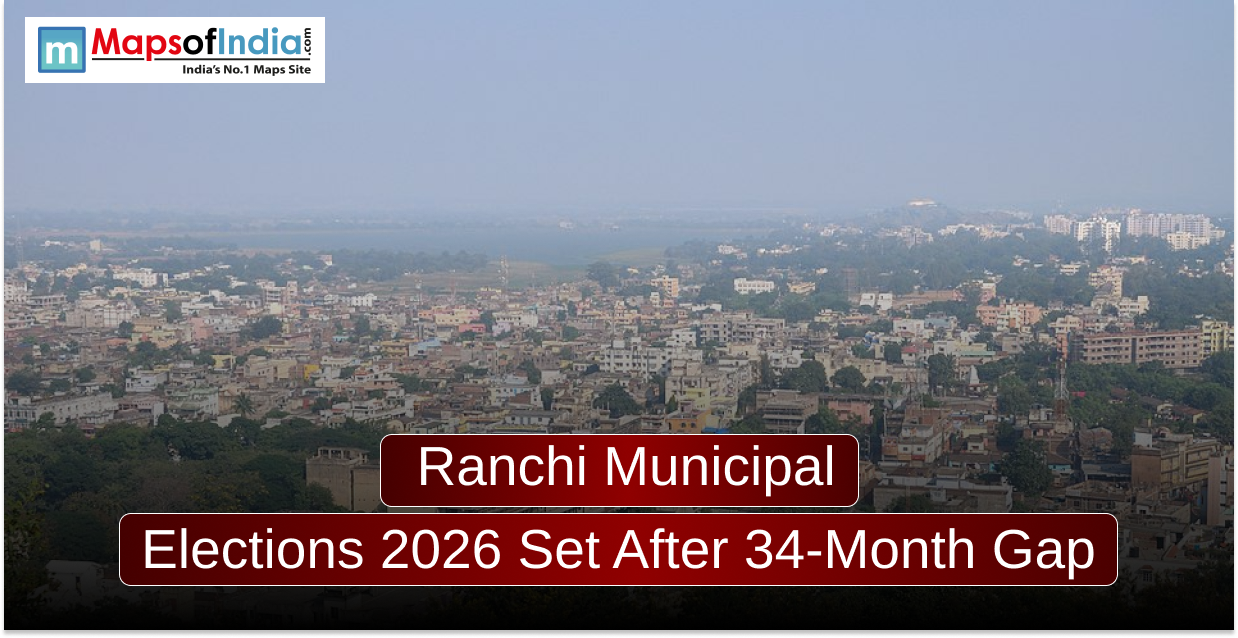
In a historic move of democratic significance, the Ranchi Municipal Corporation is all poised to conduct civic elections in Ranchi in 2026, thus marking a break of close to three years of administrative rule. The citizens will then, after a long absence of about 34 months of no elected local body, have a chance to elect their officials and mold the governance of the city through the ballot.
This has led to the lack of municipal elections, which has seen civic affairs of Ranchi being handled by the state-appointed officials rather than elected councillors and a mayor. Although lifeline services like water supply, sanitation, maintenance of roads and urban planning remained intact, there were widespread complaints by many citizens and civil society organizations regarding the lack of accountability by the people and the slowness in addressing the local challenges.
The elections are a larger state-level exercise that will elect representatives to various urban local bodies that are spread in Jharkhand, such as municipal corporations, municipal councils, and nagar panchayats. To Ranchi, the polls will have added perception because they will bring back to full functionality a municipal government that is directly accountable to the electorate.
The officials cited legal and administrative difficulties as the reason behind the delay of the elections, such as differences over the allocation of seats to the Scheduled Castes, the Scheduled Tribes and women. The judiciary was also interested in the issue, with the High Court encouraging the state government to make sure that democratic processes were not indefinitely delayed.
The Model Code of Conduct is also likely to be put into effect with the release of the election schedule, which limits new policy decisions and official announcements that might affect voters. The political action will probably reach a higher intensity in the upcoming weeks, although in Jharkhand, municipal elections are usually held on a non-party basis, and the candidates are informally supported by the significant political groups.
The local people have embraced the move in the hope that with the re-entry of elected leaders, the civic services will be enhanced, more transparency ensured, and the representation of the neighbourhood-level concerns better advocated. The challenges of traffic jams, garbage disposal, sewage systems, roads, and city sprawl will probably take up the majority of campaign debates.
Urban governance scholars opine that long-term planning and the successful execution of development schemes involve the reestablishment of a local government. A council of elected officials is also in a better position to liaise with state and federal government offerings to ensure that money and projects are employed to meet the most urgent demands of the city.
Since Ranchi is on the verge of the polls, it is time to shift the emphasis to voter awareness and participation. The elections will not only signify the restoration of the local democracy but also give the citizens a chance to hold their future leaders accountable and directly contribute towards the development and administration of the capital city.