One of the biggest highway work projects in Uttarakhand has taken a nosedive as protests continue to mount against the recent land acquisition notification by the government, which has cast fresh doubts on the construction schedules as well as the administrative plans. The residents of Dehradun have been greatly opposed to the project, which intends to ease the traffic congestion in the city due to the apprehension of being displaced, lack of adequate compensation and due to the lack of transparency over the decision-making process.
It is proposed that the elevated corridor will cross portions of the river Rispana and Bindal areas to connect some of the important sections of the city and ease the congestion on the arterial roads, which already accommodate an unprecedented number of vehicles. It has been characterized by state authorities as a strategic urban infrastructure program which would enhance movement, reduce travelling time and enable the overall growth of the city in the long term. Nevertheless, the process of land acquisition has come under the heat of the fury of the masses.
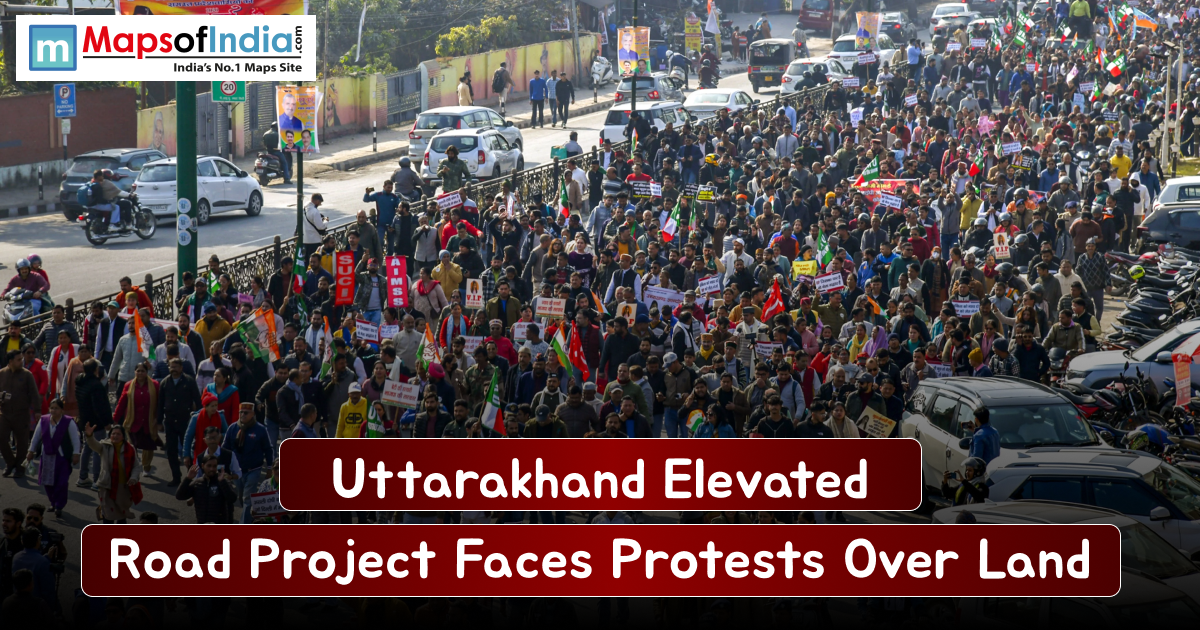
With the acquisition notification being issued, impacted families and other groups in the neighbourhood started to hold demonstrations stating that they had not heard about the notices being served. Most of the residents indicate that they are not sure about the precise route along which the road will pass, the number of houses and shops that will be affected, and compensation and rehabilitation packages to be provided. Protesters claim that the process has been rushed and lacked any serious consultation with the communities that will lose property or livelihood.
The resistance of the people has assumed various modes such as rallies, sit-ins, and human chains in the affected neighbourhoods. The civil society organizations and the resident welfare associations have also become part of the campaign demanding that the project be halted until proper social impact assessment can be provided, as well as a transparent way of conducting the hearings. Other groups have proposed more reasonable solutions, which include enhancement of the public transport, better management of the traffic and improving the current road infrastructure as opposed to the erection of a big elevated corridor.
The legal community has also been interested in the controversy, with it being reported that courts have interfered in the initial phases to make sure that the procedure is followed as it should in public consultations. These advances have placed a strain on the state government to rethink its approach and consider environmental effects, displacement and reparation.
State officials, in their turn, insist on the fact that the project is key to the further development of Dehradun and that all the legal and administrative procedures will be observed. Authorities have indicated that they are willing to communicate and develop rehabilitation and compensation policies for victims.
Now that the standoff persists, the elevated road project has become the metaphor of the larger discussion in Uttarakhand of the conflict between the demands of fast urbanization and community rights and sustainable planning. The next few weeks have become pivotal to the question of whether negotiations can be used to relieve tensions, or the demonstrations will continue to put one of the most ambitious urban infrastructure projects of the state on hold.