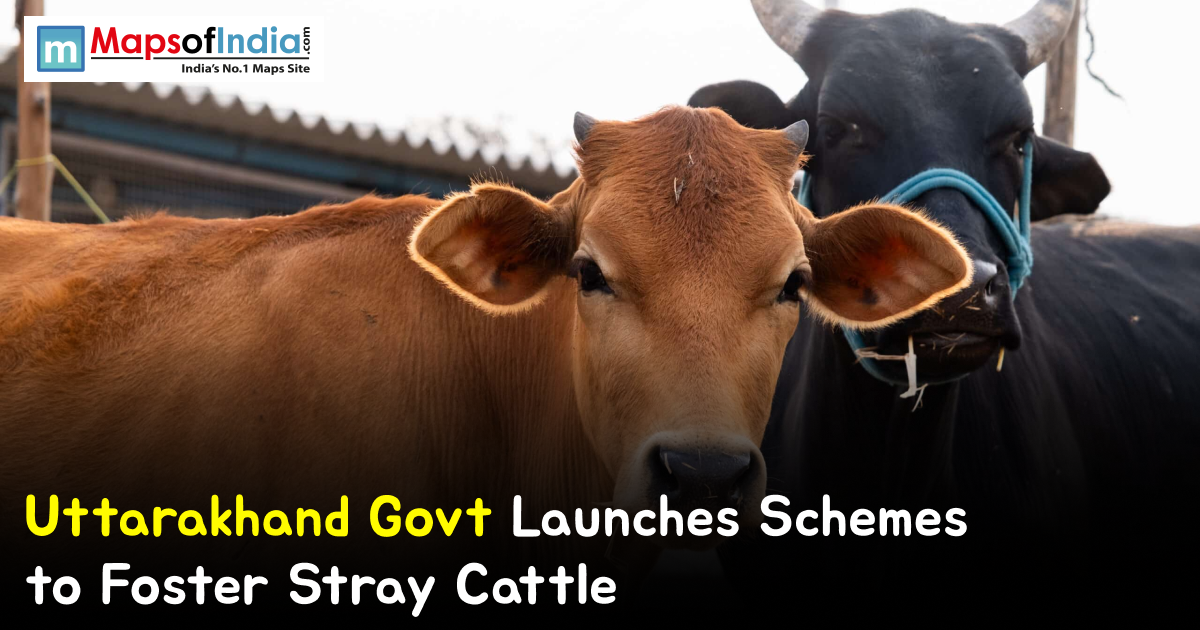
The Uttarakhand government has implemented two new welfare-oriented programs that are directed at addressing the ever-increasing issue of stray animals roaming on the highway and on the farm lands. The program aims at enhancing road safety, securing the crops of farmers and ensuring that the abandoned and unclaimed cattle obtain better care by inviting the citizens and shelters to keep those dogs in their care in return for financial assistance.
Stray cattle, particularly cows and bulls, are a major issue in most areas of the state. They are also likely to roam through the highways and roads in villages, thereby posing a risk of road accidents. Meanwhile, farmers have frequent damage to crops, as animals get access to fields in search of food. The new schemes are intended to deal with the safety of the people and the well-being of animals, and the authorities claim that the new plans will be organized and sustainable.
Within the initial program, which is called Gram Gaur Sevak Yojana, rural people are allowed to ensure stables of a maximum of five male stray cattle. The government will offer financial support to the government through a daily incentive per animal under care which may reach up to 12000 dollars monthly, to those who foster the greatest number of animals. Besides financial assistance, the scheme is supplemented with free access to veterinary services and medical care in governmental facilities, which means that the animals are well taken care of and nourished.
The second program aims at the empowering of formal cow shelters, or gaushalas. The animals that are at stray may be housed in the existing and new shelters, which will receive a daily payment per animal by the state. This is aimed at increasing the capacity of the organized shelters and decreasing the pressure on roads, villages and farmlands by providing safe and designated areas where stray cattle can be.
Early involvement in the schemes has already been reported by the district officials, and some individuals and shelters have already joined and registered to adopt animals. It is hoped by the authorities that the community would be central to the success of the program since locals would be the first to experience the problems that come with roaming livestock.
The wider intention of the government is to create a balance between the convenience of the people and the animals. Through the financial incentives, the administration believes that it can develop a system whereby taking care of the stray animals will be a social responsibility and an additional income for the rural households.
Through these interventions, Uttarakhand hopes to lead the pack of other states confronted with the same problems by being safe, sustainable, and caring in their quest to end the long-time menace of stray animals on the streets.