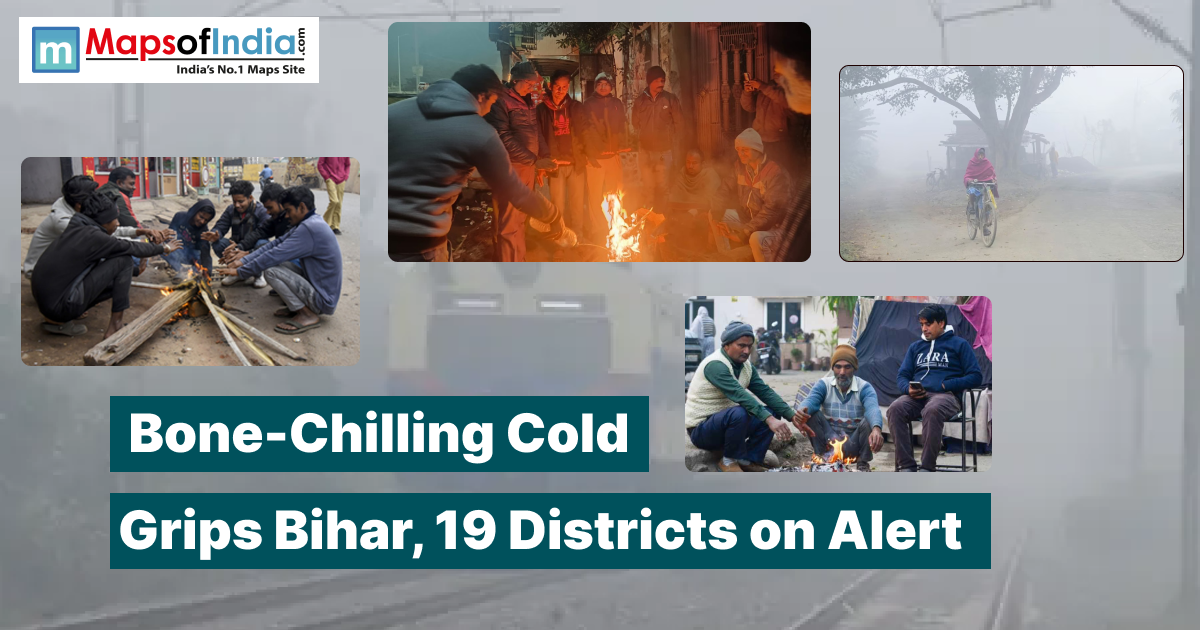
Bihar is still grappling with the extreme winter seasons with bone-chilling cold and thick fog disrupting day-to-day lives in the state. The India Meteorological Department (IMD) has given a cold day warning to 19 districts, stating that the temperatures are expected to be well below the normal level and can bring out severe cold weather even in the daytime.
The last few days have been characterized by icy mornings, cold winds, and mild sunshine in Bihar, which leaves more people with cold discompositions. Some of the districts recorded very low minimum temperatures, and the high temperature did not reach sufficient levels since fog and cloud cover continued to cover the sky. This has caused people to feel cold during the day, which is normally reported as a cold day by the weather scientists.
The IMD said the cold northerly winds that started in the Himalayan region, coupled with dry weather and thick fog, were driving the current cold spell. This has limited the amount of sunlight, and hence daytime temperatures have not increased. The afflicted regions are found in the north, central and south of Bihar in large urban centres and not only in rural regions.
The weather department has predicted that the cold weather will continue on January 3, and that nothing will help in the near future. The fog in the morning is also anticipated to persist, especially in low areas and along the rivers, making visibility extremely low in the morning. Although daytime temperature might improve somewhat in case the sun is exposed, the overall cold intensity is likely to be rather high.
The current cold wave has prompted authorities to issue an advisory on the safety of people. It has also encouraged residents to refrain from unnecessary outdoor activities in the early mornings and late evenings, put on sufficient warm clothes, and be extra careful of children, elderly individuals, as well as people with respiratory and heart-related conditions. Cautious driving on highways and rural roads has also been advised due to poor visibility caused by fog.
In some of the districts, hospitals have indicated that they have received more patients with cold-related diseases like cough, fever and difficulty in breathing. In the meantime, the local governments are keeping track of the situation and have been requested to make sure that they have the arrangements in place in case of a shelter home and other basic amenities for the vulnerable groups.
Daily routines have also been affected by the cold wave; schools have registered low attendance in certain regions, and activities that take place early in the morning have been postponed. Farmers are also closely monitoring weather conditions, given that standing crops can be hit by extreme cold and fog.
In general, a severe winter spell still holds Bihar, and the weather officials are warning citizens to be on guard and take all the possible precautions until the temperatures normalize.