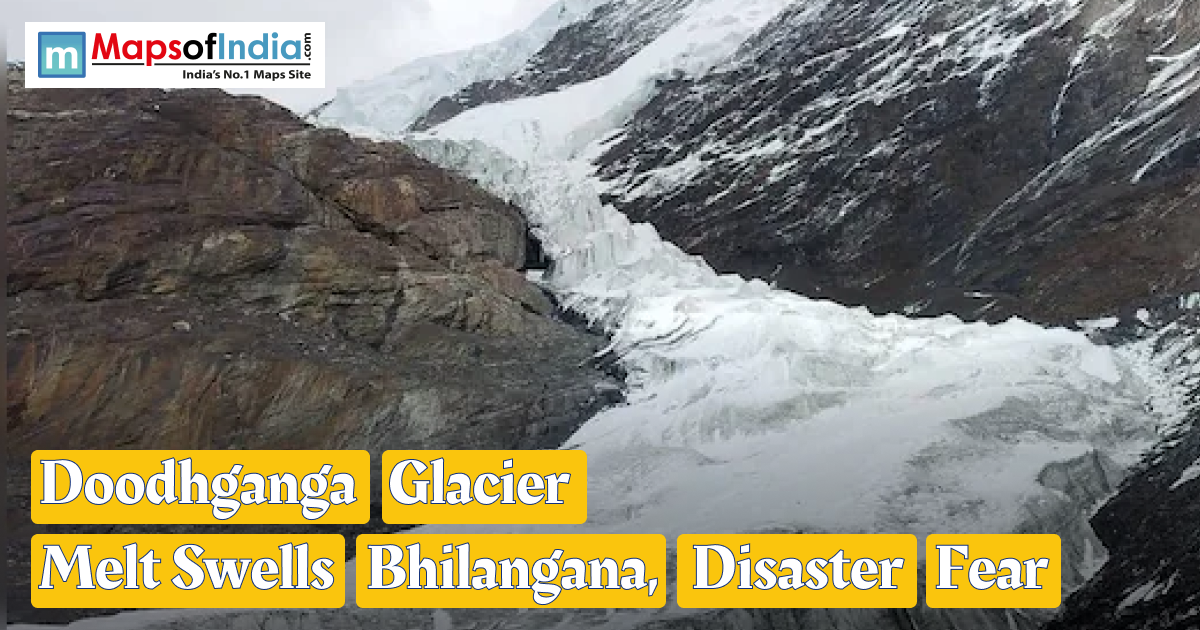
There are alarming reports of the upper parts of the Himalayas, where the Doodhganga Glacier is melting at an alarming rate, and the Bhilangana River is overflowing in dangerous amounts. The local residents and the scientists are worried that, in case the situation is not brought under control, it will result in a disaster similar to the Kedarnath disaster in 2013.
Experts in the Wadia Institute of Himalayan Geology have indicated that the glacier has been receding at higher rates than usual because of increasing temperatures and difficult climatic changes in the area. This meltwater is draining into a glacial lake that is linked to the Bhilangana River basin, which has grown tremendously in recent years. Scholars fear that the moraine walls of the lake, which are natural barriers that consist of loose rocks and soil, might be weak enough to hold back the pressure of the rising water.
When these barriers fail, this may lead to a massive water event known as a Glacial Lake Outburst Flood (GLOF), which is a sudden and very massive flood of water that can carry away all that it comes across. The same kind of trigger has initiated the disastrous floods in Kedarnath in 2013 that took thousands of lives and destroyed the Kedarnath valley.
A major concern has been addressed by local villagers who live along the Bhilangana River belt. They say that they have observed some changes in the behaviour of the river in the last several weeks. The river, which was calm, is now turbid with heavy sediment and overflowing above its normal seasonal levels. Numerous inhabitants are worried that one heavy rainfall or seismic activity can trigger an all-out disaster in the area.
Authorities have already started the initial tests, although analysts note that the state of affairs requires emergency measures. It is now necessary to ensure that the glacial lake is continuously monitored, install early-warning systems and elaborate risk mapping of the downstream villages to avert loss of life. Controlled draining of the lake has also been demanded by environmentalists to relieve pressure to reduce the possibility of an outburst.
A number of villages, roads, bridges, and hydropower projects are located in the Bhilangana Valley, which may be badly hit in case of a lake breakout. As winter is coming closer and the weather patterns become less predictable, the risk is still great.
People of Uttarakhand are waiting with the hope that, in time, the warnings will be taken seriously, and early preventive measures taken before it is too late, since the authorities mobilize their teams and researchers keep conducting their assessments.